English
 English
 中文简体
中文简体
 Español
 Tiếng Việt
Get in touch
English
Get in touch
Oct 05, 2026
An engineer recently asked us whether switching every spring in a valve assembly to stainless steel would produce the "strongest" part. The short answer is that stainless steel is rarely the strongest material in terms of pure tensile strength, but it can be the strongest choice once corrosion and temperature are included in the definition. For general-purpose high strength, music wire is still the benchmark. For millions of load cycles, chromium silicon steel performs better. For a spring that must survive moisture, chemicals, and heat without losing its shape, precipitation-hardened grades such as 17-7PH stainless steel are the practical winner.
Spring failure is almost never a simple case of the wire snapping from one overload. In our workshop, when a customer sends back a broken spring, the cause is usually fatigue cracking, stress relaxation, corrosion pitting, or a combination of these. That is why we ask customers for the full working condition, not just the load. The table below lists the strength properties that decide whether a spring will survive in its real environment.
| Property | What It Measures | Why It Matters for Springs |
|---|---|---|
| Tensile strength | The maximum stress the wire can resist before breaking | Direct measure of load capacity |
| Yield strength | The stress at which permanent deformation occurs | Determines whether the spring keeps its free length |
| Fatigue strength | The stress level the spring can take for a given number of cycles | The main parameter for moving parts |
| Stress relaxation resistance | The ability to maintain load over time at elevated temperature | Essential for hot environments |
| Corrosion fatigue limit | The fatigue strength when exposed to an aggressive medium | Critical for marine, food, and chemical use |
If we rank materials purely by tensile strength, three stand out for industrial springs. Each one wins in a different application, which is why the question "which is strongest?" rarely has a single answer.
Tensile strength can reach 2,300 to 2,500 MPa in fine wire sizes. Excellent for compact springs and clips, but it has poor corrosion resistance and should not be used above roughly 120°C.
Tensile strength of 1,800 to 2,100 MPa combined with excellent fatigue life and shock resistance. It is the preferred material for heavy-duty suspension springs and high-stress torsion springs.
After precipitation hardening, this grade reaches roughly 1,600 to 1,900 MPa while keeping corrosion resistance close to that of 304 stainless steel. It is the strongest common option when strength and corrosion resistance must coexist.
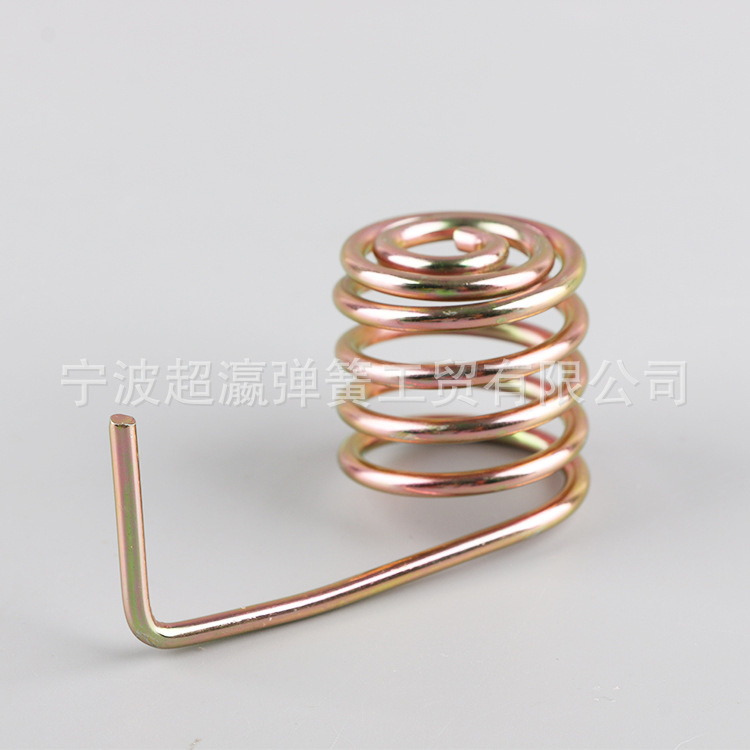
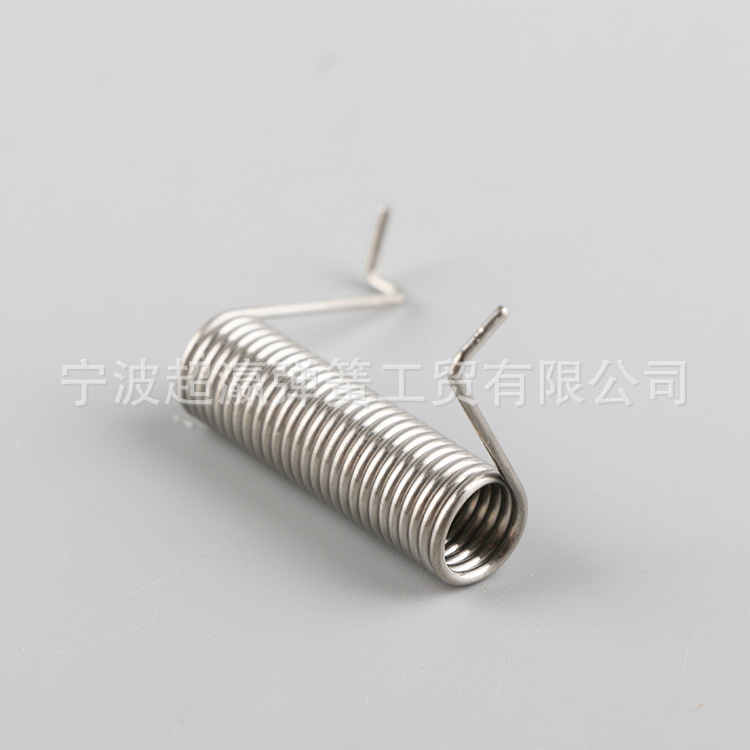 Stainless Steel Torsion Tension Spring for Industrial UseThis combined torsion and tension spring is made from precipitation-hardened stainless steel, offering high strength near 1,600–1,900 MPa while retaining corrosion resistance similar to 304 grade. It suits industrial machinery requiring consistent elasticity under mixed loads.View Product →
The table below gives a practical comparison of typical values. Actual performance varies with wire diameter, heat treatment, surface finishing, and the way the spring is stressed in service.
| Material | Tensile Strength (MPa) | Fatigue Rating | Corrosion Resistance | Max Service Temp | Best Typical Use |
|---|---|---|---|---|---|
| Music wire (A228) | 2,000–2,400 | Good | Low | 120°C | Small springs, clips, wire forms |
| Hard-drawn MB (A227) | 1,500–1,900 | Fair | Low | 120°C | General low-cost springs |
| Chrome silicon (A401) | 1,800–2,100 | Excellent | Low | 250°C | Suspension, heavy torsion springs |
| Chrome vanadium (A231) | 1,700–2,000 | Excellent | Low | 220°C | Valve springs, shock absorbers |
| 302/304 stainless steel | 700–1,200 | Good | Good | 250°C | Medical, food, marine equipment |
| 316 stainless steel | 650–1,100 | Good | Excellent | 250°C | Marine and chemical processing |
| 17-7PH stainless steel | 1,600–1,900 | Very good | Very good | 370°C | Aerospace, high-strength corrosion-resistant parts |
| Inconel X-750 | 1,100–1,400 | Very good | Excellent | 650°C | High-temperature turbine and exhaust springs |
| Beryllium copper | 1,100–1,400 | Good | Good | 200°C | Electrical contacts, non-sparking tools |
For a deeper comparison of corrosion performance, see how 304 and 316 stainless steel perform differently in industrial spring applications.
Many buyers choose the material with the highest tensile strength, only to see the spring fail early from repeated loading. A spring normally fails when the surface develops a fatigue crack, not when the whole wire pulls apart. This is why chrome silicon steel, with slightly lower tensile strength than music wire, often lasts much longer in a high-cycle application. The charts below compare typical tensile strength and fatigue resistance of four common materials on a relative scale.
Relative Tensile Strength
Relative Fatigue Strength Under Repeated Loading
Values are relative indicators for comparison, not exact material specifications.
In daily production, the best material choice depends on the working environment, the number of cycles, and the space available. The following are typical selections from our plant:
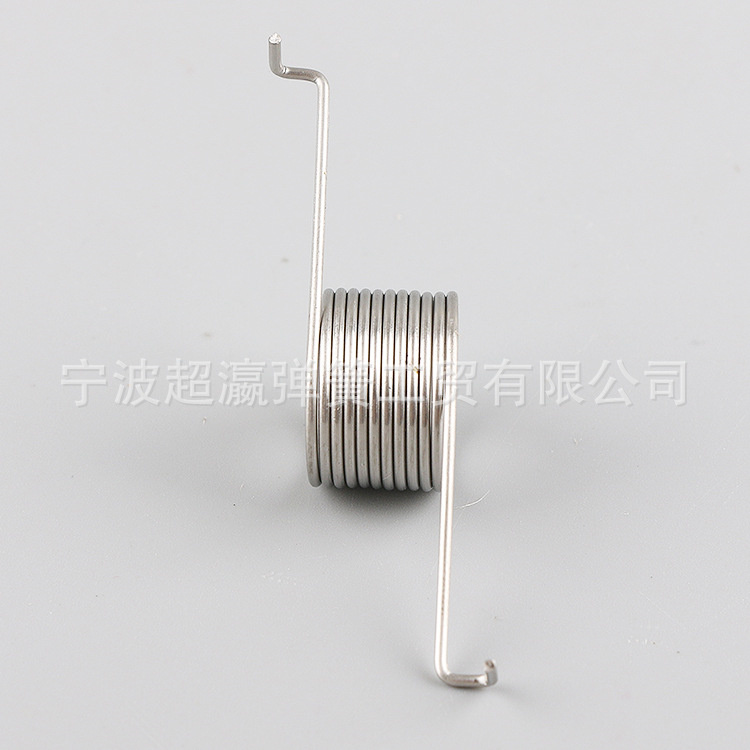 Heavy-Duty Garage Door Torsion Tension SpringBuilt for high elasticity and long-term durability, this custom non-standard spring handles repeated tension and compression cycles in garage door systems. Samples are available for testing, and specifications can be tailored to specific application needs.View Product →
The same wire can become a completely different spring after heat treatment and surface finishing. Tempering after coiling reduces brittleness and sets the coil shape. Shot peening puts the surface layer into compression and can almost double the fatigue life of a high-stress spring. Passivation and other surface treatments remove micro-scale defects where cracks start. In our production line, the material grade is only the starting point; process control is what delivers consistent strength from lot to lot.
Relative Fatigue Life After Common Finishing Processes
Relative improvement depends on stress level, wire diameter, and coating selection.
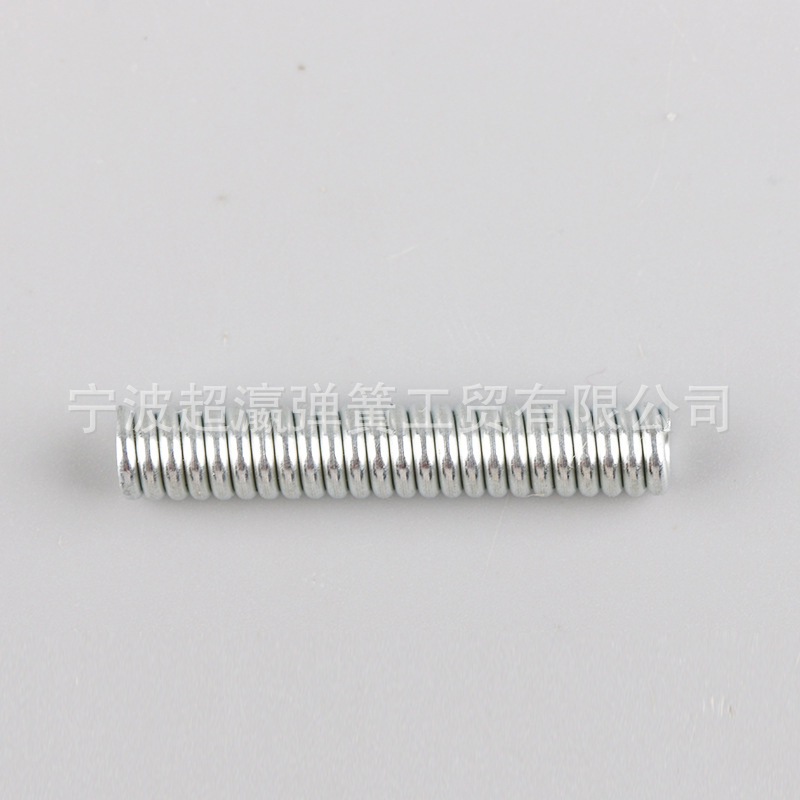
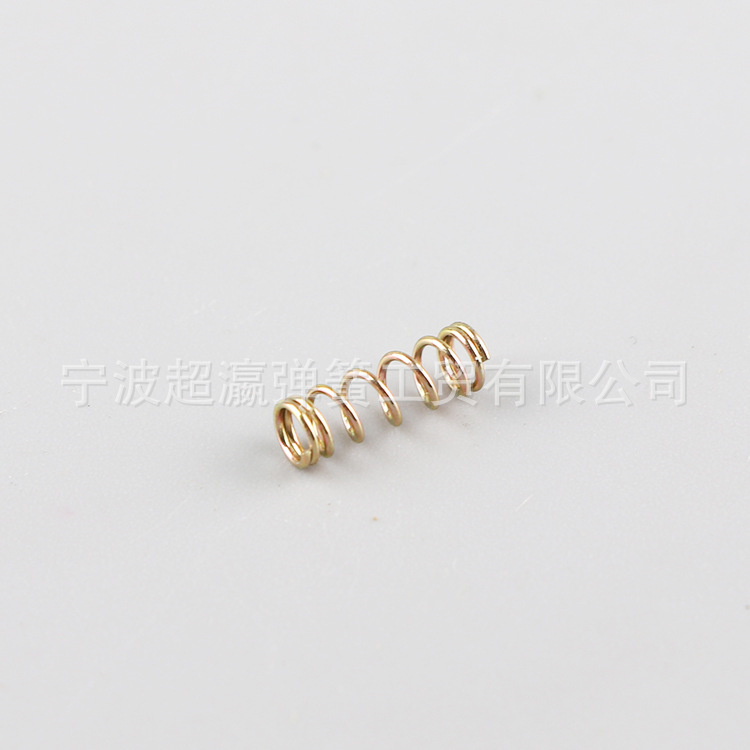
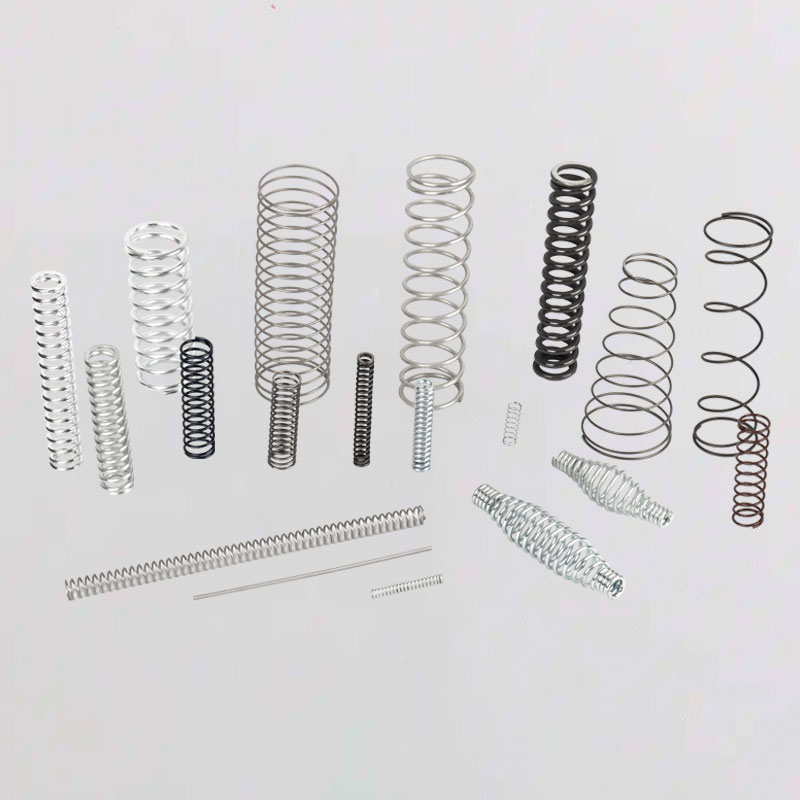 304 Stainless Steel Small Return Pressure SpringThis non-standard small spring uses 304 stainless steel for corrosion resistance and stable performance. Available in outer diameters from 1 to 60 mm, it suits mechanical, automotive, electronic, and medical equipment where reliable pressure support is needed.View Product →
When you send us a request, the details below make the difference between a spring that barely survives and one that runs for years without attention.
For more detail on how to confirm that a stainless steel spring can handle high repeated stress, see our guide on validating stainless steel springs for high-stress conditions.
No. In terms of tensile strength, music wire and chrome silicon steel are stronger. Stainless steel is chosen when corrosion resistance or hygiene matters as much as strength.
For commercially produced springs, music wire offers the highest tensile strength. For combined strength and corrosion resistance, 17-7PH stainless steel is the strongest common option.
Nickel-based alloys such as Inconel X-750 retain useful spring properties at up to around 650°C. Stainless steel grades can reach about 370°C depending on load and wire diameter.
Not always. Spring rate depends on wire diameter, coil diameter, and the number of active coils. A thicker wire makes the spring stiffer, but it also increases stress at the inner fibre. The correct wire diameter should be calculated from the load, not guessed.
Yes, if the material, wire diameter, coil geometry, heat treatment, and surface finish are all specified for the actual load. Many high-strength torsion and compression springs in our production are custom designs.
Choosing the strongest material means balancing tensile strength, fatigue resistance, corrosion behaviour, and temperature capability. From a manufacturer's viewpoint, a strong spring is one that fails only after the equipment it protects is obsolete. Provide the real operating conditions and let the spring be designed accordingly.
Related Products
Contact us
Factory Address
No. 8, Taoyuan South Road, Wuyuqiao, Henghe Town, Cixi City, Ningbo, China
Phone
+86-188 6787 1218+86-574-62605393
QR CODE
 Wholesale Stainless Steel Coil Springs Manufacturers