English
 English
 中文简体
中文简体
 Español
 Tiếng Việt
Get in touch
English
Get in touch
Sep 07, 2026
When an engineer first asks whether 304 stainless steel is good for making springs, the most accurate answer is: yes, it is a dependable choice for a wide range of spring applications, but it is not the best choice for every spring. The material offers strong corrosion resistance, good formability, and predictable mechanical performance that make it the default for many industrial and consumer products. At the same time, it has clear strength and temperature limits that matter when a spring must be very compact, run under high stress, or survive extreme cycles.
The practical approach is to evaluate 304 against the specific requirements of your application before committing to a material. The main criteria are the operating environment, the load and deflection needed, the space available, the expected service life, and the acceptable cost. When corrosion resistance and appearance matter more than absolute strength, 304 usually wins. When the spring must deliver maximum force from a small envelope or endure millions of high-stress cycles, stronger alloys will outperform it.
This article explains how 304 behaves as a spring material, where it excels, where it struggles, how it compares with alternatives, and what you should specify when ordering 304 stainless steel springs from a manufacturer. It is written from the perspective of an experienced spring workshop that deals with these material decisions daily.
304 stainless steel is an austenitic chromium-nickel alloy containing typically 18 to 20 percent chromium and 8 to 10.5 percent nickel. This composition gives it a face-centered cubic austenitic structure that remains stable from cryogenic temperatures all the way up to the hardening range, which is why 304 does not become brittle in cold service the way carbon spring steel does.
For spring applications, 304 is supplied as cold-drawn wire. The cold drawing process significantly increases tensile strength through strain hardening, taking the wire from an annealed strength of roughly 500 to 600 MPa up to 700 to 1,100 MPa depending on wire diameter. This is essential because annealed 304 is far too soft for a useful spring. The strength achieved in the final spring also depends on the cold work introduced during coiling, which is why 304 spring wire and 304 sheet metal are very different engineering materials.
Common spring steel wire standards that reference 304 include EN 10270-3, ASTM A313, and JIS G4314. If you are sourcing springs internationally, these standards give you a baseline for tensile strength and tolerances. However, it is worth noting that the final spring performance depends as much on the forming process, stress relief, and surface condition as on the material grade itself.
A spring designer needs several figures before choosing 304: tensile strength, yield strength, modulus values, and operating temperature limits. The table below summarizes typical values for cold-drawn 304 spring wire. Because strength varies with wire diameter, the ranges shown are more useful than a single number.
| Property | Typical Value | Practical Note for Spring Design |
|---|---|---|
| Tensile strength | 700 – 1,100 MPa | Smaller diameters are stronger; a 0.5 mm wire can exceed 1,200 MPa. |
| 0.2% yield strength | 400 – 900 MPa | Higher than annealed plate values due to cold drawing. |
| Modulus of elasticity (E) | 193 GPa | Approximately 28 × 10⁶ psi in imperial units. |
| Modulus of rigidity (G) | 77 GPa | Used for compression and torsion spring rate calculations. |
| Maximum continuous service temperature | Around 290 °C | Above this, load relaxation accelerates quickly. |
| Minimum service temperature | Down to -200 °C | No ductile-to-brittle transition in the austenitic structure. |
| Density | 7.93 g/cm³ | Useful when calculating wire weight and shipping mass. |
| Electrical resistivity | 72 µΩ·cm | Relevant if the spring carries current in a circuit. |
For static applications, a typical design limit is to keep the corrected stress below 45 to 50 percent of the tensile strength of the wire. For dynamic applications with millions of cycles, the maximum operating stress must be reduced considerably, often to 20 to 30 percent of tensile strength, and a spring manufacturer may recommend shot peening or presetting to extend fatigue life.
The tensile strength of 304 spring wire drops as wire diameter increases. This is not a defect; it is a consequence of less plastic deformation being applied to the centre of a thicker wire during drawing. The following chart shows how this relationship typically appears across the wire sizes used in commercial spring production.
How Wire Diameter Affects the Tensile Strength of Cold-Drawn 304 Spring Wire
The practical implication is that if you need a high force from a small spring, a thin 304 wire operating at a high stress level will deliver it, but the same material in a thick wire may not reach the required load without an oversized coil. When this happens, switching to 301 stainless steel or a carbon steel music wire, which retain higher tensile strength in thicker diameters, is often the better engineering decision.
The main reason engineers choose 304 stainless steel for a spring is its corrosion resistance. In ordinary atmospheric conditions, fresh water, steam, food processing environments, and many dilute organic and inorganic chemicals, 304 provides excellent protection without any surface coating. The passive oxide film is automatically maintained as long as oxygen is present, and a scratched surface will self-heal.
For springs used in household appliances, medical devices, food contact equipment, and outdoor mechanisms that do not face salt water, 304 is usually the first choice. It avoids the problem of plating wear, which is a common failure mode for zinc-plated carbon steel springs that lose their protective layer when the coils rub against each other during compression.
However, 304 has a well-known vulnerability to chlorides. Long-term exposure to sea water, road de-icing salt, bleaching solutions, and certain industrial chemicals can cause pitting and crevice corrosion. The risk increases with temperature and with tensile stress. A spring under continuous load in a chloride-rich atmosphere is also susceptible to stress corrosion cracking, which can lead to sudden failure even if the load is within the calculated safe range.
If your spring operates near the sea, on a vehicle that experiences winter road salt, or inside a cleaning machine that uses chlorine-based detergents, consider 316 stainless steel instead. The extra molybdenum in 316 significantly improves pitting resistance. For a deeper explanation of how these two grades compare in spring manufacturing, read our detailed comparison of 304 versus 316 stainless steel in industrial spring applications.
Surface treatment also plays a role. The same 304 spring can behave very differently depending on its surface condition:
304 behaves well at low temperatures, which is one of its advantages over carbon steel. There is no ductile-to-brittle transition, so a 304 spring continues to deform elastically in cryogenic applications down to around -200 °C. The spring rate and load will increase slightly at low temperature because the shear modulus of the material rises, so a spring designed for room temperature will deliver a somewhat higher force when it is cold. This should be checked in the design if the spring functions at very low temperatures.
At elevated temperatures, the picture is different. The beneficial cold work in 304 spring wire begins to anneal out when the wire is exposed to temperatures above roughly 300 °C for any significant time. The tensile strength drops, and more importantly, the spring begins to relax: it loses some of its initial load while held at a fixed deflection. Relaxation accelerates with temperature, time, and initial stress level.
In practical terms, a 304 spring working at 200 °C with a moderate stress level will normally retain acceptable load after long service. At 300 °C, expect measurable load loss. At 400 °C, 304 is no longer a sensible spring material. For continuous high-temperature service, a precipitation-hardening stainless steel such as 17-7PH or a nickel-based alloy must be used.
If your application involves occasional short excursions to a high temperature followed by a return to normal conditions, 304 may still be acceptable, but you should tell the spring manufacturer about the actual temperature profile. The stress-relief temperature used during production is typically 260 to 400 °C; if your service temperature is higher than the stress-relief temperature, the spring may partly release the residual stresses that contribute to its load capacity.
Choosing a spring material is a balancing exercise. The table below compares 304 with the other grades commonly encountered in spring manufacturing, using typical mid-range tensile strength values, corrosion behavior, temperature limits, and approximate cost position.
| Material | Typical Tensile (MPa) | Corrosion Resistance | Max Continuous Temp | Fatigue Performance | Relative Cost |
|---|---|---|---|---|---|
| 304 stainless steel | 850 | Excellent in mild environments | ~290 °C | Good | $$ |
| 316 stainless steel | 770 | Superior in chloride environments | ~300 °C | Good | $$$ |
| 301 stainless steel | 1,050 | Excellent in mild environments | ~290 °C | Better due to higher strength | $$ |
| Music wire (carbon steel) | 1,950 | Poor, requires coating | ~120 °C | Excellent | $ |
| 17-7PH stainless steel | 1,600 | Excellent | ~370 °C | Excellent | $$$$ |
The cost column is a relative indicator based on raw wire price and processing complexity. Music wire is the cheapest and strongest option, but it rusts. 316 costs more than 304 for the same spring geometry while providing lower tensile strength; it is only justified when chlorides are present. 301 gives a worthwhile strength advantage over 304 when you need more force from the same diameter, at a similar price. 17-7PH is a specialty choice for high-temperature, high-strength, and high-fatigue applications.
Typical Mid-Range Tensile Strength of Common Spring Wire Materials (MPa)
A common misconception is that if 304 is good, then 316 is automatically better for every spring. In reality, 316 wire is softer in the cold-drawn condition, so for the same spring dimensions, a 316 spring will deliver lower load than a 304 spring. You may need a thicker wire or a larger coil to reach the same force. The decision should be driven by the environment, not by a blanket preference for a higher alloy grade.
In daily production, 304 is the most frequently specified stainless steel for springs across a wide range of sectors. The common thread is that these applications value corrosion resistance, clean appearance, and moderate load capacity more than sheer strength.
Washing nozzles, valve returns, conveyor safety springs, and dispenser springs repeatedly contact water, steam, and food acids. 304 resists staining and avoids coating contamination.
Door locks, switches, battery contacts, and release mechanisms benefit from a spring that will not rust after years in humid kitchens, bathrooms, or basements.
Small return springs in single-use instruments and diagnostic equipment must be cleanable and compatible with sterilization vapor. 304 is the standard entry-level grade.
Brake pedal return springs, seat adjustment, and HVAC damper springs are used in warm, humid interior spaces where carbon steel would require extra protection.
Gate latches, mailbox springs, and ventilation dampers exposed to rain and temperature swings benefit from the long life of 304.
Small springs that carry electrical current and press contacts need stable force and resistance to oxidation. 304 wires with a clean surface are widely used here.
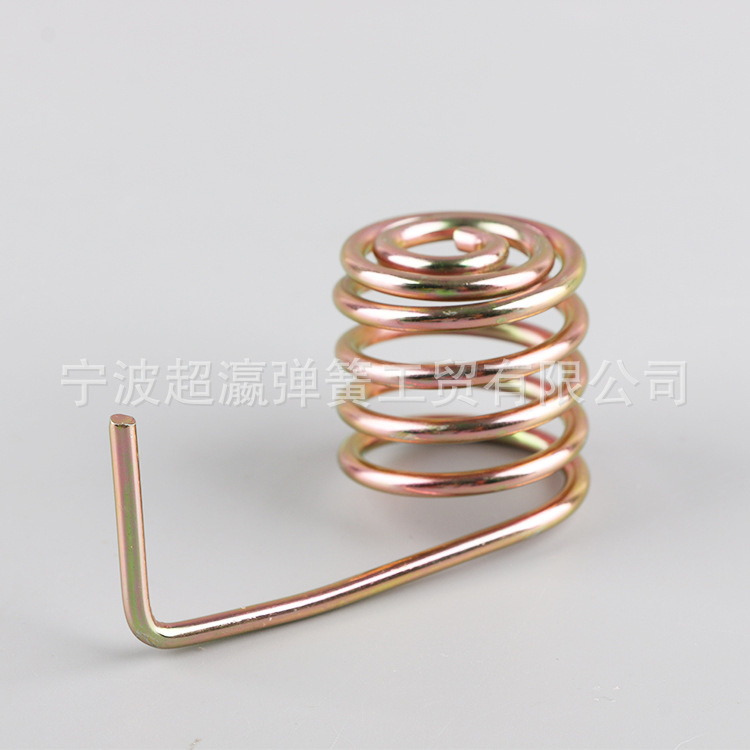
For applications that require a compact shape or a precisely controlled return force, manufacturers such as the production facility behind this website produce custom 304 springs from CNC coiling machines and test them for load and dimensional accuracy before shipment. The product family includes not only simple compression springs but also shaped and wire-formed parts that are difficult to make on a standard spring coiler.
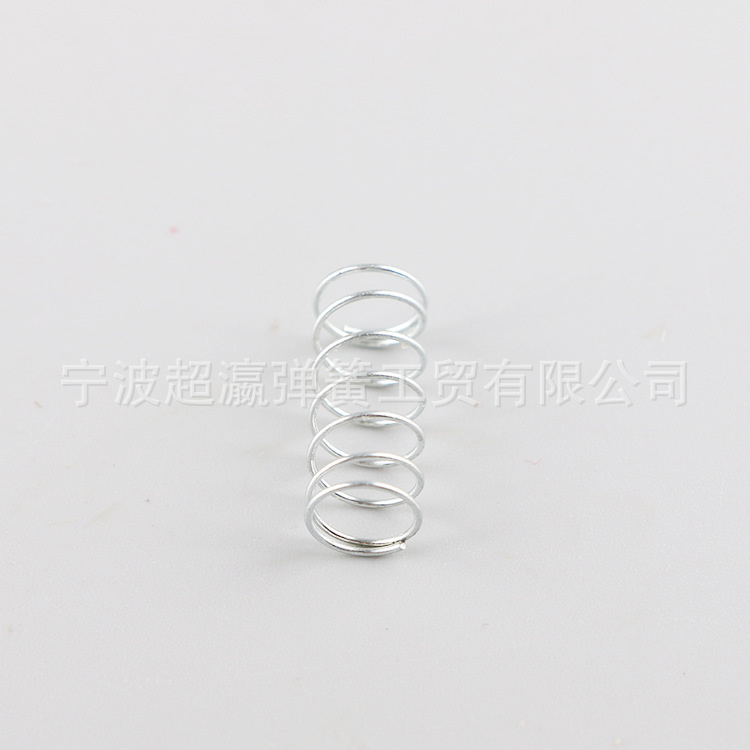
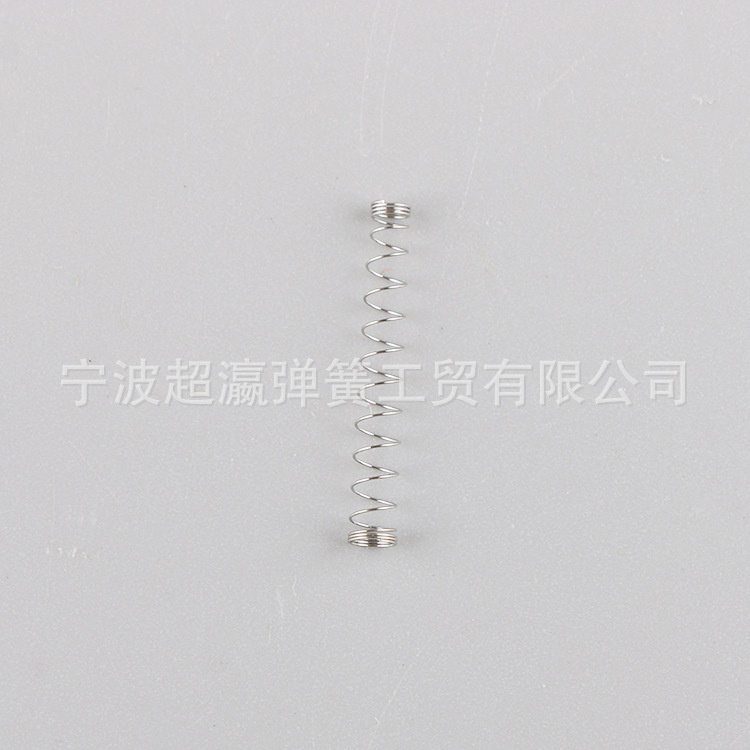
One typical example is a stainless steel 304 spring used as a return-pressure element in a small valve assembly. The spring needs to fit in a diameter smaller than 6 mm, deliver a controlled force over a long stroke, and survive frequent cycling in a warm, damp environment.
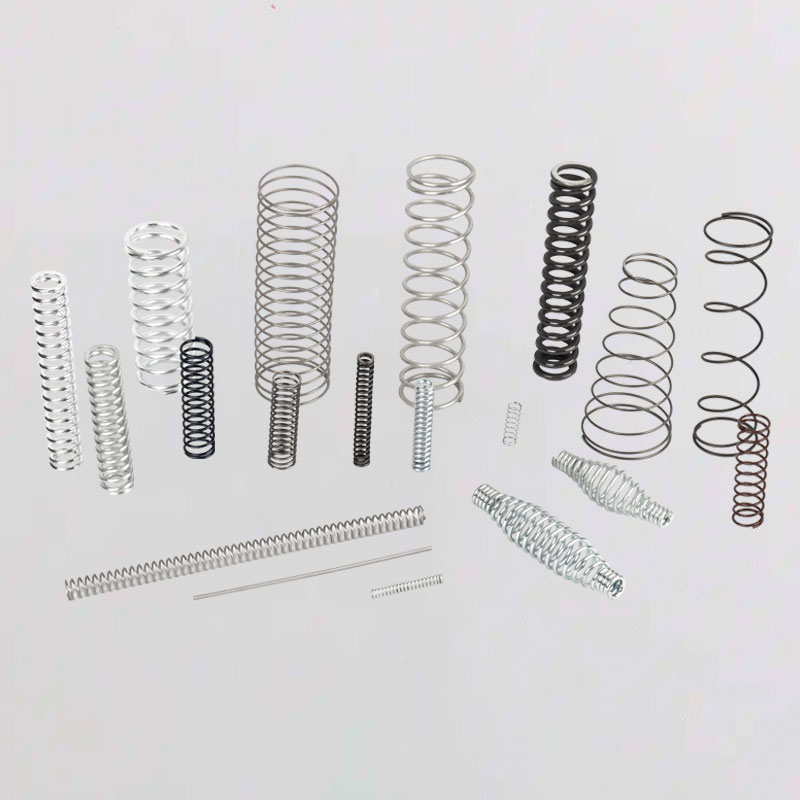 Custom 304 Stainless Steel Return Pressure Small SpringThis compact 304 stainless steel spring suits a small valve assembly needing a controlled return force, long stroke, and resistance to warm, damp conditions.View Product →
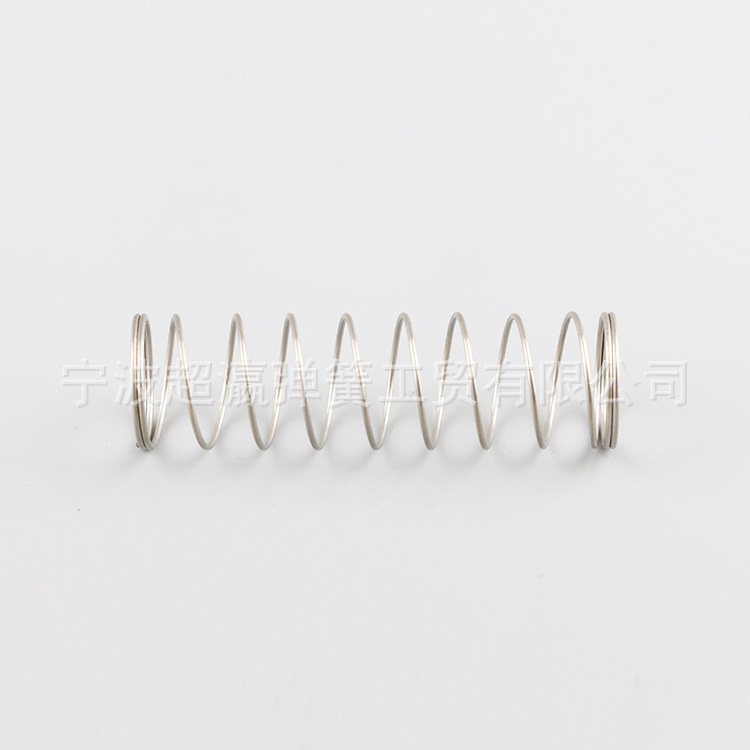
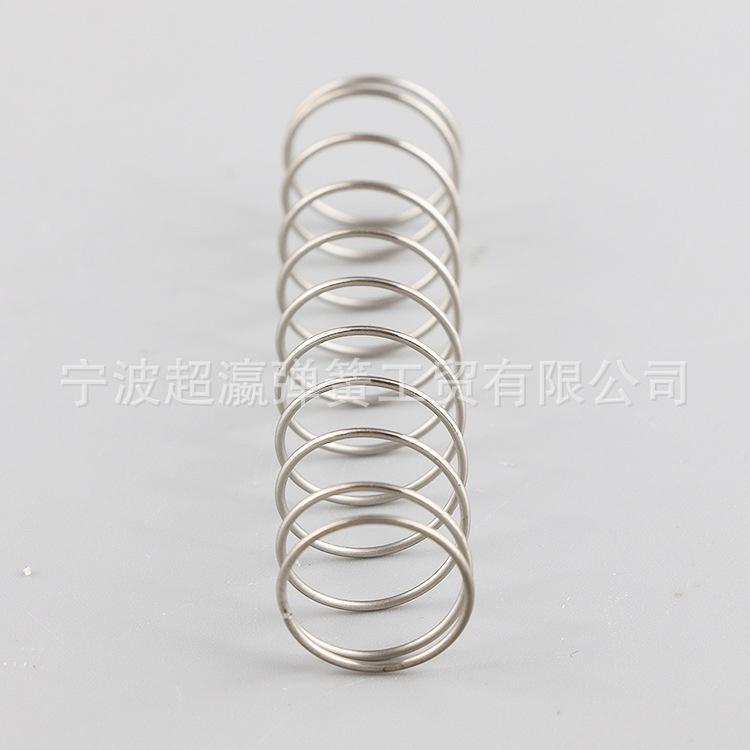
Another common scenario is a large-volume compression spring for a household appliance, where the production tolerance must be held across hundreds of thousands of pieces. The wire diameter, free length, and closed end geometry all affect the final load, and a well-controlled CNC process with stress relief heat treatment is required to keep the load within specification.
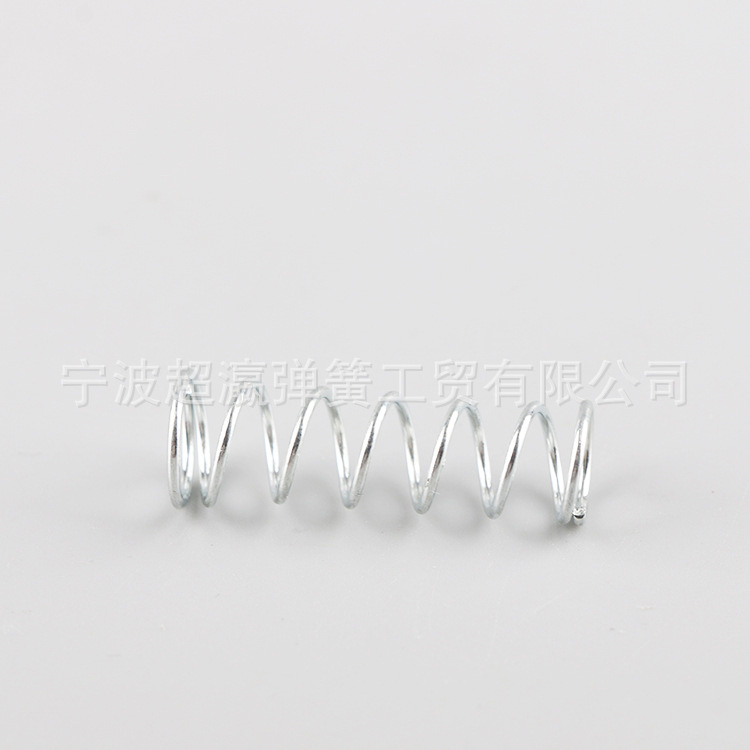 Custom Stainless Steel Compression SpringFor large-volume appliance production, this CNC-made compression spring with stress relief heat treatment helps hold load specifications across hundreds of thousands of pieces.View Product →
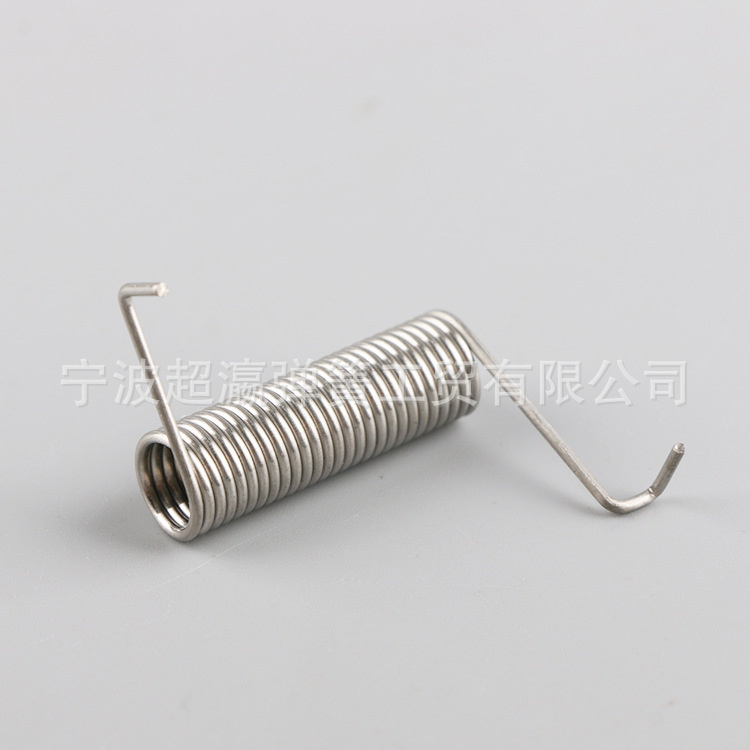
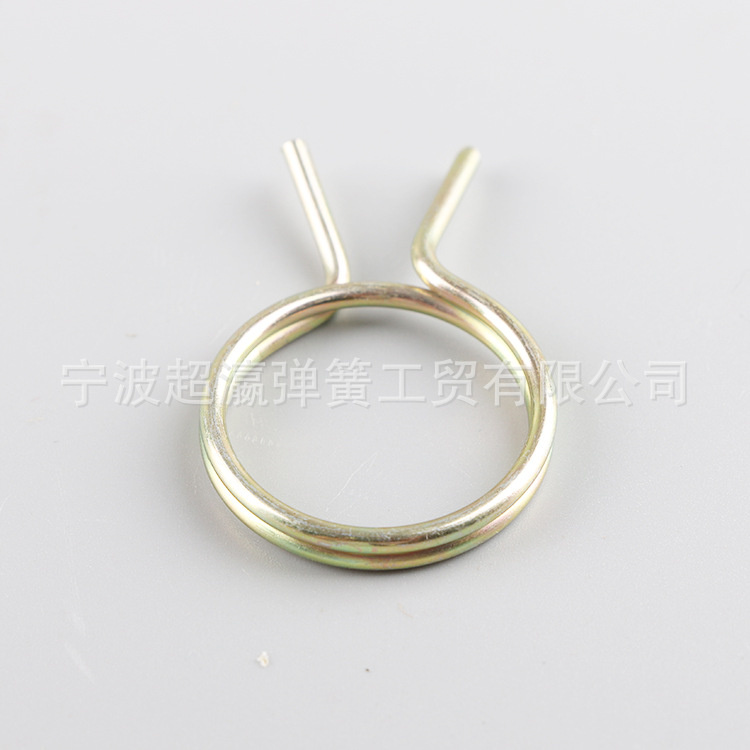
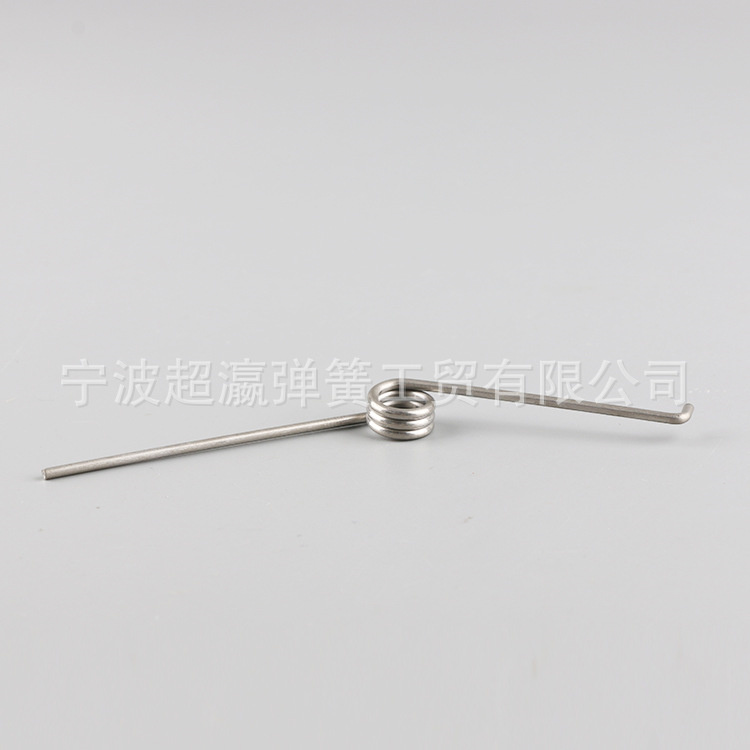
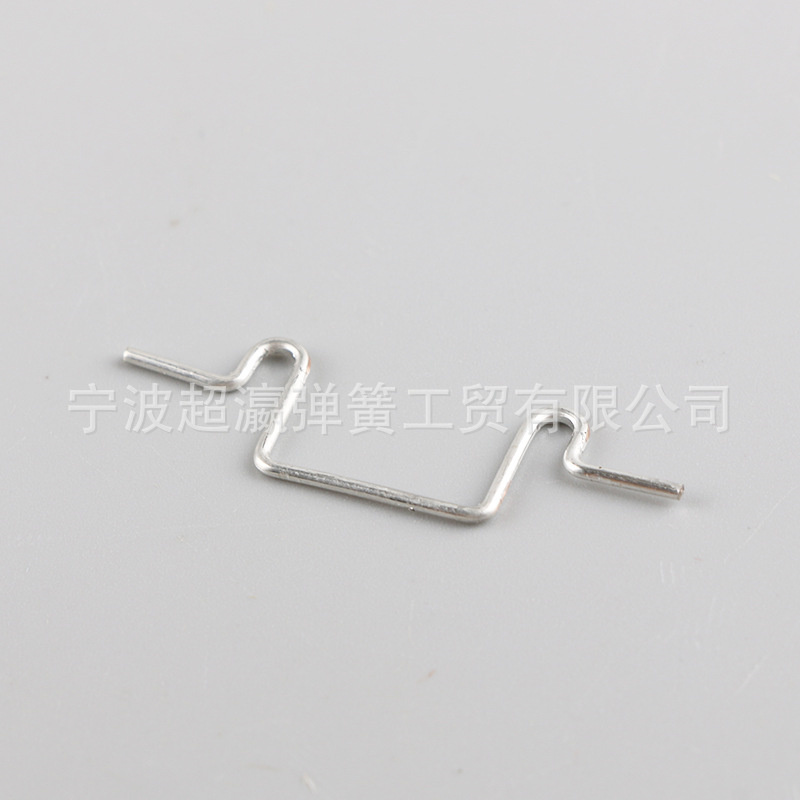
When the mechanism needs a non-circular section or an unusual leg geometry, 304 wire can also be formed into special-shaped tension springs that combine a spring function with a clip or hook feature inside a single component. This reduces part count and simplifies assembly for the customer.
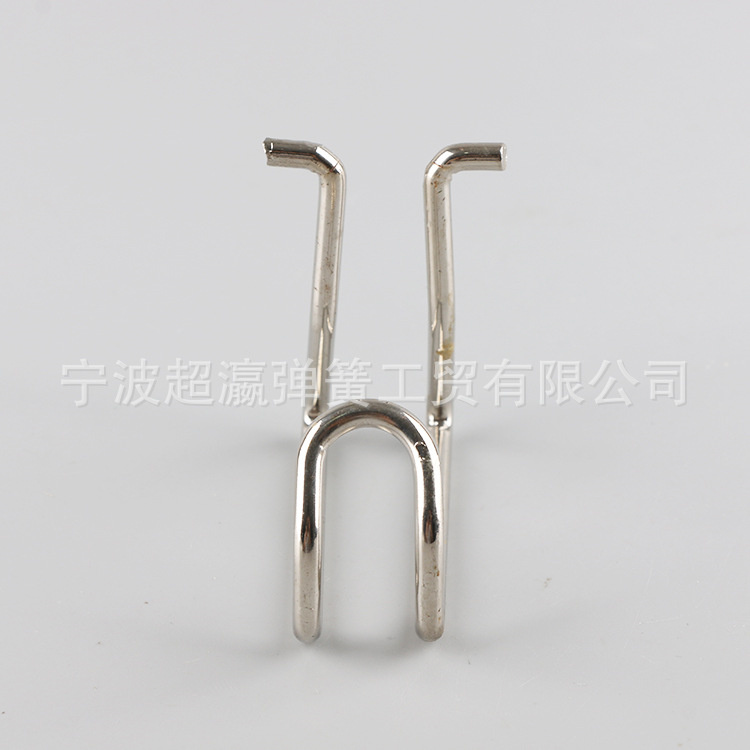 Custom-Shaped 304 Stainless Steel Tension SpringThis special-shaped tension spring combines spring function with a clip or hook feature, reducing part count and simplifying assembly for non-circular or unusual leg geometries.View Product →
Selecting the material is only half the job. A 304 spring that is poorly designed will fail even if the material is perfect. The following points matter the most when designing springs from this grade.
As shown in the earlier chart, strength decreases as wire diameter increases. Designers sometimes assume the same tensile strength for all diameters and then wonder why a thick prototype spring produces a lower load than calculated. Always use the wire strength that matches the actual diameter you intend to use.
The spring index is the ratio of the mean coil diameter to the wire diameter. A practical range for 304 is between 4 and 12. A very low index means tight curvature and high stress concentration. A very high index tends to buckle and requires careful guidance. For springs with an index below 4, 304 may crack during coiling, especially if the wire surface has any defects.
The choice of open ends, closed ends, squared closed ends, or closed and ground ends affects the effective coils and the load at a given height. For 304 compression springs, ground ends give a flat seating surface and are recommended when the spring must stand vertically without tilting. Grinding also creates a smooth surface that helps corrosion resistance when properly passivated afterward.
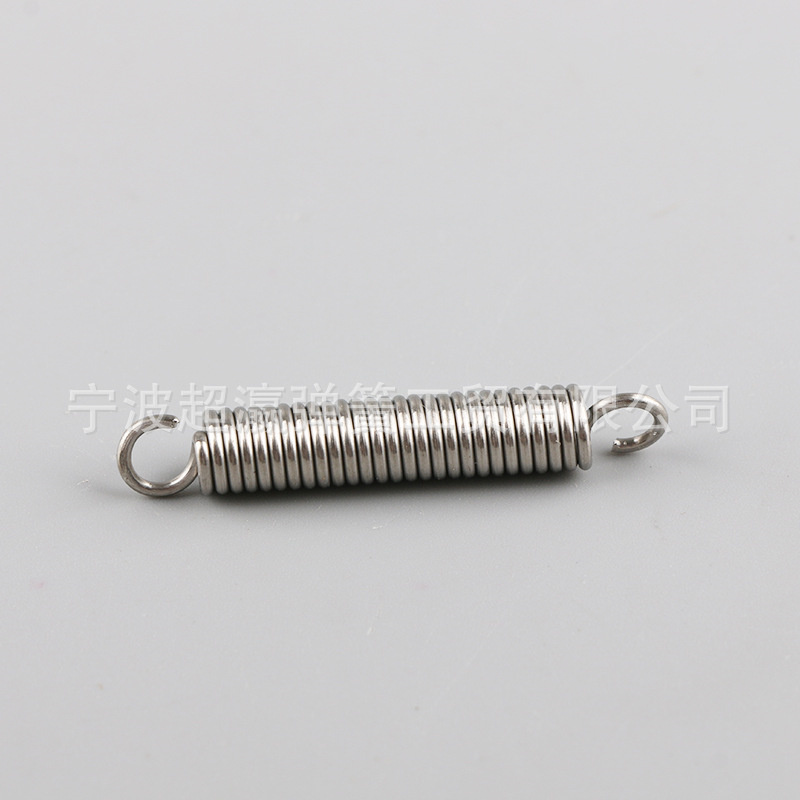
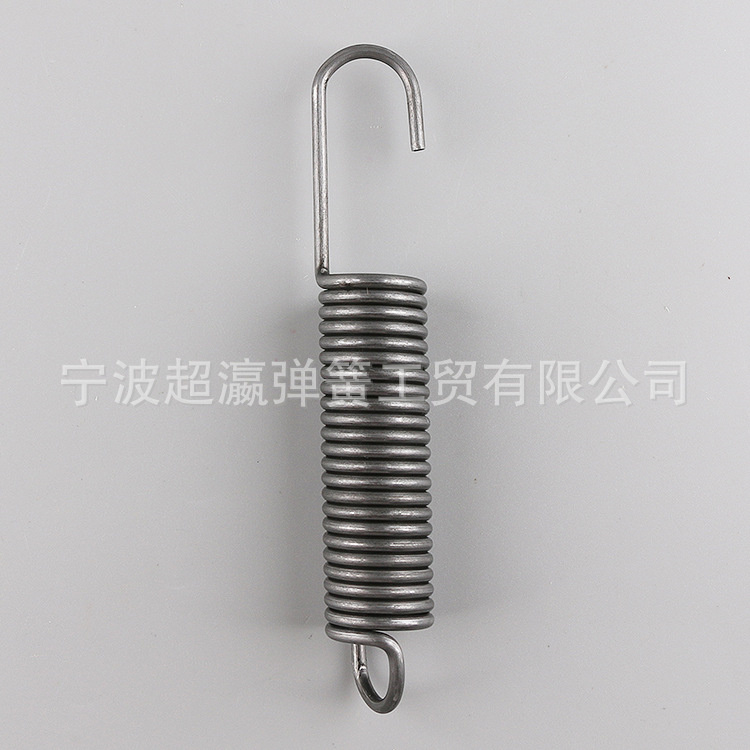
For extension springs, the hook geometry introduces stress concentrations that are often the failure point. A full hook is stronger than a side hook. The bend radius at the hook should be at least twice the wire diameter to avoid cracking. In production, the coiling process should leave a smooth transition between the coil and the hook, without sharp notches from the forming tool.
Two processes can significantly improve a 304 stainless steel spring:
Both processes are standard options at a spring factory that has the right equipment, and they are worth requesting for any spring that will endure more than 100,000 cycles under significant stress.
Understanding the production process helps you ask the right questions when ordering springs. A typical 304 stainless steel spring goes through several steps before it is ready to use.
At factories such as the Chaoying Spring facility in Ningbo, the combination of Japanese and Taiwanese precision CNC spring formers and automatic test equipment allows 304 springs to be produced economically even for long runs. The same equipment can handle the special-shaped springs that cannot be made on standard spring machines.
The quality of a 304 stainless steel spring is not visible on the surface. Two springs with the same free length and diameter can behave completely differently if their stress relief, wire source, and end geometry differ. Reliable suppliers run the following checks regularly.
If your project involves high stress or high cycle counts, you should work with a supplier that can provide material certificates and test reports. A step-by-step method for selecting and validating stainless steel springs for high-stress conditions is covered in a separate article, and it explains how to define the test program in a way that is practical rather than theoretical.
When you send an inquiry to a spring manufacturer, the quality of the answer depends on the quality of the information you provide. A complete spring specification should include the following items.
| Parameter | Description | Example |
|---|---|---|
| Wire diameter | Diameter of the spring wire, ideally chosen from a standard wire gauge. | 1.2 mm |
| Outside or inside diameter | Select one; outside diameter matters for mounting in a bore, inside diameter for fitting over a rod. | OD 12.0 mm |
| Free length | Overall length of the spring when unloaded. | 30.0 mm |
| Solid length | Length when all coils are touching; used for compression springs to check clearance. | 8.5 mm |
| Working height with load | The critical design pair, for example a load of 35 N at a height of 20 mm. | 35 N at 20 mm |
| Total coils and end type | Total number of coils and whether ends are closed, squared, or ground. | 6.5 coils, closed and ground |
| Hook geometry | For tension springs, specify full hook, side hook, crossover, or other shape. | Full hook both ends |
| Surface and finishing | Passivated, glass bead blasted, shot peened, or electropolished. | Passivated |
There are a few common mistakes that engineers make when ordering 304 springs:
If you have only a sample or a drawing, a manufacturer with in-house engineering experience can work the design backwards: measure the existing spring, determine the load and deflection needed, calculate whether 304 is suitable, and propose a corrected design. This is why many customers send a physical sample to the factory during the development phase.
It depends on what you define as high strength. For a small spring made from thin wire, 304 can provide a tensile strength close to 1,100 MPa, which is reasonably strong. If your design requires a very high load in a limited space and the spring must be made from thick wire, 304 will likely not deliver the required stress without excessive diameter, and 301 or music wire would be better. Strength is a function of both the material and the wire diameter, not the alloy alone.
316 adds molybdenum to improve resistance to chloride pitting and stress corrosion cracking, making it the better choice for salt water and marine environments. However, 316 wire has a lower tensile strength than 304 in the cold-drawn condition, so a 316 spring will be weaker than an identical 304 spring. This trade-off must be considered when designing for corrosive environments.
In normal atmosphere, fresh water, and food environments, a properly passivated 304 spring will not rust. In prolonged contact with chlorides, aggressive industrial chemicals, or high-humidity marine air, pitting and rust can occur. The risk rises with temperature and with surface contamination from carbon steel particles that may be embedded during handling at the factory.
304 can be used intermittently up to around 300 °C, but continuous service above 290 °C causes gradual load relaxation and loss of tensile strength. Above 400 °C, the cold-worked structure recovers rapidly and the spring loses most of its spring properties. For high-temperature services, use 17-7PH or a nickel-based alloy.
Annealed 304 is essentially non-magnetic, but the cold drawing and coiling processes convert part of the austenitic structure to martensite, making the finished spring slightly magnetic. The magnetism is usually weak and varies with the amount of cold work. If a completely non-magnetic spring is required, the material and process must be carefully controlled and tested.
The most effective methods are shot peening, presetting, and avoiding sharp stress concentration in the hook or end turns. In addition, keep the operating stress within the fatigue limit of the material and make sure the surface is free of scratches, pits, and grinding marks. A clean, smooth surface delays crack initiation significantly.
Stress relief heat treatment intentionally allows the material to relax internally, and some load loss is normal if the treatment temperature is higher than the original coiling stress. If the load loss is excessive, the stress relief temperature or duration may have been too high, or the wire may have been overheated. A good supplier will adjust the process so the final load meets your specification after the stress-relief cycle.
Related Products
Contact us
Factory Address
No. 8, Taoyuan South Road, Wuyuqiao, Henghe Town, Cixi City, Ningbo, China
Phone
+86-188 6787 1218+86-574-62605393
QR CODE
 Wholesale Stainless Steel Coil Springs Manufacturers