English
 English
 中文简体
中文简体
 Español
 Tiếng Việt
Get in touch
English
Get in touch
Sep 21, 2026
In nearly 20 years of manufacturing stainless steel springs, our workshop has seen 304 grade material return from outdoor service with pitting after just one coastal winter, while identical material remained clean after a decade bolted to an inland structure. That difference is why no honest engineer quotes a single number for the outdoor life of 304 stainless steel. The practical answer: 10 to 30 years in most non-coastal outdoor environments, more than 50 years in clean rural air, and only 1 to 5 years in direct marine spray. For spring components, which operate under continuous stress, the real figures can be lower unless the design and surface treatment are specified with corrosion in mind.
304 is an austenitic stainless steel containing 18–20% chromium and 8–10.5% nickel. Chromium reacts with oxygen to form a self-healing chromium oxide layer that keeps moisture and chlorides away from the base metal. As long as that passive film remains intact, corrosion progresses at an extremely slow rate. Outdoor life is therefore controlled by how aggressively the environment breaks that film down.
| Exposure environment | Typical outdoor life | Main corrosion risk |
|---|---|---|
| Rural / clean inland air | 30–50+ years | Surface discolouration |
| Urban / industrial air | 15–30 years | Acid rain, sulphur compounds |
| Coastal (1–5 km from sea) | 10–20 years | Chloride aerosols |
| Marine / direct salt spray | 1–5 years | Pitting, crevice corrosion |
| Road de-icing salt zone | 5–10 years | Chloride attack at splashes |
These ranges assume a clean surface with no trapped organic matter, no galvanic contact with dissimilar metals, and no mechanical damage. In practice, the actual result depends on three mechanisms described below.
General surface rusting is the easiest problem to see, but it is rarely what destroys a spring. Three localised mechanisms matter far more in outdoor spring service.
Chloride ions penetrate the passive film at weak points, leaving microscopic craters that grow deeper over time. Pitting is particularly aggressive where salt spray dries and re-concentrates on the surface.
Oxygen is blocked inside tight gaps — between coils, under mounting brackets, or where a hook touches a housing. The gap becomes anodic and corrodes much faster than exposed areas.
When tensile stress, chlorides and temperatures above roughly 60°C combine, cracks can propagate through the wire without visible warning. Springs in sunlight on warm coastal days are vulnerable because their own working stress is always present.
For springs, stress corrosion cracking is the most dangerous mode because it is hard to inspect and can lead to sudden fracture.
A spring is not a flat sheet. The wire is heavily cold-worked, contains residual forming stresses, and is continuously loaded in service. That combination makes outdoor corrosion a fatigue-life issue, not just an appearance issue.
When a customer asks for a 304 spring for an exposed coastal gate or an outdoor machine, we recommend a design review before production. The wire diameter, coil geometry and surface treatment all influence how many years the spring will survive outdoors.
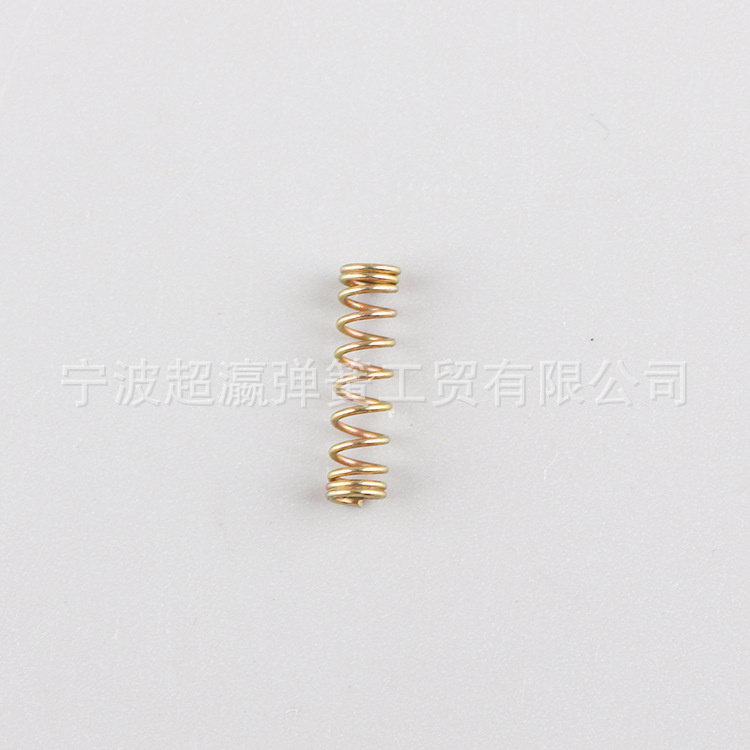
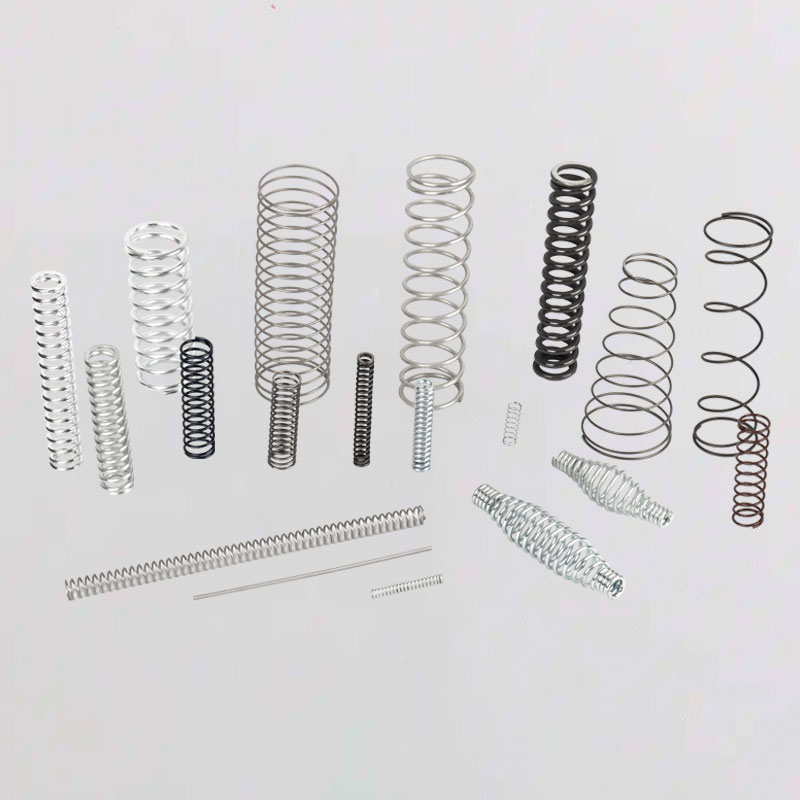 Stainless Steel 304 Return Pressure Small SpringThis customizable 304 stainless steel spring suits outdoor door mechanisms, valve returns, and enclosure latches, offering corrosion resistance for moderate exposure.View Product →
For moderate outdoor exposure, our standard 304 return pressure spring is passivated after forming and has served reliably in door mechanisms, valve returns, and small enclosure latches for well over a decade of real installations.
The single most important upgrade from 304 is the addition of 2–3% molybdenum in 316, which improves resistance to chloride pitting by a wide margin. The Pitting Resistance Equivalent Number (PREN) is about 19 for 304 and 24 for 316. In simple terms, 316 gives significantly longer life wherever salt is present.
| Property | 304 | 316 |
|---|---|---|
| Chromium | 18–20% | 16–18% |
| Nickel | 8–10.5% | 10–14% |
| Molybdenum | — | 2–3% |
| PREN | ~19 | ~24 |
| Relative material cost | 1.0× | 1.3–1.5× |
| Best suited for | General outdoor, inland, cost-sensitive | Coastal, chemical exposure, de-icing salt |
We use 304 by default for outdoor springs when the site is more than a few kilometres from salt water and the customer accepts periodic cleaning. If the spring will live near the coast, on a vehicle that travels winter roads, or inside an enclosure that traps warm humid air, 316 is worth the additional cost. For a detailed technical comparison of the two alloys in spring manufacturing, read our article on 304 vs 316 stainless steel performance in industrial spring applications.
From our manufacturing records and customer feedback, the following six measures give the highest return on effort for outdoor 304 springs:
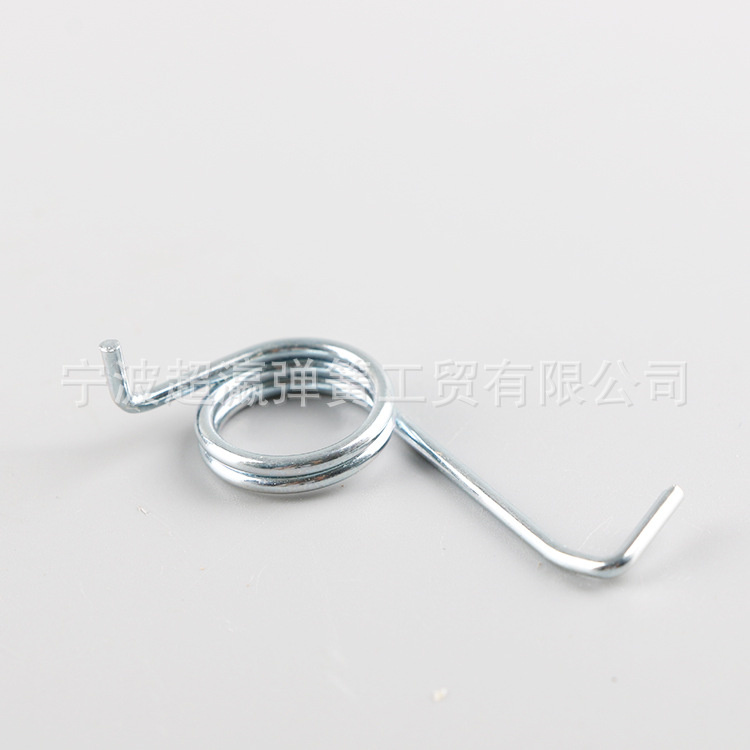
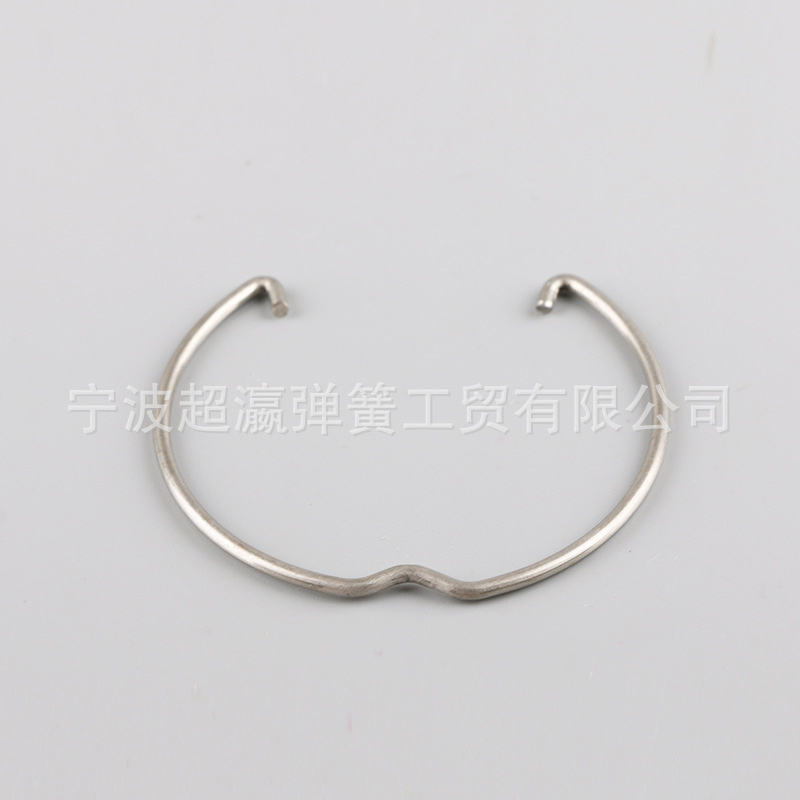
If your outdoor mechanism uses a torsion spring to hold a clamp, cover or latch, the clamp fastening torsion spring in our range is formed from 304 wire with controlled end geometry. It performs well in garden tools, gates and light agricultural equipment where chloride exposure is occasional rather than constant.
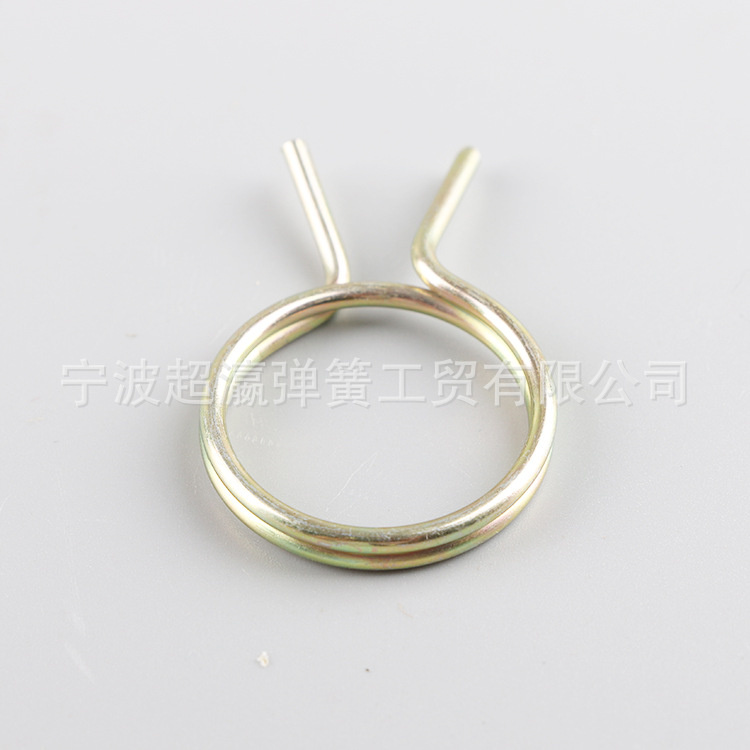 Stainless Steel Clamp Fastening Torsion SpringDesigned for fastening pipes, fittings, or mechanical parts, this 304 torsion spring provides reliable clamping force in garden tools, gates, and light agricultural equipment.View Product →
These measures are within the designer's control. In our production line, the same 304 wire with passivation and a good surface finish has outperformed an untreated 316 spring in a nine-year coastal comparison.
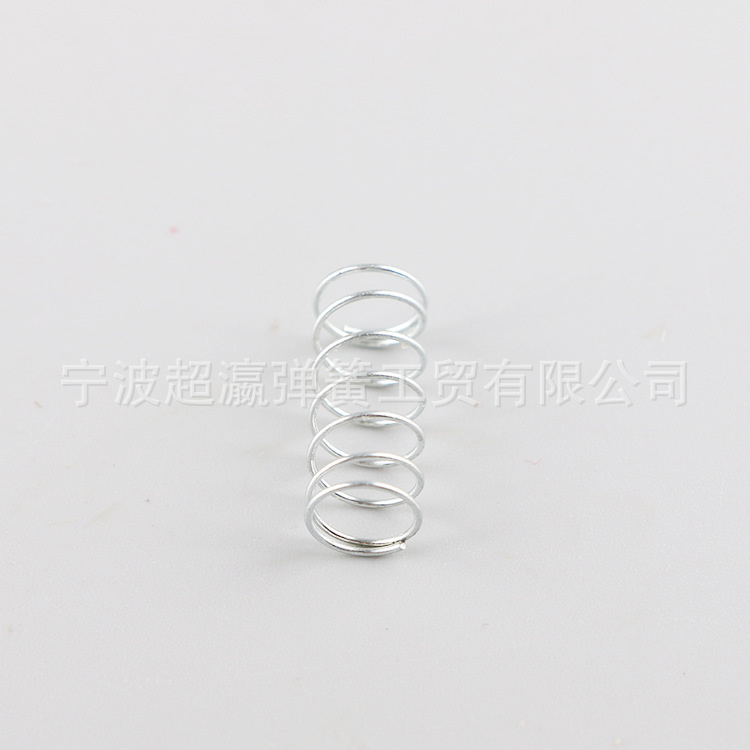
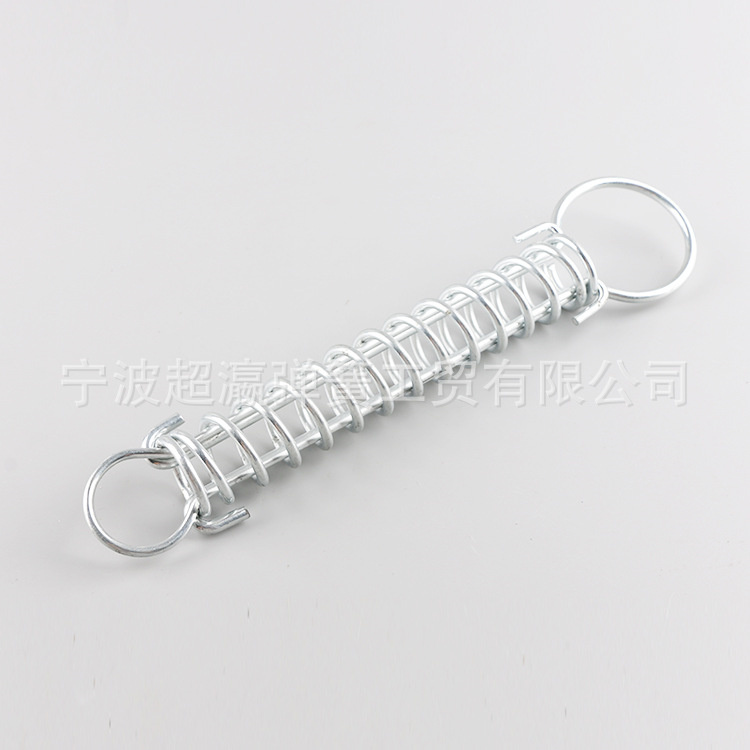
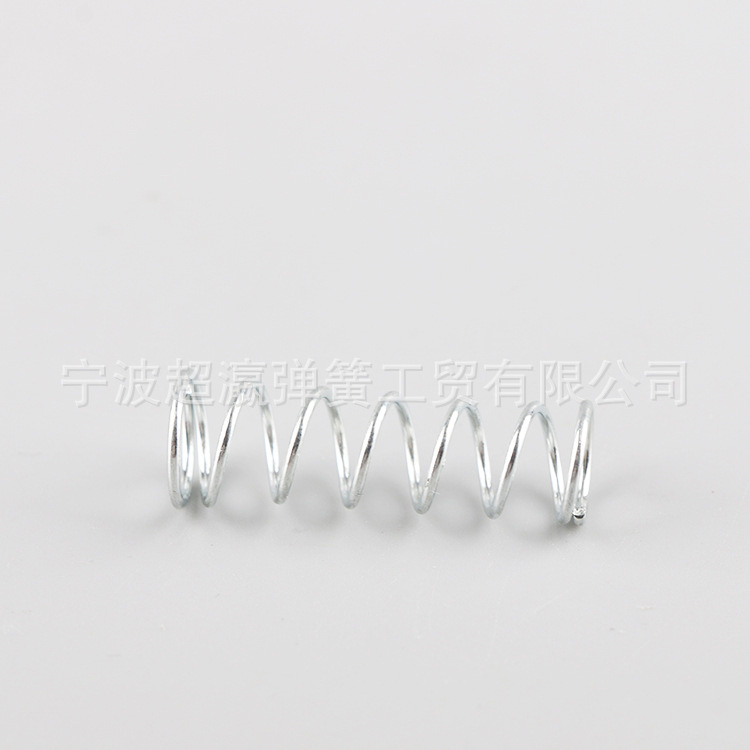 Customizable Stainless Steel Compression SpringA durable 304 compression spring with passivation and closed ground ends, ideal for outdoor cabinets, shutters, and access doors requiring dependable pressure support.View Product →
For outdoor equipment that relies on a compression spring under a fastening plate or weather seal, the stainless steel compression spring is the component we supply most often in 304. With passivation and closed ground ends, it has proven to be a durable solution for outdoor cabinets, shutters, and small access doors.
Yes, under certain conditions. Brown specks on a new outdoor spring are often embedded carbon steel particles from fabrication, not the stainless steel itself. True corrosion of the base metal takes the form of pitting or crevice attack and develops over months to years depending on chloride exposure.
In broad engineering terms, 304 lasts 10–30 years in typical mixed outdoor conditions, 30–50 years or more in clean rural air, and only 1–5 years in direct marine salt spray. The surface condition, the stress level, and the cleaning routine shift the result within these ranges.
Choose 316 when the spring is regularly exposed to salt water, de-icing salts, chlorinated cleaning agents, or when failure would create a safety hazard. For ordinary inland outdoor equipment, 304 with passivation is a proven and economical choice.
Passivation removes free iron and helps the chromium oxide layer form evenly. On a stressed spring this measurably delays pitting initiation. It is not a coating — it improves the base material's own resistance. We run passivation as standard on outdoor-grade springs.
It will survive, but likely only for a few years. If the component is in constant salt spray, higher-alloy materials such as 316, 2205 duplex, or a spring with an organic coating are more cost-effective over the service life.
Related Products
Contact us
Factory Address
No. 8, Taoyuan South Road, Wuyuqiao, Henghe Town, Cixi City, Ningbo, China
Phone
+86-188 6787 1218+86-574-62605393
QR CODE
 Wholesale Stainless Steel Coil Springs Manufacturers