English
 English
 中文简体
中文简体
 Español
 Tiếng Việt
Get in touch
English
Get in touch
Aug 03, 2026
A torsion spring that is correctly specified, manufactured, and installed typically delivers 10,000 to 15,000 operating cycles before replacement is needed. In calendar terms, most industry sources translate that into 7 to 10 years of normal service. The catch is that cycle life and calendar life are not the same number, and the difference between them explains most premature spring failures.
One cycle is a complete load-and-release operation. A residential garage door used three or four times per day accumulates roughly 1,200 to 1,500 cycles per year, so a 10,000-cycle spring lasts about 7 to 9 years. The same spring in a machine that cycles 20 times per day reaches its design limit in roughly 14 months. Whenever someone quotes a life expectancy, ask whether they mean cycles or years. In engineering terms, cycles are the only number that counts.
Design life is not a guarantee. It is a target that assumes the spring operates within its rated stress, temperature, and environmental limits. Exceed any of those limits and you move from normal design life into premature failure territory.
For a maintenance engineer, knowing this number means you can schedule replacement before a failure stops production. For a design engineer, it determines the material, wire diameter, and heat treatment specified before the spring ever goes into production.
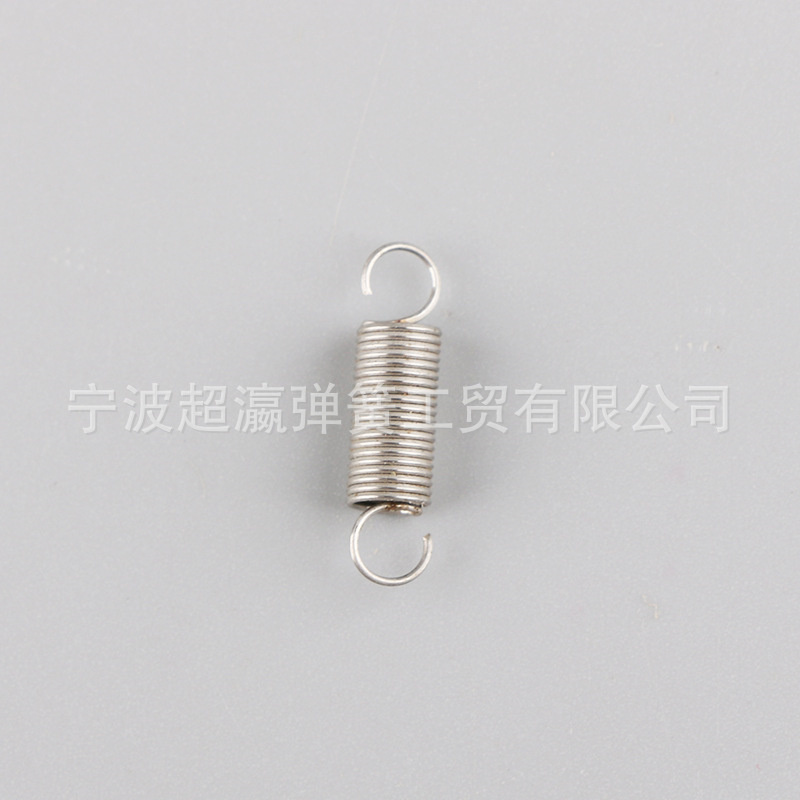
Torsion springs generally outlast extension springs under comparable service conditions. Garage door industry sources commonly list torsion spring life at 10,000 to 15,000 cycles, compared with 5,000 to 10,000 cycles for extension springs.
| Spring Type | Typical Cyclic Life | Primary Failure Point |
|---|---|---|
| Torsion spring | 10,000 - 15,000 cycles | Coil body fatigue after repeated twisting |
| Extension spring | 5,000 - 10,000 cycles | End hook or loop stress fracture |
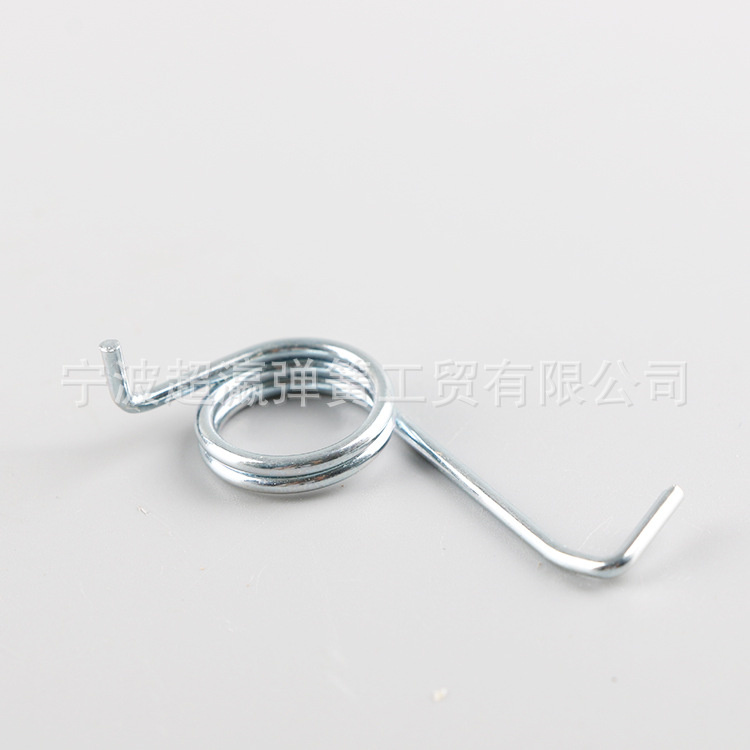
The engineering reason is straightforward. A torsion spring stores energy by twisting, so stress spreads through the coil body. An extension spring depends on end hooks or loops, and those attachment points concentrate stress, making them the natural origin of fatigue cracks. In equipment where downtime is expensive, choosing a torsion spring can double the interval between replacements.
The choice is often dictated by space. Torsion springs wrap around a shaft or arbor, which suits compact rotary assemblies. Extension springs need more axial space, and their end hooks reduce fatigue life. When both geometries are feasible, the torsion spring usually wins on service life.
For applications where torsional loading is preferred, our torsion spring products cover wire diameters from light-duty to heavy industrial service.
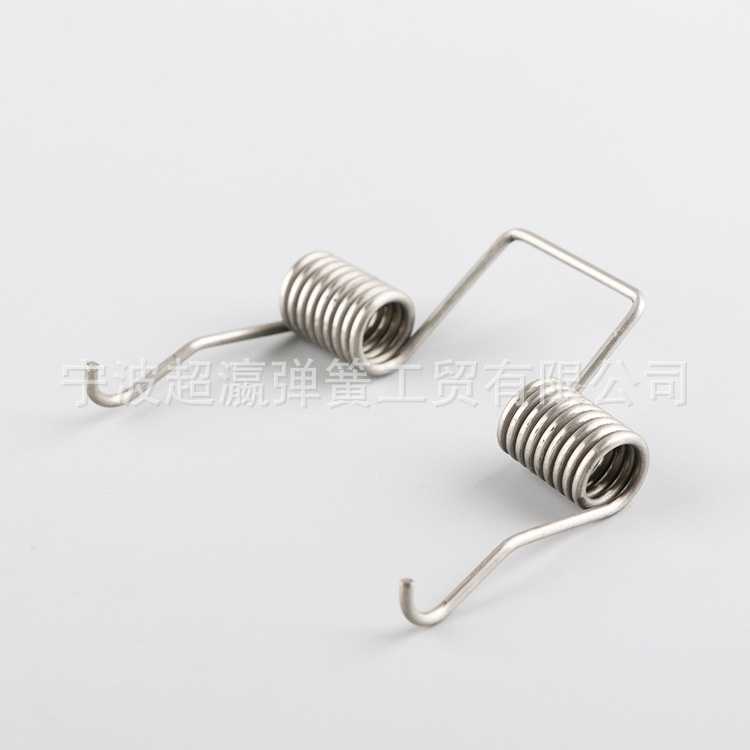 Stainless Steel Torsion Spring Manufacturers, FactoryAs China Stainless Torsion Spring Manufacturers and Stainless Steel Torsion Spring Factory, Ningbo Chaoying Spring Industry & Trade Co., ...View Product →
The life numbers above assume proper specification and a clean operating environment. In practice, five factors shorten torsion spring life more than everything else combined.
Steel grade and heat treatment set the ceiling for fatigue life. Oil-tempered wire, for instance, undergoes a special heat treatment that makes it noticeably more durable than ordinary high-carbon wire of the same diameter. Stainless steel grades such as 304 and 316 sacrifice some tensile strength but gain corrosion resistance, which can make them the longer-lived option in humid or washdown environments. Surface quality matters as well; wire with drawing marks, seams, or decarburization fails earlier than a clean, properly processed surface. In high-cycle applications such as commercial doors, choosing heavy-duty garage door torsion springs with upgraded wire material can double or triple the service interval. If a specification does not state material grade and heat treatment, life expectancy is left to chance.
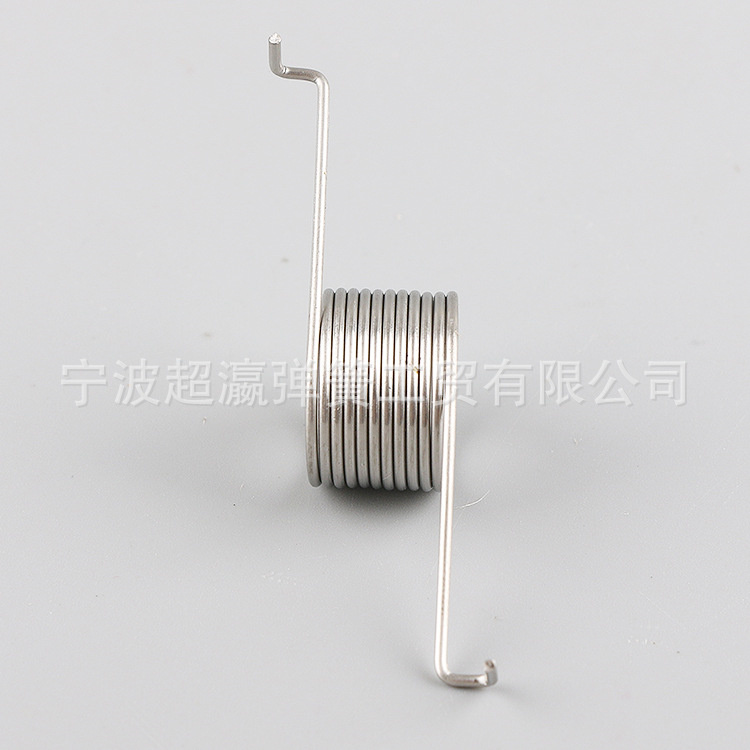 Wholesale Heavy-duty garage door tension torsion spring Manufacturers, OEM SupplNingbo Chaoying Spring Industry & Trade Co., Ltd. is China Heavy-duty garage door tension torsion spring Manufacturers and Wholesale Heav...View Product →
The most influential factor is the ratio between the maximum working stress and the tensile strength of the wire. A widely used design rule keeps maximum working stress below 40-50 percent of the material's tensile strength, and exceeding that range makes fatigue life fall off sharply. Overload happens more often than designers admit. A torsion spring carrying a heavier load than it was designed for, such as a single spring supporting the full weight of a heavy garage door, can lose half of its expected life. Industry sources note that an oversized or heavy door can reduce spring life to roughly 4 years instead of the usual 7 to 10. Increasing wire diameter is one of the simplest remedies: a thicker wire at the same load means lower stress, and lower stress means more cycles.
Rust is the most destructive environmental factor for torsion springs. Corrosion does triple damage: it pits the wire surface and creates crack-initiation sites, it reduces the effective cross-section, and it increases friction between adjacent coils. Industry sources describe rust as the leading cause of premature spring fracture. In coastal or chemical processing environments, specifying stainless steel clamp fastening torsion springs eliminates the corrosion failure mode entirely. Where stainless is not required, a protective surface treatment such as zinc plating or passivation can still extend service life significantly.
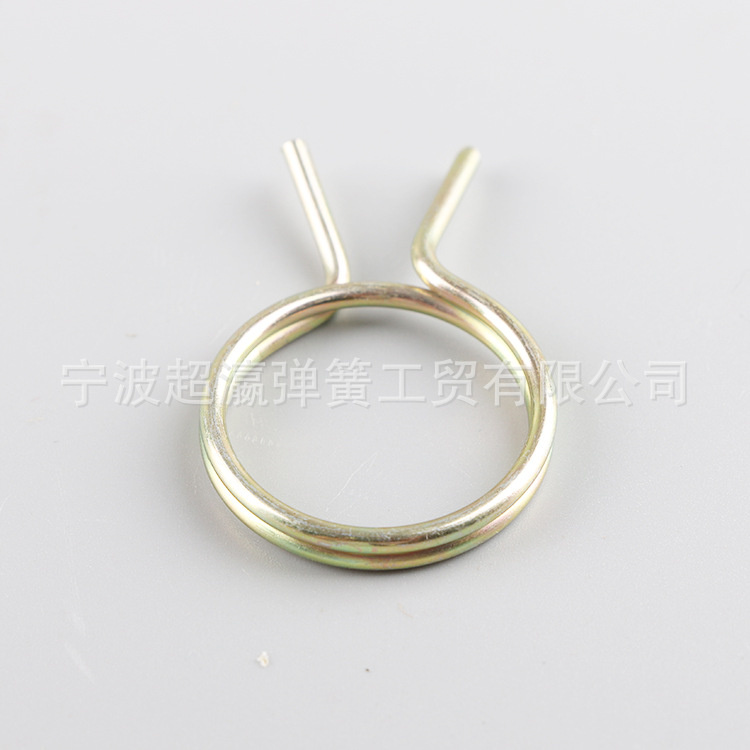 Wholesale Stainless steel clamp fastening torsion spring Manufacturers, OEM SuppNingbo Chaoying Spring Industry & Trade Co., Ltd. is China Stainless steel clamp fastening torsion spring Manufacturers and Wholesale Sta...View Product →
Heat rarely breaks a torsion spring outright; it makes the spring give up gradually. Elevated temperature accelerates stress relaxation and creep, so the spring loses its set force even while it remains physically intact. For ordinary spring steel, fatigue life starts to decline noticeably above roughly 80-120 degrees C, depending on the specific alloy and operating stress. Equipment that runs hot, or that cycles sharply between temperatures, needs a material with better thermal stability. For a closer look at the mechanisms behind high-temperature degradation, see our detailed analysis of high-temperature effects on stainless steel torsion springs.
An otherwise perfect torsion spring can be destroyed by poor installation. A wrong mounting angle, an incorrect end fixture, or a misaligned guide rod adds bending stress that the designer never intended. Torque per turn must also match the equipment requirement; a replacement spring with a mismatched rate changes the working deflection and can push the spring past its safe stress limit. Alignment matters most in clamping and fastening applications, where a correctly positioned spring delivers consistent force and a misaligned one develops unpredictable stress concentrations.
These five factors interact rather than acting alone. A spring that is marginal in two areas can fail much sooner than the sum of its individual problems suggests. The full dependency chain between processing parameters and mechanical performance is explored further in our guide to factors affecting stainless steel torsion spring mechanical properties.
Springs rarely fail without warning, but the warnings have to be noticed. In industrial equipment, the most cost-effective maintenance strategy is scheduled visual inspection rather than a wait-for-fracture approach. Common warning signs include:
A more detailed breakdown of torsion spring failure modes is covered in our separate technical article. The practical rule for maintenance teams is simple: if a spring shows any of these signs, schedule the replacement. A planned swap costs far less than an emergency breakdown, and inspection frequency should follow the duty cycle. Check monthly for a spring cycling hundreds of times per day, and at least yearly for low-cycle devices.
Life extension begins at the specification stage, not after installation. These five measures have the largest effect:
If your equipment needs longer service intervals than a standard spring provides, specify a higher cycle target such as 25,000 or 50,000 cycles, and let the manufacturer select the material and geometry to meet it. These upgrades are routine for any spring manufacturer, and the added cost is usually small compared with the maintenance savings. If you are not sure which combination of presetting, material, and surface treatment fits your duty cycle, our engineering team can recommend options based on your actual load data.
Standard torsion springs make sense when duty cycles are moderate and the environment is benign. Choose a custom design when any of the following applies:
A custom spring does not have to be exotic. In most cases, we adjust wire diameter, number of coils, material grade, and surface treatment to reach a target life. We develop and produce springs based on customer drawings or samples, and we need a clear set of parameters to work from: working torque, maximum working angle, available installation space, expected number of cycles, and environmental conditions.
The bottom line is that a torsion spring lasts 10,000 to 15,000 cycles, or roughly 7 to 10 years, when it is matched to its load, protected from its environment, and installed correctly. That range is an industry benchmark, not a product guarantee. For a life expectancy estimate for your specific application, contact our engineering team with your duty cycle and load requirements. That is the fastest way to turn a generic number into a reliable maintenance plan.
Related Products
Contact us
Factory Address
No. 8, Taoyuan South Road, Wuyuqiao, Henghe Town, Cixi City, Ningbo, China
Phone
+86-188 6787 1218+86-574-62605393
QR CODE
 Wholesale Stainless Steel Coil Springs Manufacturers