English
 English
 中文简体
中文简体
 Español
 Tiếng Việt
Get in touch
English
Get in touch
Mar 02, 2026
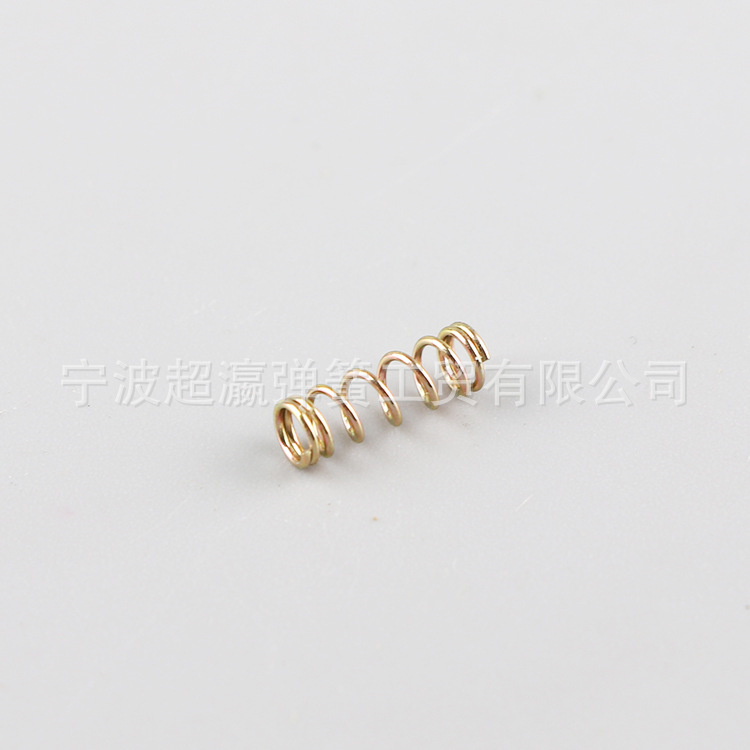
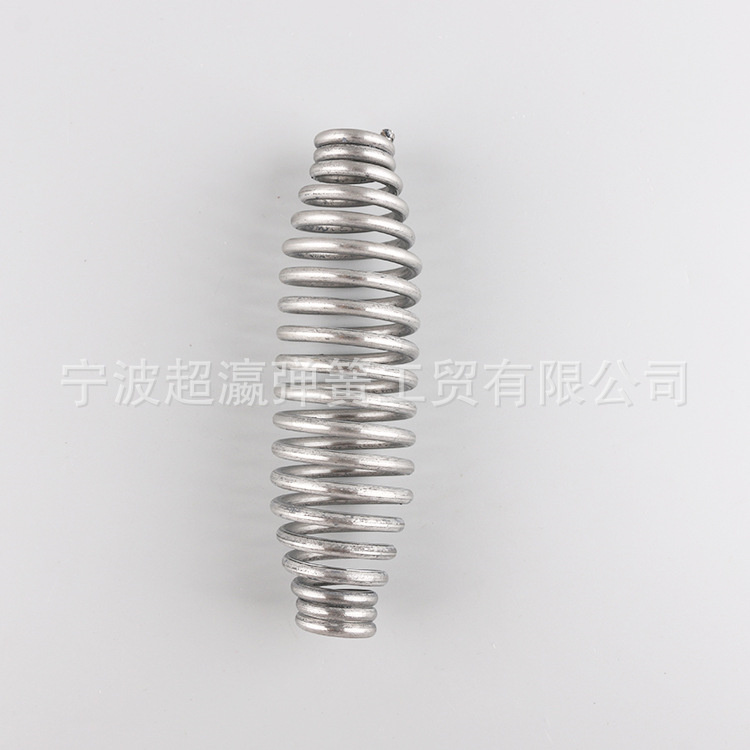
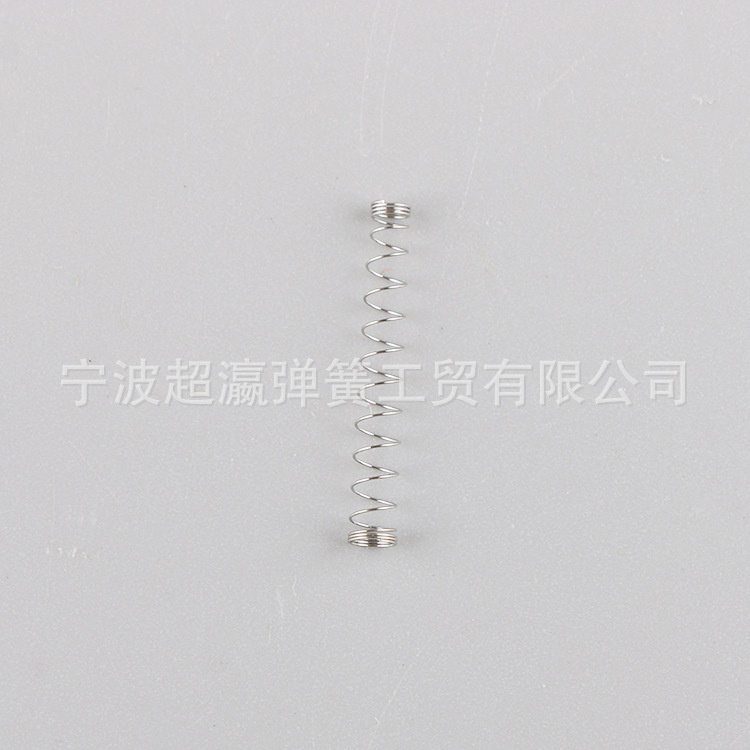
In the design of high-performance mechanical components, the stability of a Stainless Steel Compression Spring directly affects the operating precision of the equipment. A common failure phenomenon is the lateral deflection of the spring when subjected to axial pressure, a phenomenon known as Buckling. To solve this problem, precise design from the Pitch perspective is one of the most effective methods recognized in the industry.
Before discussing Pitch optimization, it is essential to understand the critical conditions for spring instability. The stability of a spring is closely related to its Slenderness Ratio, which is the ratio of the Free Length to the Mean Diameter of the spring. Generally, when this ratio exceeds 4, the spring is highly susceptible to lateral Buckling when compressed to a specific percentage of its total stroke.
The uniformity and magnitude of the Pitch directly determine the distribution of force vectors during the compression process. If designed improperly, local stress concentrations will cause the centerline of the helix to deviate from the axis, thereby inducing Buckling.
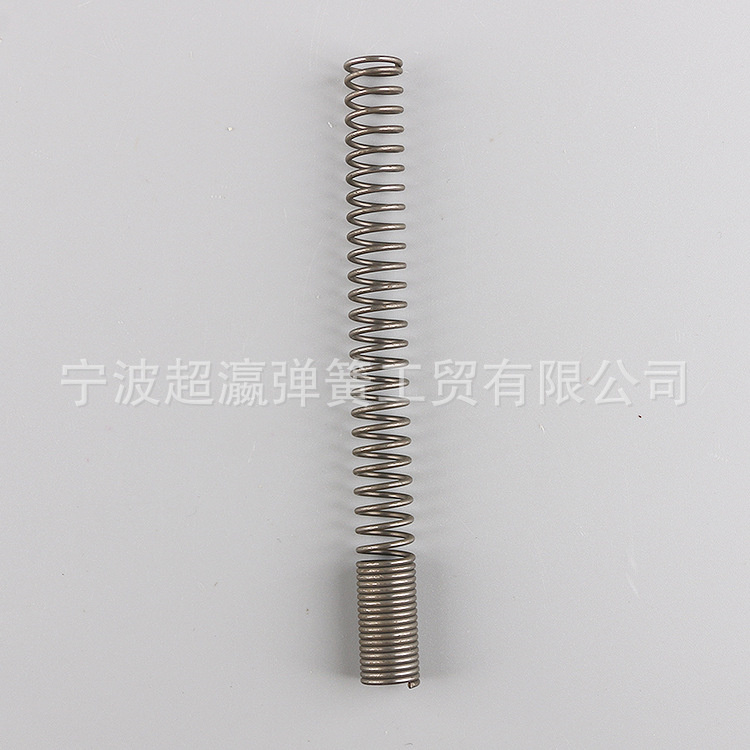
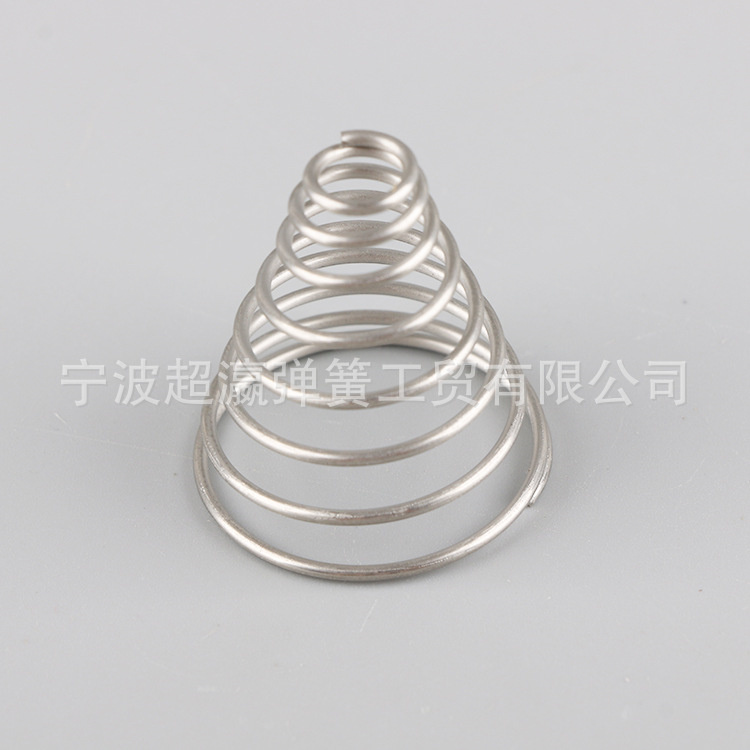
Traditional Stainless Steel Compression Spring designs usually employ Constant Pitch. However, under high compression ratio conditions, this design easily leads to a loss of support in the middle coils during compression. Introducing a Variable Pitch design can effectively change this situation:
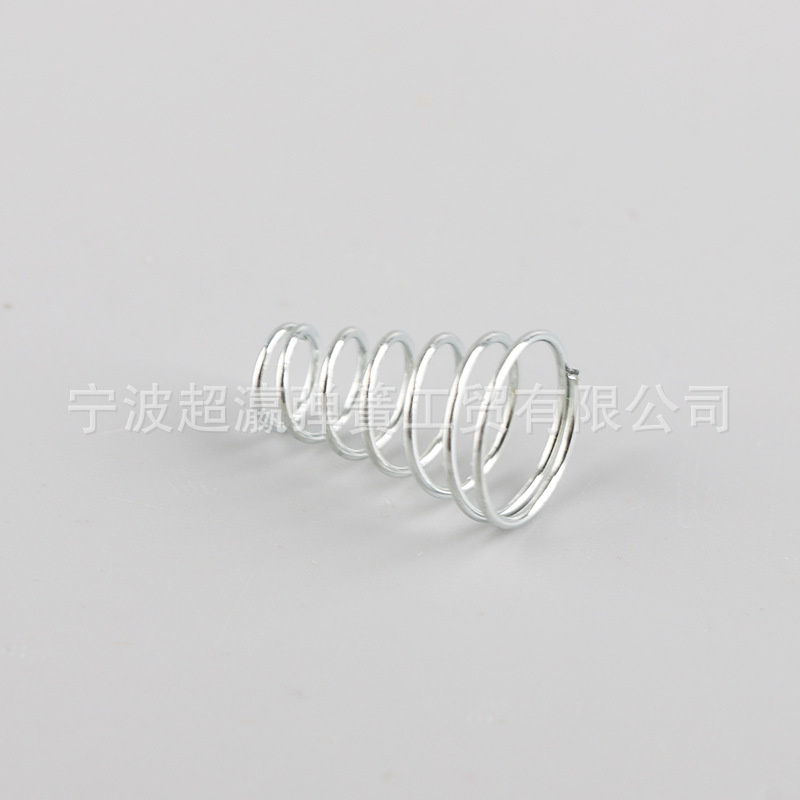
Gradient Pitch Allocation: By designing a smaller Pitch in the middle of the spring and a slightly larger pitch near the support coils at both ends, the radial stiffness of the middle section can be increased. This non-linear design ensures that the ends absorb displacement first during the initial stage of the stroke, while the middle maintains high axial alignment stability.
Contact Stress Management: Variable pitch design allows certain coils of the spring to close gradually in a planned manner during the compression process. This gradually increasing physical support provides additional lateral constraint, thereby increasing the overall Critical Buckling Load.
Changes in Pitch directly affect the force angle of the Active Coils. In high-precision applications, reducing the angle of a single Pitch (i.e., reducing the Lead Angle) allows the pressure to act more vertically on the spring wire. When the lead angle is controlled within 10 degrees, lateral force components are significantly reduced, which is the technical core of preventing Buckling.
End Parallelism and Pitch Transition: The transition of Pitch between the Dead Coils and the first Active Coil is crucial. If the pitch change at the junction is too drastic, it will lead to initial force tilting. Using precise Grinding and matching it with a progressive Pitch transition ensures that the axial force is transmitted through the centerline of the spring.
The Modulus of Elasticity (E) of stainless steel plays a decisive role in maintaining the Pitch shape. In high-frequency compression environments, the heat generated by the Stainless Steel Compression Spring may lead to material softening. Therefore, optimizing the Pitch design to reduce the stress level per coil can prevent geometric asymmetry caused by local Permanent Set, thereby eliminating the hidden danger of instability.
Stress Distribution Optimization: A reasonable Pitch design enables Shear Stress to be distributed more uniformly across the entire spring wire. Avoiding stress concentrations caused by excessively large local Pitch is key to maintaining axial verticality during long-cycle operations.
After modifying the Pitch design, the critical height must be re-verified. Engineers usually use professional calculation formulas combined with the spring's support method (such as fixed at both ends, one end free, or with a guide rod) to confirm the displacement at which the spring will buckle under the new Pitch parameters. For restricted spaces where a Guide Rod or Spring Sleeve cannot be installed, optimizing the Pitch is the only way to improve the safety factor.
Support Factor (K Factor): Different end treatments and Pitch transition methods change the support factor. By rearranging the distribution of Active Coils in space, the bending stiffness of the spring can be manually intervened, ensuring it always stays within the stable zone within the working displacement range.
Related Products
Contact us
Factory Address
No. 8, Taoyuan South Road, Wuyuqiao, Henghe Town, Cixi City, Ningbo, China
Phone
+86-188 6787 1218+86-574-62605393
QR CODE
 Wholesale Stainless Steel Coil Springs Manufacturers