English
 English
 中文简体
中文简体
 Español
 Tiếng Việt
Get in touch
English
Get in touch
Dec 15, 2025
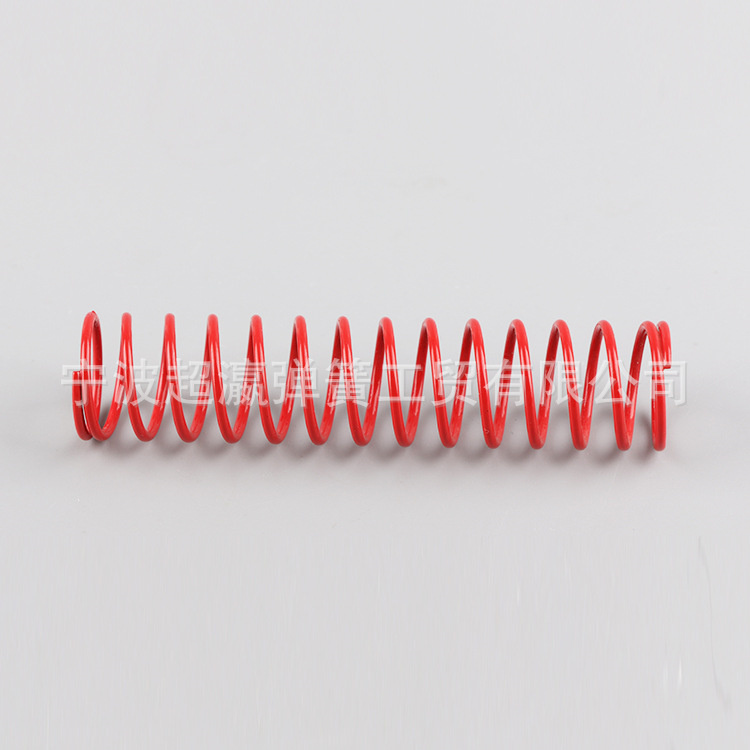
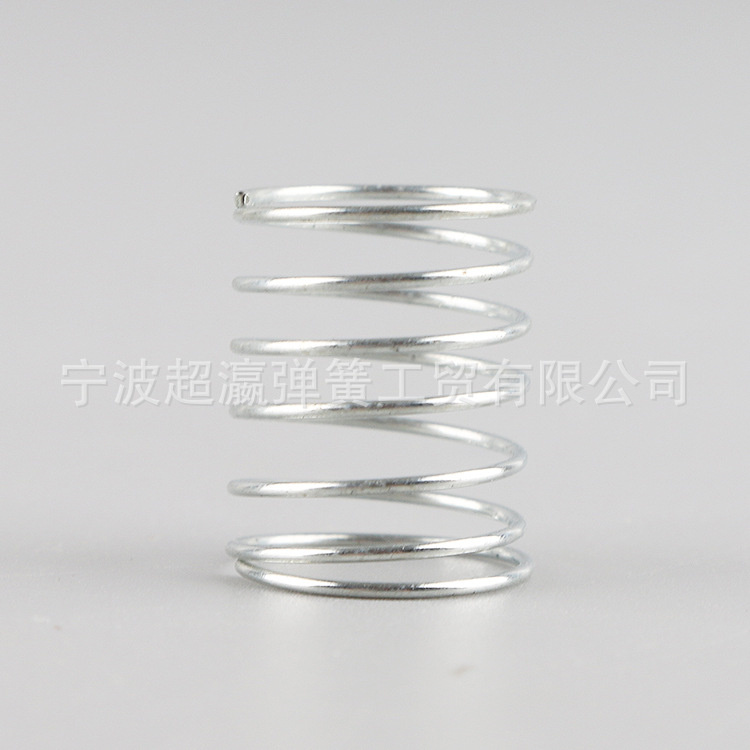
Impact inner spring ring retaining springs play a critical role in mechanical assemblies, providing axial retention and structural stability under high-frequency vibrations and impact loads. Fatigue life is a key performance indicator for these springs. Surface defects, micro-cracks, and material wear often become initiation points for fatigue failure. Implementing advanced surface treatment technologies can significantly improve fatigue resistance and extend service life.
Surface hardening is a core method for enhancing fatigue life. Processes such as carburizing, nitriding, and induction hardening create a high-hardness layer on the spring surface while maintaining a tough core. Carburizing is suitable for spring steel, allowing carbon diffusion at high temperatures to achieve surface hardness above 60 HRC. Nitriding creates a uniform hard layer at lower temperatures, offering excellent wear resistance in high-impact environments. Induction hardening provides localized hardening, strengthening contact surfaces while preserving core flexibility to prevent brittle failure.
Shot peening and roller burnishing are widely used to improve fatigue performance. Shot peening introduces a compressive stress layer on the surface through high-speed steel or ceramic shots, inhibiting crack initiation and propagation. Roller burnishing plastically deforms the surface, refining grain structure and increasing tensile strength and fatigue limit. Shot peening is ideal for complex spring cross-sections due to its uniform stress layer formation, while roller burnishing suits circular or linear sections, offering simplicity and high efficiency. Both methods enhance fatigue life without altering the chemical composition of the material.
Corrosion accelerates fatigue failure. Surface coatings and protective treatments reduce oxidation and corrosion-induced cracking. Phosphate coatings form a chemically stable layer, providing lubrication and corrosion resistance. Nickel, zinc, or chromium plating enhances surface hardness while reducing micro-crack propagation. For marine or high-humidity environments, thermal spray or PVD coatings create dense protective layers, further extending fatigue life and reliability.
Surface roughness directly impacts fatigue crack initiation. Precision polishing and stress-relief annealing effectively reduce micro-crack formation. Mirror-like finishes remove machining marks, minimizing stress concentration and increasing fatigue limit. Maintaining surface roughness (Ra) between 0.2–0.4 μm slows crack initiation and growth, improving durability under repeated impact loads.
Combining multiple surface treatments produces optimal results. A common approach includes surface hardening, followed by shot peening to introduce compressive stress, and finally applying a protective coating. This multi-layer strategy increases hardness, wear resistance, fatigue strength, and environmental adaptability. Selecting the right combination based on operating conditions maximizes the fatigue life of impact inner spring ring retaining springs.
Springs treated with advanced surface techniques show substantial improvements in fatigue performance. Cycle life can increase by 1.5 to 3 times, and failure rates under vibration and impact loads are significantly reduced. Treated springs maintain dimensional stability, resist deformation and loosening, and ensure assembly precision and safety. Standardized surface treatment processes in mass production enhance reliability and reduce maintenance costs.
Related Products
Contact us
Factory Address
No. 8, Taoyuan South Road, Wuyuqiao, Henghe Town, Cixi City, Ningbo, China
Phone
+86-188 6787 1218+86-574-62605393
QR CODE
 Wholesale Stainless Steel Coil Springs Manufacturers