English
 English
 中文简体
中文简体
 Español
 Tiếng Việt
Get in touch
English
Get in touch
Jun 01, 2026
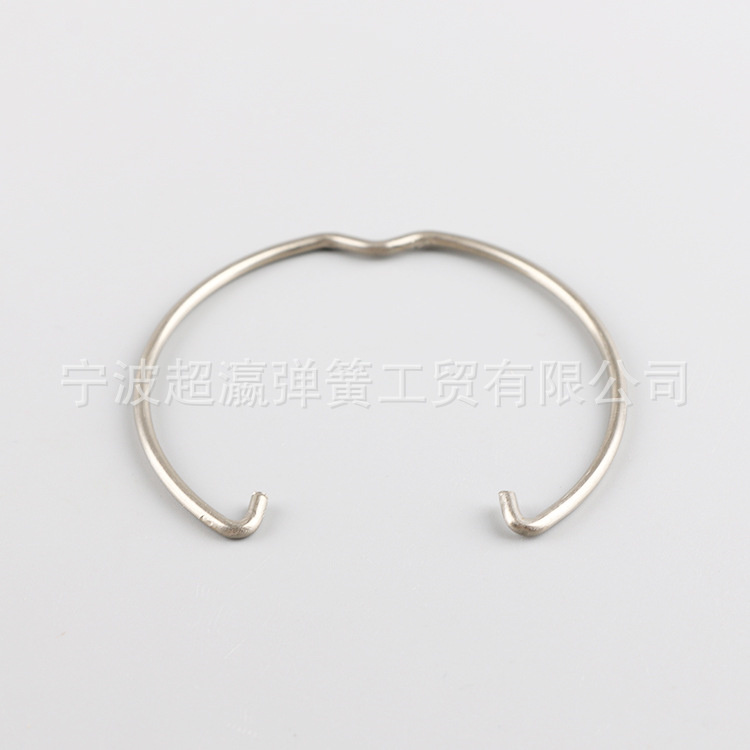
In precision mechanical transmission and positioning systems, the selection of fasteners directly impacts the operational stability and service life of equipment. Stainless steel circlips are critical axial positioning components, widely utilized in fields with stringent requirements such as aerospace, chemical equipment, food processing machinery, and medical devices. Due to their unique structural design and material performance, stainless steel internal circlips and stainless steel external circlips play an irreplaceable role in industrial assembly.
In harsh operating environments, fasteners must possess exceptional corrosion resistance. 316 stainless steel circlips are manufactured using austenitic stainless steel containing molybdenum (Mo) elements. Compared with standard 304 stainless steel, 316 material significantly enhances resistance to pitting corrosion in chloride environments and marine atmospheres by increasing chromium content and adding molybdenum.
In assemblies involving fluid control, pharmaceutical equipment, or high-salt fog environments, utilizing 316 stainless steel circlips effectively prevents stress concentration caused by rust, avoiding fracture of the fastener under long-term stress. This material ensures the physical integrity of the mechanical structure during long-cycle operations and reduces maintenance frequency, serving as a primary solution for standardized industrial assembly.
In engineering applications, depending on the mounting location, it is essential to strictly distinguish between stainless steel internal circlips and stainless steel external circlips, as they differ significantly in design logic and force modes.
Stainless steel internal circlips: These components are designed for installation within a groove in a bore, primarily limiting the axial movement of mechanical parts inside the bore. During installation, specialized pliers must be used to compress the circlip, reducing its diameter so it can be embedded into the internal groove. Its design relies on the outward tension generated by the circlip's own elastic deformation to achieve a secure lock within the bore groove.
Stainless steel external circlips: These components are installed in a groove on a shaft to limit the axial displacement of parts on the shaft. During installation, the circlip must be expanded to fit over the shaft groove. Its working principle relies on the inward gripping force of the circlip to form an effective positioning surface on the shaft surface.
To ensure safety coefficients in assembly, engineers must refer to cross-sectional thickness, load limits, and groove width requirements. The following is a reference for technical parameters of typical stainless steel circlips:
| Parameter Item | Stainless steel internal circlips (Bore type) | Stainless steel external circlips (Shaft type) |
| Base Material | 316 Stainless Steel | 316 Stainless Steel |
| Installation Direction | Radial outward tension (Locked in bore) | Radial inward gripping force (Locked on shaft) |
| Maximum Axial Load Capacity | Dependent on groove depth and circlip thickness | Dependent on shaft diameter and shear strength |
| Corrosion Resistance Grade | Extremely high (Resistance to chloride ion corrosion) | Extremely high (Resistance to chloride ion corrosion) |
| Surface Treatment | Passivation | Passivation |
To ensure stainless steel circlips perform to expected mechanical standards, operational specifications during installation are crucial. First, it is essential to ensure the width and depth of the installation groove match the specifications of the selected circlip; the base of the groove should be flat and free of burrs to prevent stress concentration points that lead to premature failure.
Secondly, use specialized installation tools for operation. Avoid using common pliers to pry directly, as this may cause permanent material deformation, leading to stress failure. Furthermore, due to the hardness characteristics of stainless steel, after installation, an axial thrust test should be performed to confirm the circlip is fully embedded in the groove and exists in a state of free expansion or contraction. For assemblies in vibrating environments, regular inspection of the mating gap is recommended to ensure the circlip maintains good axial positioning accuracy, thereby extending the service life of the entire transmission system.
Related Products
Contact us
Factory Address
No. 8, Taoyuan South Road, Wuyuqiao, Henghe Town, Cixi City, Ningbo, China
Phone
+86-188 6787 1218+86-574-62605393
QR CODE
 Wholesale Stainless Steel Coil Springs Manufacturers