English
 English
 中文简体
中文简体
 Español
 Tiếng Việt
Get in touch
English
Get in touch
Aug 17, 2026
A spring is not just a coiled piece of metal. When a passenger car hits a pothole, compression springs absorb the impact. When a trailer axle drops into the same pothole, leaf springs carry the load. And when a sectional garage door closes, torsion springs hold the tension. In every case, the same physical principle is at work: a spring stores mechanical energy under load and releases it when the load is removed.
The relationship between load and deflection was formalized in the 17th century as Hooke's law, F = -kx. Within a spring's elastic limit, the force it exerts is proportional to how far it is compressed, stretched, or twisted. Push it past that limit and the spring takes a permanent set.
Springs perform four basic jobs in mechanical systems: store energy, absorb shock, maintain contact between components, and control motion. Which job a spring is asked to do depends on its geometry, its material, and the quality of its manufacturing. Those three factors are what separate the four main types discussed below.
Engineering references do not always agree on a single list of spring types. Some sources classify by geometry, others by load direction. The most common classification — and the one used in this guide — identifies four basic types: compression springs, extension springs, torsion springs, and leaf springs. The first three are helical; the fourth is a stacked bending beam. Understand these four and you can make a sound first-pass selection and communicate clearly with any spring manufacturer.
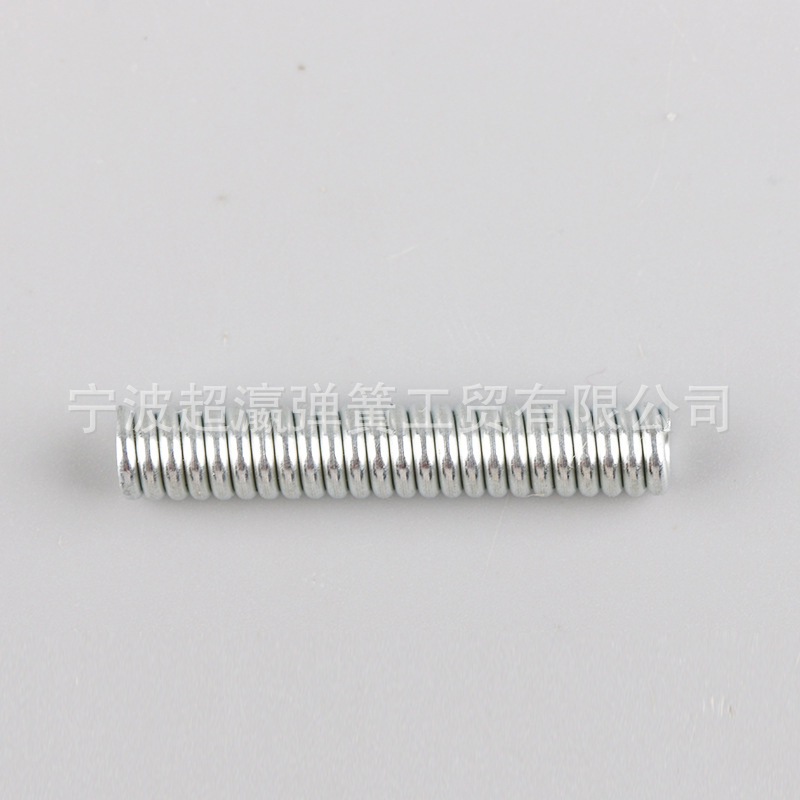
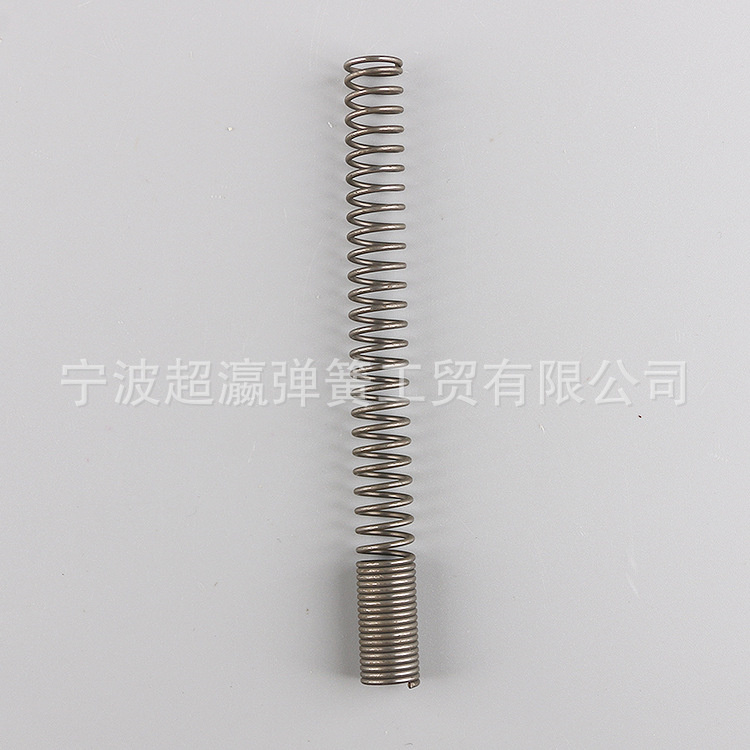
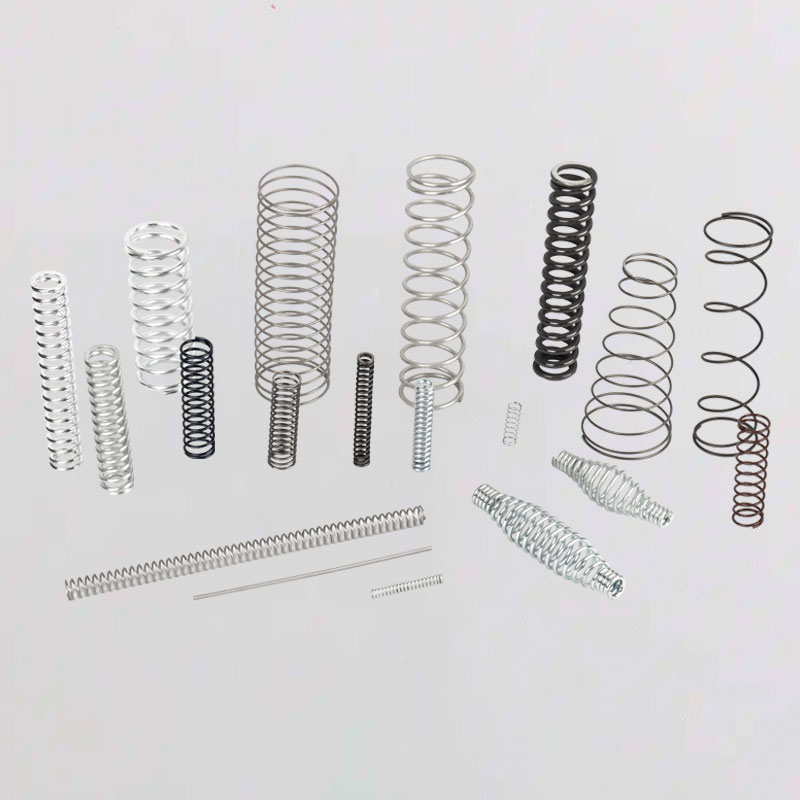
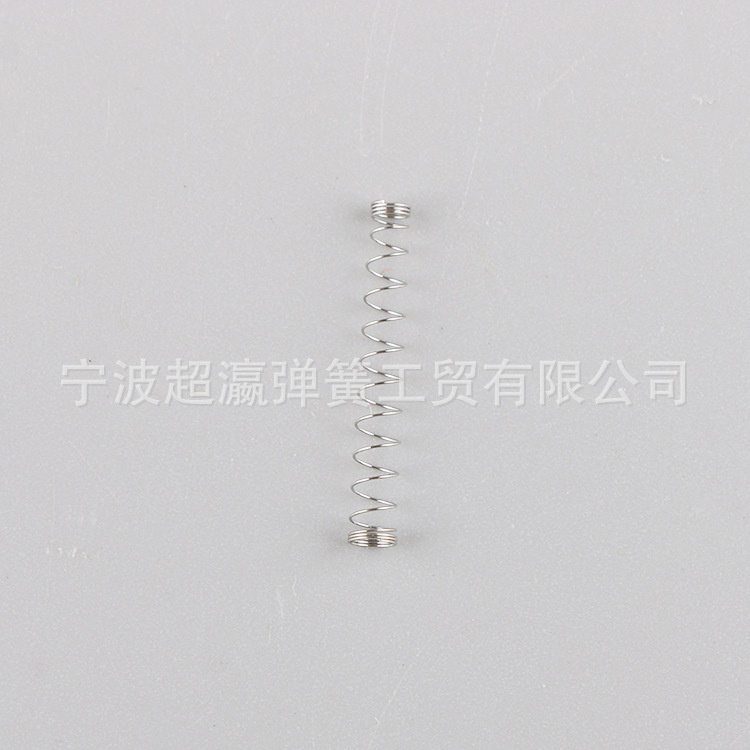
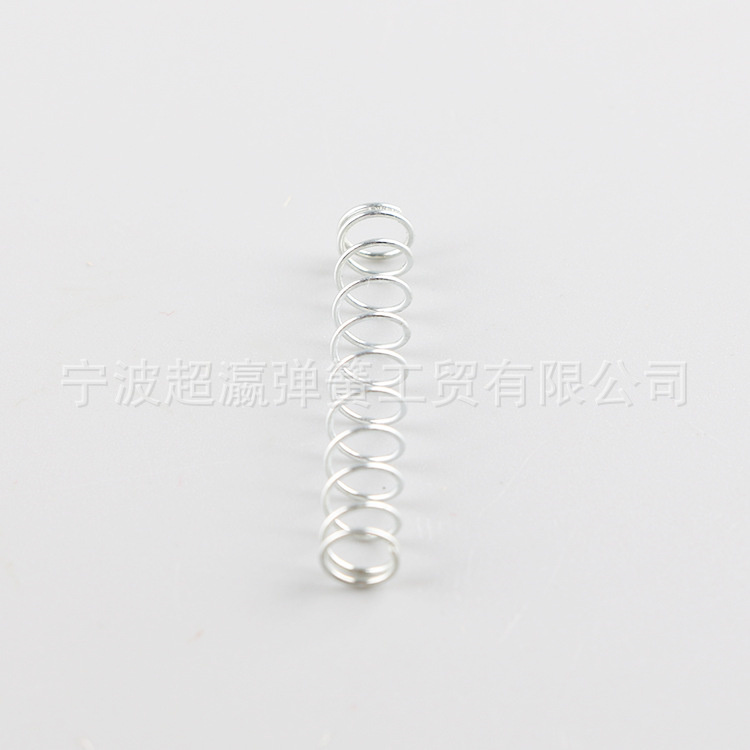
Compression springs are open-coil helical springs. Their coils are spaced so the spring can shorten under a compressive load and push back when the load is released. That simple behavior makes them the most widely used spring type in industry and consumer products.
End conditions deserve attention at the design stage. Open ends, closed ends, and closed-and-ground ends each seat differently against adjacent parts. A ground end distributes the load evenly and helps prevent buckling in short springs with a small slenderness ratio.
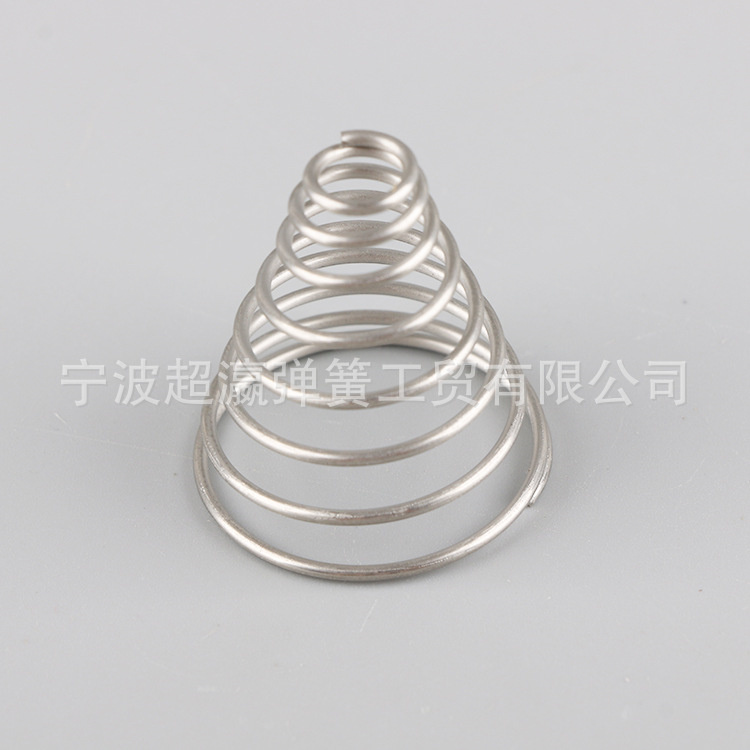
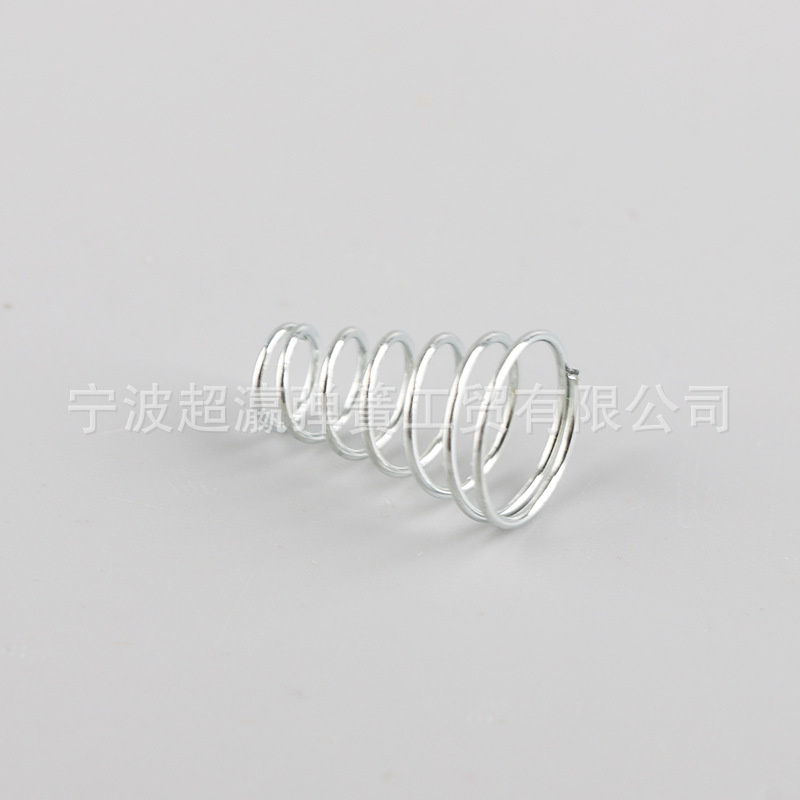
Compression springs are the shock absorbers of modern passenger-car suspension, the valve return elements of industrial machinery, and the tiny coils inside ballpoint pens, mattresses, and toys. Conical and barrel-shaped versions are special variants used when designers need a lower solid height or a progressive load curve.
In corrosive environments, stainless steel is the sensible default. Grade 304 stainless resists rust far better than oil-tempered carbon steel and keeps its spring rate stable through repeated cycles. Combined with CNC forming, a stainless compression spring delivers predictable performance part after part.
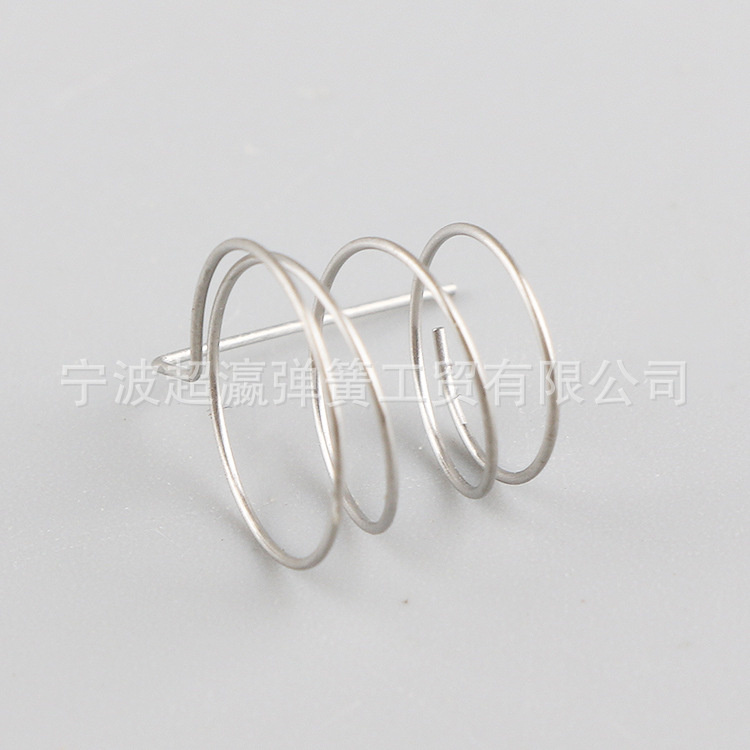
Extension springs are close-wound helical springs designed to resist pulling. Unlike compression springs, most are wound with initial tension, so the coils remain in contact until the applied load overcomes that preload. The spring then lengthens and pulls back when the load is removed.
End configuration is the first decision in any extension spring design. A plain hook, a crossover hook, or a double ring changes how the spring attaches to mating parts and where stress concentrates. For applications that need dependable attachment at both ends, stainless steel double hook tension springs are a proven option — the paired hooks distribute stress evenly during repeated cycling.
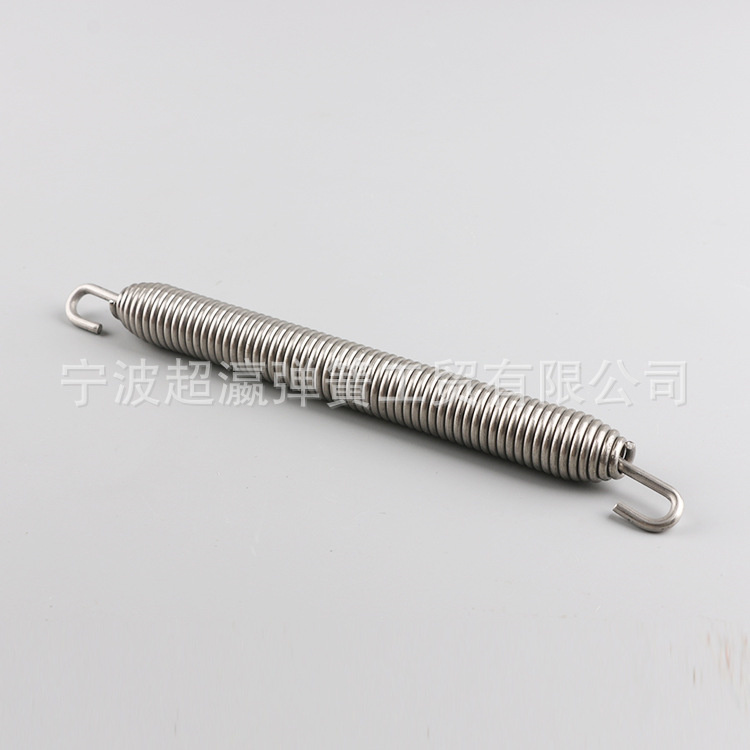 Wholesale Stainless steel double hook small tension spring Manufacturers, OEM SuNingbo Chaoying Spring Industry & Trade Co., Ltd. is China Stainless steel double hook small tension spring Manufacturers and Wholesale S...View Product →
Because the hook is almost always the weakest point, manufacturing consistency determines service life. A hook formed with a sharp internal radius or an inconsistent angle can fail long before the coil body does. CNC forming keeps hook geometry repeatable across large production runs.
Extension springs appear in trampoline frames, agricultural implements, and one-piece overhead garage doors, where they stretch along the door tracks and counterbalance the moving panel. In automotive systems, stainless steel brake pedal return springs demonstrate why material choice is critical in safety-related parts: the pedal must return quickly and predictably, cycle after cycle, and stainless protects the hook and coil from corrosion.
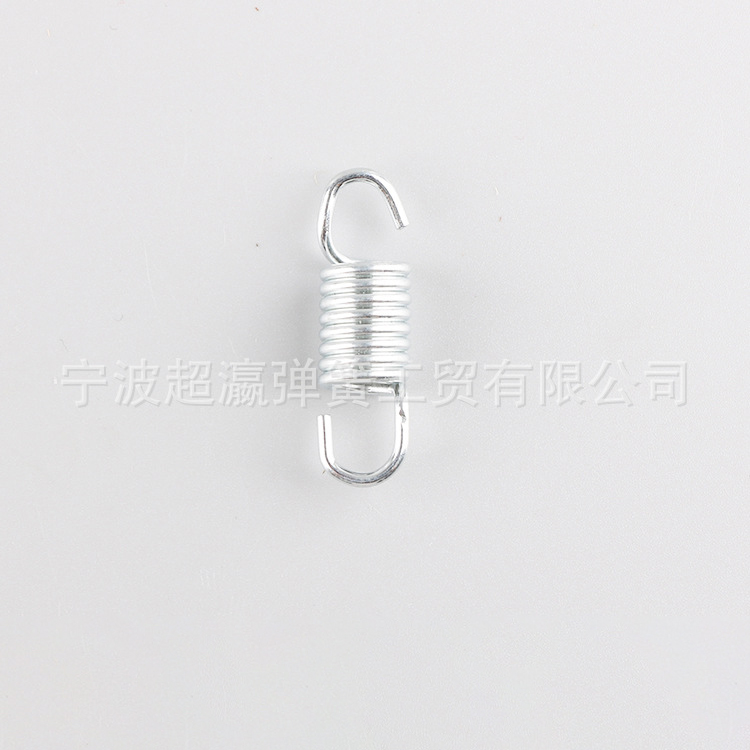 Wholesale Stainless steel short brake pedal spring Manufacturers, OEM Suppliers Ningbo Chaoying Spring Industry & Trade Co., Ltd. is China Stainless steel short brake pedal spring Manufacturers and Wholesale Stainless...View Product →
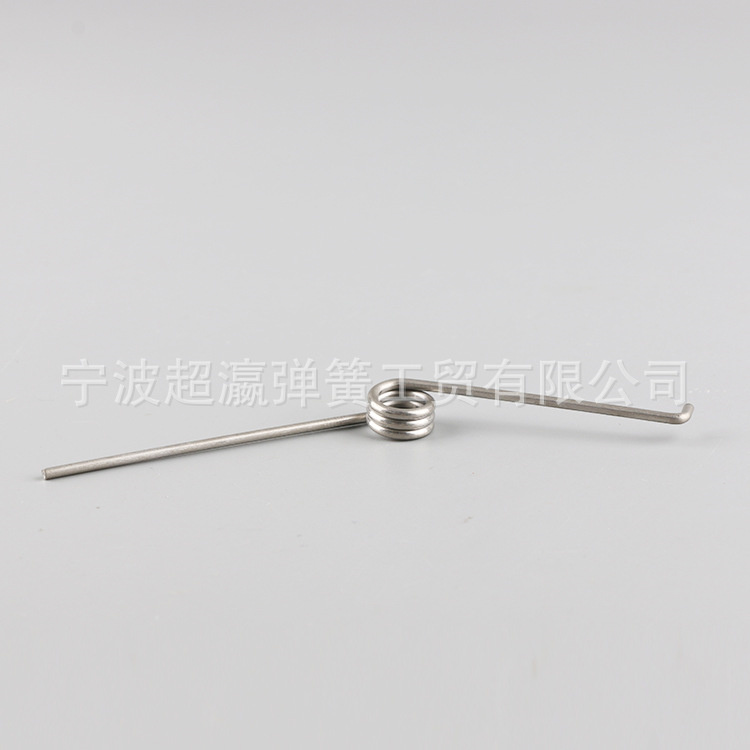
Torsion springs rotate instead of moving in a straight line. They are helical springs that carry angular torque: the two ends attach to different components, and relative rotation between those components tightens the spring and stores energy.
Wind direction is the detail most first-time buyers overlook. A left-hand or right-hand coil determines which way the torque acts once the spring is installed. Choose the wrong winding and the spring unwinds instead of resisting the load.
Sectional garage doors rely on torsion springs mounted on a shaft above the door opening. Heavy-duty garage door torsion springs must survive thousands of open-close cycles, which makes material grade and heat treatment decisive for service life. The same operating principle appears in snowboard bindings, spring clamps, chain tensioner wheels, clothespins, and door hinges.
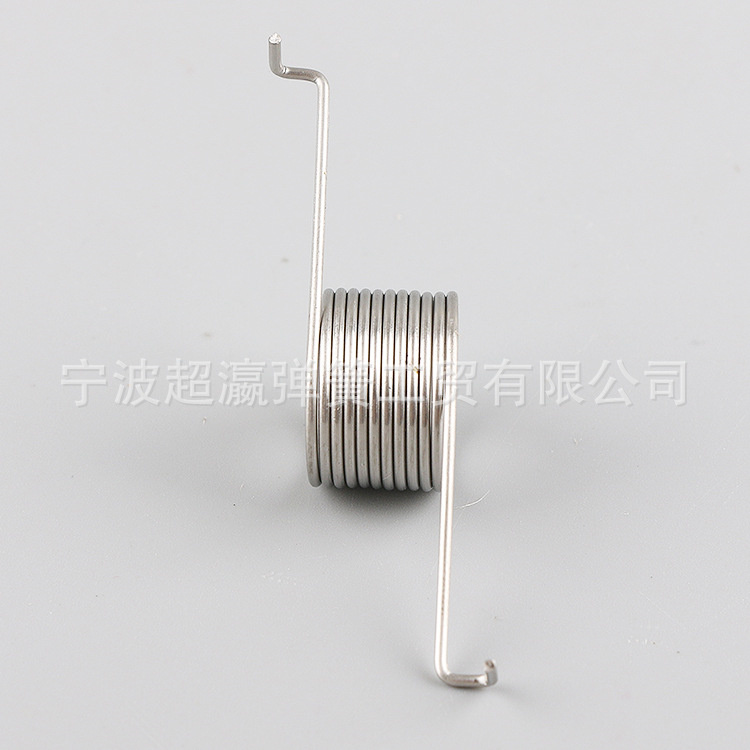 Wholesale Heavy-duty garage door tension torsion spring Manufacturers, OEM SupplNingbo Chaoying Spring Industry & Trade Co., Ltd. is China Heavy-duty garage door tension torsion spring Manufacturers and Wholesale Heav...View Product →
Two design parameters deserve attention. The free angle — the angle between the legs with no load — controls how the spring fits into the assembly. A double torsion spring, with two coils wound in opposite directions, balances the torque and minimizes side thrust in compact spaces. For a closer look at available configurations and load ratings, explore our torsional spring product range.
Leaf springs are the non-helical member of this group. A leaf spring is a stack of curved metal strips bolted together to act as a single bending beam. A load applied to the center flattens the stack and stores energy; releasing the load returns the stack to its original camber.
The inter-leaf friction provides natural damping, which is why leaf springs remain standard on trucks, trailers, and rail bogies. They suit heavy static loads and high-load, low-frequency suspension duties. Modern passenger cars, by contrast, use coil springs at all four corners.
Material selection for leaf springs is different from the other three types. High-strength alloy spring steel is the norm, because strength per unit cost matters more than corrosion resistance in under-vehicle service. Leaf springs are most often developed by suspension specialists rather than general spring manufacturers, so we treat this type as a complementary category rather than one of our product lines.
Choosing a spring type is easier than most engineers expect. Start with the direction of the force and the motion it must produce, and the field narrows immediately.
| Spring type | Load direction | Primary motion | Common failure modes |
|---|---|---|---|
| Compression | Compressive (push) | Shortens axially | Buckling, stress relaxation |
| Extension | Tensile (pull) | Lengthens axially | Hook breakage, fatigue at hook bend |
| Torsion | Rotational (torque) | Rotates around the coil axis | Leg fracture, stress relaxation |
| Leaf | Bending | Flattens under load | Fatigue cracks, inter-leaf wear |
After the load direction, check three service conditions. Operating frequency decides the fatigue strength and surface finish the spring needs. The environment — humidity, chemicals, temperature — decides whether stainless steel is worth the extra cost. Available space decides the envelope for diameter, length, and wire size. Write these conditions down before contacting a manufacturer; accurate inputs are the basis of an accurate quote.
Standard catalogs cover a large share of industrial spring needs, but many devices rely on special-shaped springs engineered for one specific product: a clip, a latch, a valve seat, or a trigger. When an off-the-shelf spring cannot fit the geometry, the load, or the assembly space, a custom spring is the right answer.
To start a custom project, define these parameters:
With that data, a manufacturer can review the design, recommend a material, and build prototypes. At Chaoying Spring, we support this workflow with ten years of industry experience, a 5,800-square-meter plant, and Japanese and Taiwanese precision CNC spring-forming machines. Customers send a drawing or a sample, and we handle material selection, forming, and surface treatment.
Two springs with identical dimensions can have completely different service lives. The difference comes from material and manufacturing quality.
Material is the first variable. Carbon steel is strong and inexpensive but rusts in humid environments, and its performance drops if the protective coating is scratched. Stainless steel in the 304 grade resists corrosion and stays dimensionally stable in food machinery, marine equipment, and outdoor installations. It also produces more consistent load performance over many cycles because the passive oxide layer protects the surface from stress concentrations.
Manufacturing is the second variable. Hand winding works for prototypes, but it introduces variation in coil pitch, diameter, and end position. CNC spring-forming machines hold tight tolerances and repeat them across thousands of pieces — the difference between a working prototype and a dependable production part.
Heat treatment and surface finishing complete the picture. Stress relieving removes forming stresses, and processes such as passivation improve corrosion resistance. When you evaluate a spring supplier, ask about their forming and finishing equipment — not just their price list.
Four basic spring types cover most of the mechanical world: compression springs push, extension springs pull, torsion springs twist, and leaf springs bend. The right type usually follows directly from the direction of the load and the motion you need.
Selection does not end with the spring type. Material determines how long the spring survives in its working environment; manufacturing quality determines how consistently it performs across a production run. Both factors can be controlled when you work with a manufacturer that forms parts in-house.
If you are starting a new design or replacing a spring that failed early, define the load, space, and environment first, then discuss the options with a spring maker. Our team at Chaoying Spring can recommend the right material and production method for your application — send us your drawing or sample and we will take it from there.
Related Products
Contact us
Factory Address
No. 8, Taoyuan South Road, Wuyuqiao, Henghe Town, Cixi City, Ningbo, China
Phone
+86-188 6787 1218+86-574-62605393
QR CODE
 Wholesale Stainless Steel Coil Springs Manufacturers