English
 English
 中文简体
中文简体
 Español
 Tiếng Việt
Get in touch
English
Get in touch
Aug 24, 2026
Springs are fundamental mechanical components that store and release energy through elastic deformation. Among the vast variety, three types dominate industrial and consumer applications: Tension Springs, Compression Springs, and Torsion Springs. While they may appear similar as helical coils, their working principles, load directions, and design criteria are distinctly different. Understanding these differences is critical for engineers, designers, and maintenance professionals to select the right spring for a given task.
This article addresses six pivotal questions that frequently arise in spring engineering: What is the purpose of a tension spring? What is the difference between a compression spring and a tension spring? What do tension springs do? Does it matter what size torsion spring you use? Does the number of coils in a spring matter? Does cutting a coil spring make it stiffer? We will dissect each query with technical depth, supported by formulas, comparative tables, and practical examples, all tailored for professionals who demand precision.
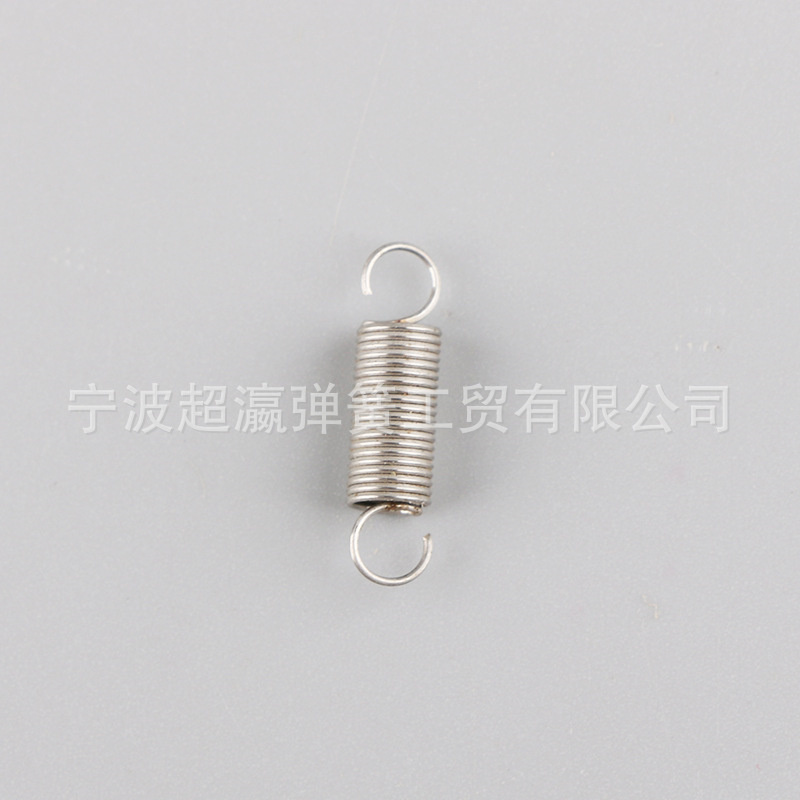
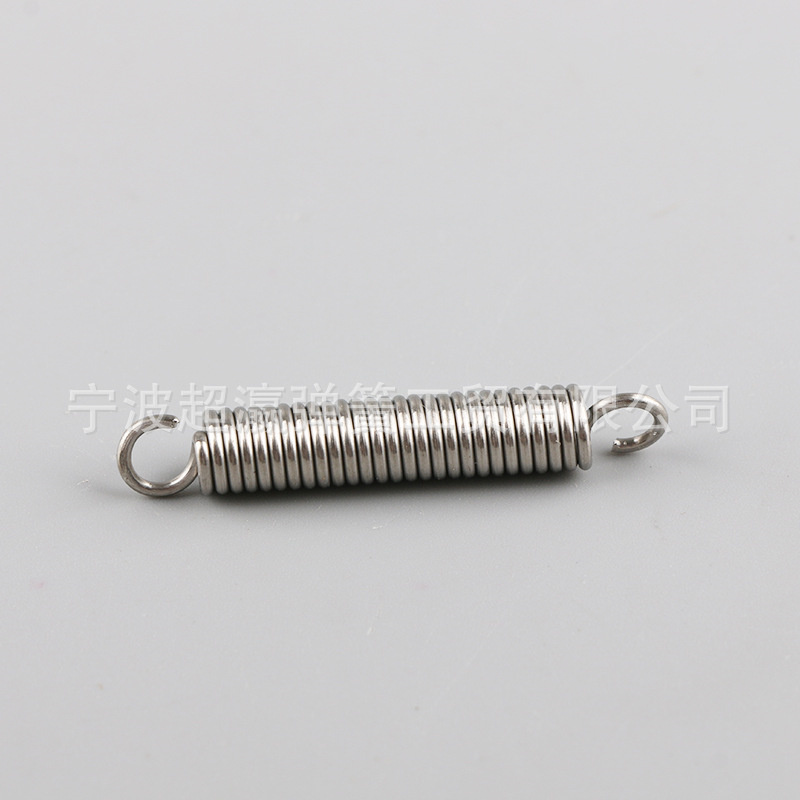
What is the purpose of a tension spring? A tension spring (also known as an extension spring) is engineered to resist axial tensile forces. Its primary purpose is to absorb and store energy when pulled apart and to return the attached components to their original position upon release of the load. In essence, a tension spring acts as a pulling mechanism, creating a restoring force that brings parts back together.
What do tension springs do? In practical terms, tension springs provide counterbalance, return, and clamping functions. They are commonly found in garage door mechanisms, where they balance the heavy door weight; in trampolines, where they provide the elastic bounce; in agricultural machinery for tensioning belts; and in medical devices for precise reset actions. The distinctive feature of a tension spring is its initial tension — a preload that keeps the coils tightly closed even at zero external deflection. This initial tension must be overcome before the spring begins to elongate linearly.
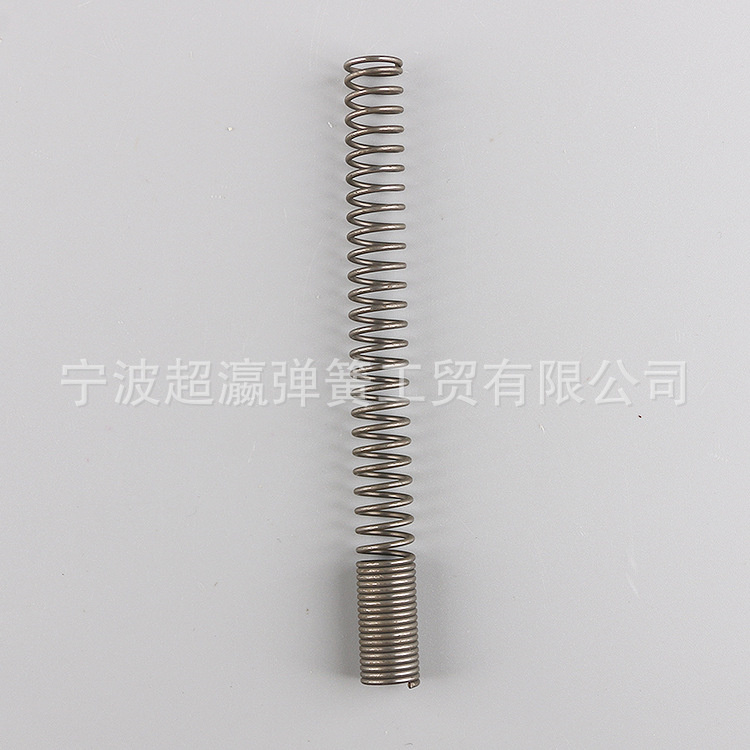
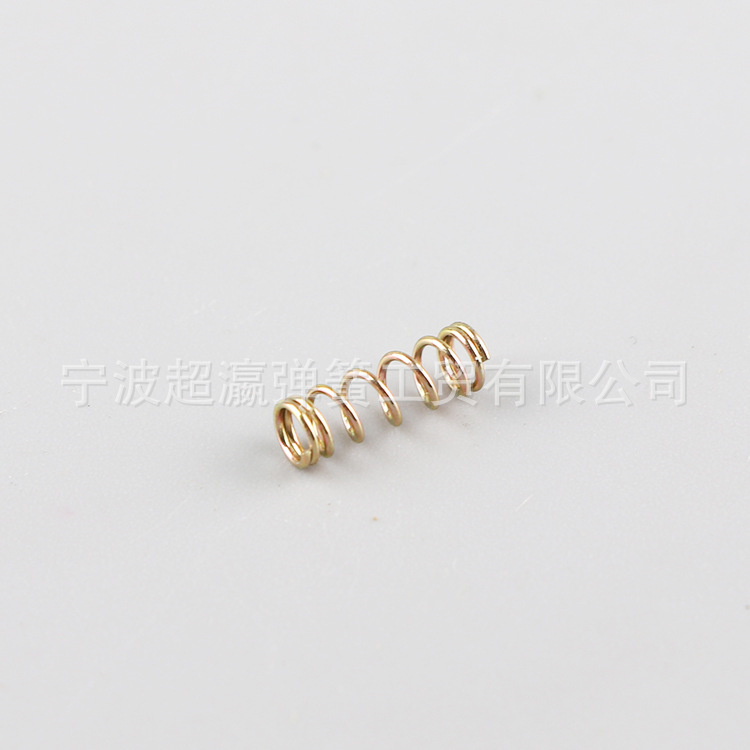
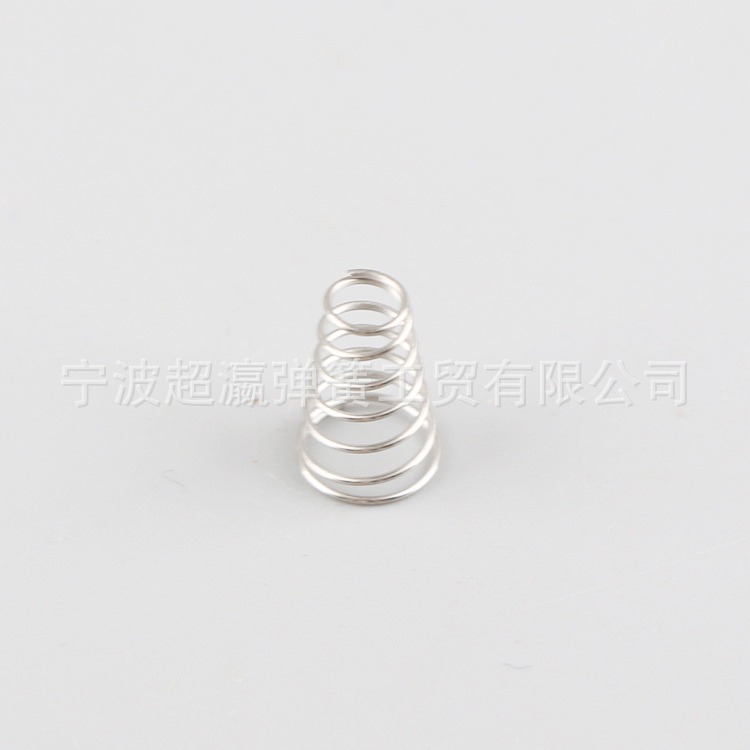
The question “What is the difference between a compression spring and a tension spring?” is fundamental. While both are helical coils, their design philosophies and operational behaviors are opposite in almost every aspect.
| Aspect | Compression Spring | Tension Spring |
|---|---|---|
| Load Direction | Resists compressive (pushing) forces | Resists tensile (pulling) forces |
| Function | Pushes components apart | Pulls components together |
| Coil Condition (free state) | Gaps between coils (open pitch) | Coils touch each other (closed pitch) |
| End Configurations | Closed, ground, or plain ends; often flat | Hooks, loops, or eyelets for attachment |
| Initial Tension | None (zero load at zero deflection) | Present (requires initial force to separate coils) |
| Typical Failures | Buckling, coil clash, stress fracture | Hook breakage, fatigue due to cyclic tension |
| Spring Rate Formula | k = (G·d⁴)/(8·D³·N) | Same formula (k = (G·d⁴)/(8·D³·N)) but with initial tension correction |
Despite using the same spring rate equation, the effective active coils differ because tension springs often have end coils that do not contribute to deflection. Moreover, the presence of initial tension means that the force-deflection curve of a tension spring does not start from zero; it has a positive intercept on the force axis. This distinction is crucial when calculating required forces in assemblies.
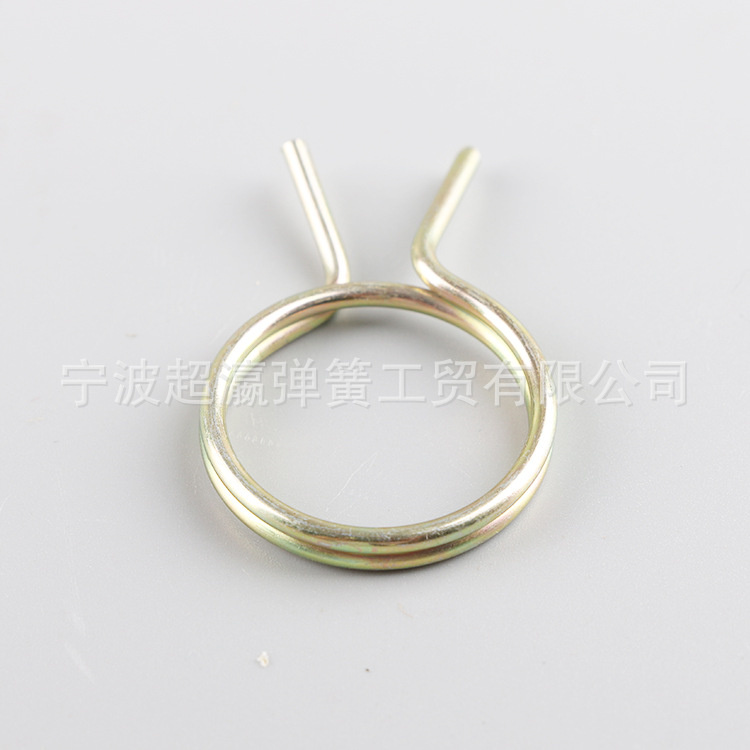
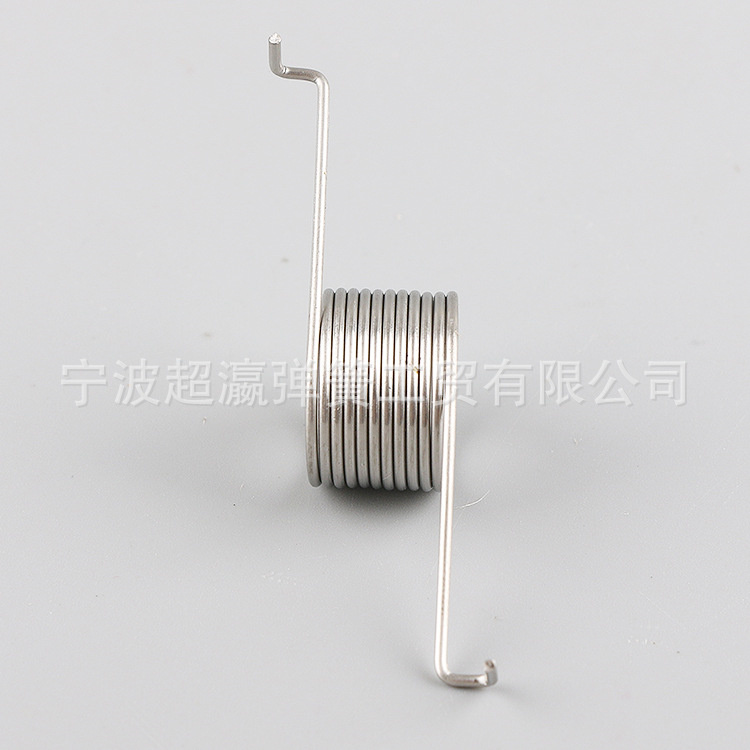
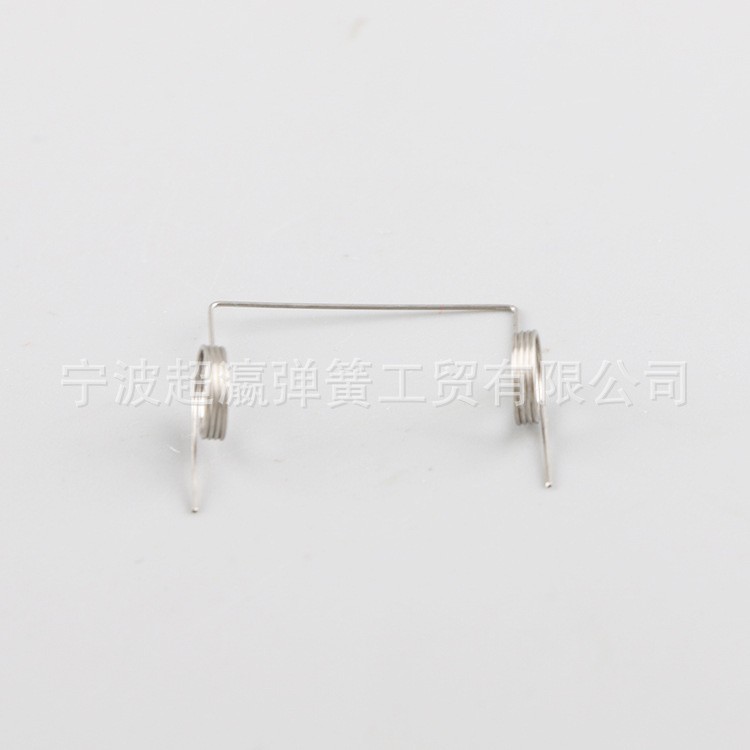
Does it matter what size torsion spring you use? Absolutely. A torsion spring operates by twisting about its axis, generating torque rather than linear force. Its dimensions — wire diameter, coil diameter, free length, and number of coils — directly determine the torque capacity, angular deflection, and stress levels.
The torque (M) produced by a torsion spring is given by: M = (E·d⁴)/(64·D·N) · θ, where E is Young's modulus, d is wire diameter, D is mean coil diameter, N is number of active coils, and θ is the angular deflection in radians. This equation reveals that:
In addition, torsion springs experience diameter changes during deflection: the body length increases (the spring grows axially) and the inner diameter decreases. If the spring is installed on a mandrel or within a housing, insufficient clearance can cause binding, leading to premature failure. Therefore, selecting the correct size is not trivial; it requires careful calculation of available space, required torque, and expected deflection angle.
Does the number of coils in a spring matter? Yes, and it is one of the most influential parameters. The number of active coils directly affects the spring rate (stiffness). For both compression and tension springs, the stiffness k = (G·d⁴)/(8·D³·N), where N is the number of active coils. This means that stiffness is inversely proportional to N — more coils result in a softer spring, fewer coils yield a stiffer spring.
To illustrate, consider two springs made of the same material, wire diameter, and mean coil diameter. Spring A has 10 active coils, Spring B has 5 active coils. The stiffness of Spring B is exactly double that of Spring A. This relationship is linear and predictable.
Stiffness normalized to 5-coil spring (100%). Inverse relationship with coil count.
For torsion springs, the number of coils also affects the available angular deflection before the spring reaches its stress limit. Additionally, the number of coils influences the free position of the legs — even a quarter-turn difference changes the arm orientation. Thus, coil count is a primary design variable that must be optimized for each application.
It is important to distinguish between total coils and active coils. In compression springs with closed ends, the end coils are often inactive (they do not deflect), so the number of active coils equals total coils minus 2 (for closed-ground ends). In tension springs, the end hooks or loops do not contribute to deflection, so active coils are those in the helical body. Misunderstanding this difference can lead to incorrect stiffness calculations.
Does cutting a coil spring make it stiffer? The unequivocal answer is yes. Cutting reduces the number of active coils, and since stiffness is inversely proportional to the number of active coils, the remaining spring becomes stiffer. The new stiffness can be calculated as: k_new = k_original × (N_original / N_new). For example, if you cut a spring from 10 active coils to 8, the stiffness increases by 25% (10/8 = 1.25).
However, cutting a spring is not without consequences. While the spring becomes stiffer, its free length decreases, reducing the available deflection range. The stress distribution may also change, and the end condition may become unstable if not properly finished. For compression springs, cutting may eliminate the closed ends, leading to potential buckling. For tension springs, cutting would destroy the hooks or loops, rendering it unusable unless new ends are formed.
As coils are cut, stiffness increases non-linearly (hyperbolic relationship).
In practice, cutting a spring may be done as a temporary adjustment, but it is rarely recommended for production designs because it alters the stress profile and may cause the spring to yield or fail at lower loads. Always consult with a spring manufacturer before modifying a standard spring.
Beyond geometry, the performance of any spring is heavily influenced by the material and manufacturing processes. For tension and compression springs, common materials include:
For torsion springs, similar materials apply, but the heat treatment and surface finish are critical to prevent stress concentration at the bends. Shot peening, for instance, can significantly increase fatigue life by inducing compressive residual stresses.
Our manufacturing facility employs CNC coiling machines, automated heat treatment furnaces, and precision grinding equipment to ensure that every spring meets stringent dimensional and mechanical specifications. We also provide design assistance to help you optimize spring parameters for your specific load and space constraints.
To better understand the practical implications, let's examine three case studies:
A residential garage door requires a tension spring that can counterbalance a 150 kg door. The spring must provide a pulling force of ~750 N at full extension. By selecting a spring with appropriate wire diameter (6 mm), mean diameter (40 mm), and 8 active coils, the calculated stiffness is 12 N/mm. With a deflection of 62.5 mm, the required force is achieved. The initial tension adds an extra 100 N to ensure the door stays closed.
An engine valve spring must withstand high temperatures and cyclic loads. A compression spring with 6 active coils, wire diameter 4.5 mm, and mean diameter 28 mm is used. The stiffness is designed to be 40 N/mm, providing a closing force of 320 N at valve lift of 8 mm. The material is chrome-silicon alloy for high fatigue strength.
A folding bicycle hinge requires a torsion spring that delivers 5 N·m torque at 90° deflection. With a wire diameter of 3 mm, mean diameter of 18 mm, and 5 active coils, the torque constant is calculated as 0.056 N·m/°, so 90° yields 5.04 N·m. The spring is made of stainless steel for weather resistance.
Understanding these nuances prevents costly design errors and extends the service life of spring mechanisms.
Selecting the optimal spring involves a systematic approach:
Our technical team offers free consultation to assist you through each step, ensuring you get a spring that meets your exact performance and durability criteria.
Linear spring rate (tension & compression): k = (G·d⁴) / (8·D³·N) (N = active coils)
Torsion spring torque: M = (E·d⁴·θ) / (64·D·N) (θ in radians)
Maximum shear stress (for round wire): τ = (8·F·D) / (π·d³) · (for compression/tension)
Maximum bending stress (for torsion): σ = (32·M·K) / (π·d³) (K is curvature correction factor)
For custom spring designs, prototyping, and production, our engineering team is ready to provide technical drawings, finite element analysis, and sample testing. We manufacture springs for industries ranging from automotive to aerospace, with rigorous quality control in accordance with ISO 9001 standards. Contact us today to discuss your project requirements.
Related Products
Contact us
Factory Address
No. 8, Taoyuan South Road, Wuyuqiao, Henghe Town, Cixi City, Ningbo, China
Phone
+86-188 6787 1218+86-574-62605393
QR CODE
 Wholesale Stainless Steel Coil Springs Manufacturers