English
 English
 中文简体
中文简体
 Español
 Tiếng Việt
Get in touch
English
Get in touch
Feb 16, 2026
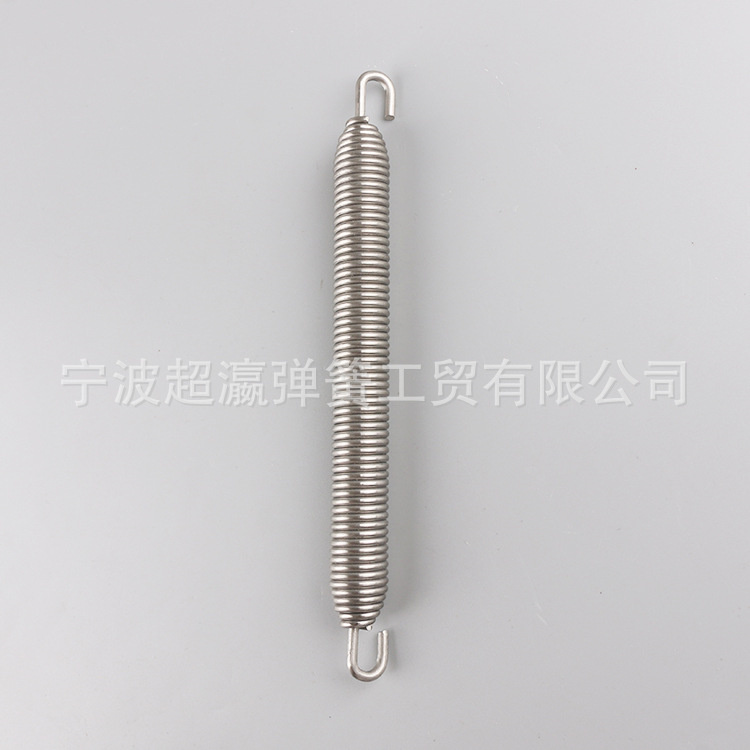
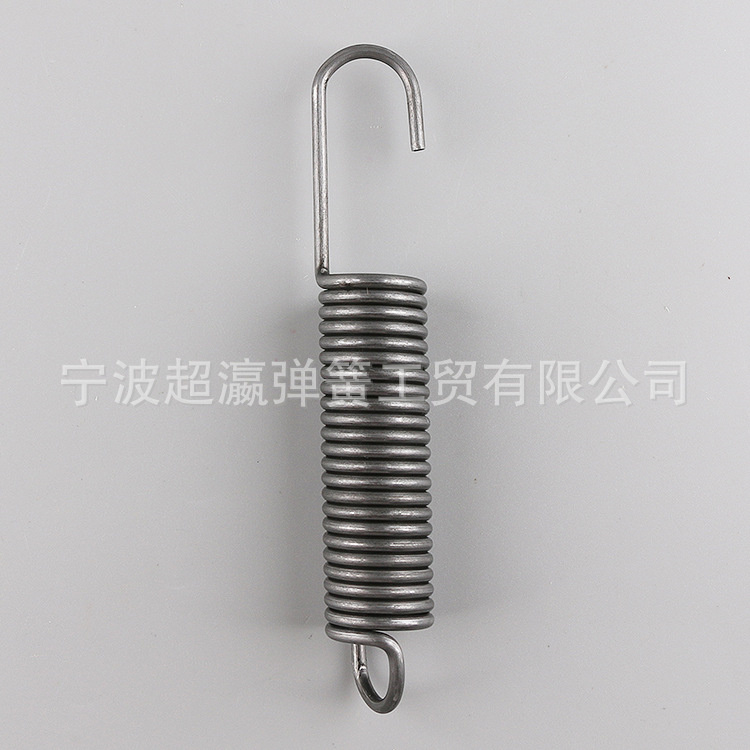
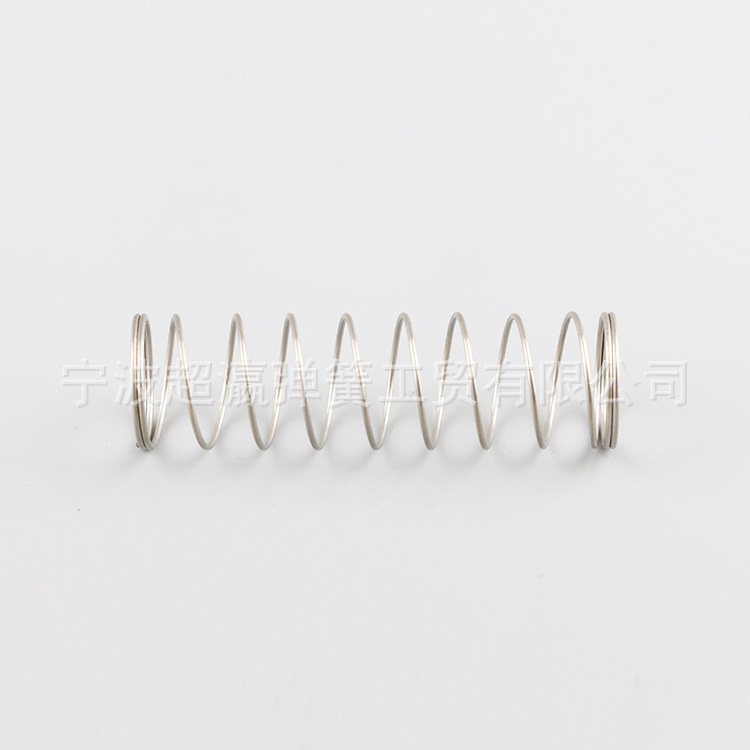
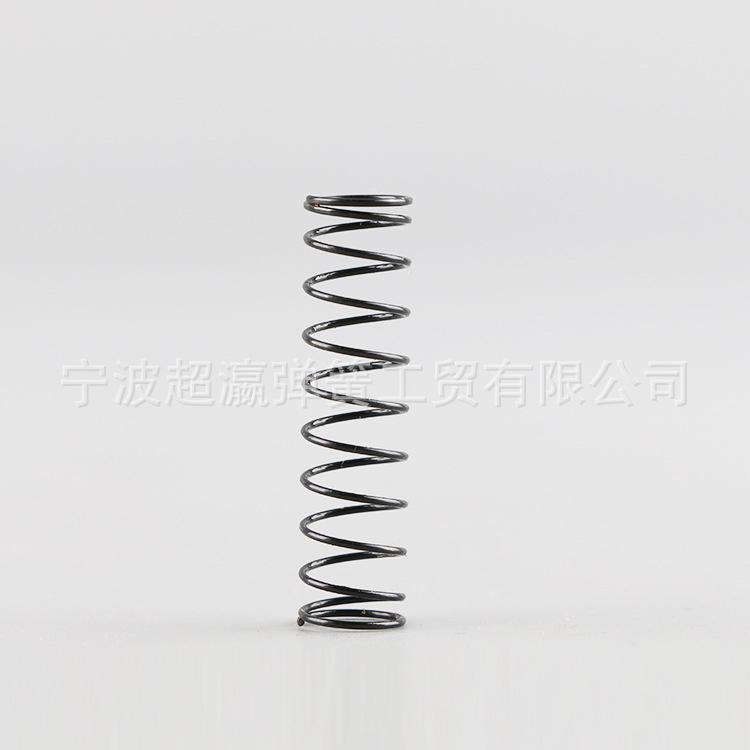
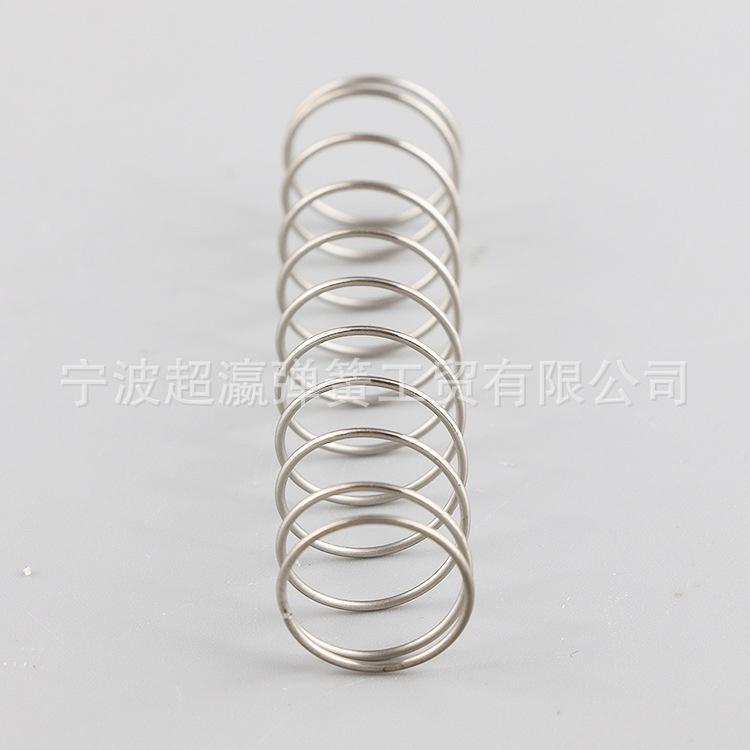
A Pullback Spring, known in engineering as an Extension Spring, is designed with one clear goal: to oppose tension and force a reset. Unlike compression springs, a Pullback Spring is typically wound so tightly that its coils touch when at rest.
Initial Tension: This is a unique parameter of the Pullback Spring. During manufacturing, the wire is wrapped so tightly that it creates a built-in internal force holding the coils together. This means you must apply a force greater than this preset value before the Pullback Spring even begins to extend.
Structural Features: To achieve the "pullback" function, these springs are usually equipped with hooks or loops at both ends to connect to two moving components.
| Feature | Pullback Spring | Compression Spring |
| Force Direction | Tensile Force (Pulling) | Compressive Force (Pushing) |
| Initial State | Coils tightly closed | Coils have gaps (pitch) |
| Functional Goal | Pull components together | Push components apart |
| Failure Mode | Permanent elongation | Buckling or bottoming out |
When an external force acts on a Pullback Spring, it goes through three stages:
1. Static Phase: Force is less than initial tension; the spring stays closed.
2. Linear Extension: Force exceeds initial tension; the spring stretches according to physical laws, storing energy.
3. Return Phase: Once the force is removed, stored energy drives the spring to contract, pulling components back to their original balance.
The "bounce back" of a Pullback Spring is actually the collective behavior of trillions of atoms reacting to displacement.
Every Pullback Spring has a Spring Rate (k), which determines the force generated per unit of extension:
F = k * Δx
F: Pullback force.
k: Spring constant (N/mm).
Δx: Extension displacement.
The Pullback Spring creates a force directly proportional to how far it is stretched. The further you pull, the stronger it snaps back.
Why does a Pullback Spring remember its shape? It depends on Young's Modulus. Metal atoms are arranged in a stable grid. When you stretch the Pullback Spring, you force atoms apart. The electromagnetic attraction between them acts like invisible "micro-springs" that pull the atoms back to their original positions the moment you let go.
| Material | Elastic Modulus (GPa) | Fatigue Strength | Typical Use |
| Carbon Spring Steel | 206 | Extremely High | Heavy machinery |
| Stainless Steel (302) | 193 | Medium | Medical/Food equipment |
| Music Wire | 210 | Highest | Precision instruments |
| Phosphor Bronze | 110 | Lower | Electrical contacts |
A Pullback Spring acts as a mechanical battery, storing energy through physical deformation.
When pulling a Pullback Spring, energy moves through these stages:
1. Input: Your pulling work is transferred to the spring.
2. Storage: Energy is locked into the potential energy of displaced molecules.
3. Release: Elastic Potential Energy converts back to kinetic energy instantly.
The energy stored in a Pullback Spring follows this rule:
U = 0.5 * k * (Δx)^2
Because displacement is squared, stretching a Pullback Spring twice as far results in four times the stored energy.
| Indicator | Steel Pullback Spring | Rubber Cord |
| Energy Return | 95% - 98% | 70% - 85% |
| Release Speed | Extremely Fast | Slow |
| Heat Loss | Extremely Low | High |
Even a high-quality Pullback Spring has a breaking point.
1. Elastic Region: The Pullback Spring returns perfectly to its original length.
2. Yield Point: The limit of the material's endurance.
3. Plastic Region: The Pullback Spring becomes permanently elongated and loses its ability to return.
Repeated use of a Pullback Spring causes Fatigue (microscopic cracks). In high heat, Creep occurs, where the Pullback Spring slowly loses its tension and stays stretched permanently.
| Material | Tensile Strength (MPa) | Max Operating Temp |
| Music Wire | 1600 - 3000 | 120°C |
| Stainless Steel | 1300 - 1900 | 280°C |
The Pullback Spring is essential for controlled tension and automatic resets:
Automatic Doors: A Pullback Spring pulls the door closed after you walk through.
Garage Systems: Large springs offset the weight of the door.
Medical Tools: Tiny Pullback Springs ensure surgical clamps reset the moment they are released.
| Application | Required Force (N) | Expected Cycles |
| Office Chair Tilt | 300 - 800 | 100,000+ |
| Conveyor Tension | 5000+ | 1,000,000+ |
| Electronic Key | 0.5 - 5 | 500,000+ |
Why does a Pullback Spring feel harder to pull the further it goes?
According to Hooke's Law, the force is proportional to extension. The more you stretch the Pullback Spring, the more those internal "micro-springs" pull back.
If a Pullback Spring breaks, was it low quality?
Not necessarily. It is often caused by fatigue from millions of cycles or overloading beyond the elastic limit.
Are a Pullback Spring and an extension spring the same?
Yes. Pullback Spring is a functional name emphasizing its job to pull objects back to a starting point.
Does temperature affect the bounce back?
Yes. Extreme heat reduces the stiffness of the Pullback Spring, while extreme cold can make the metal brittle.
Related Products
Contact us
Factory Address
No. 8, Taoyuan South Road, Wuyuqiao, Henghe Town, Cixi City, Ningbo, China
Phone
+86-188 6787 1218+86-574-62605393
QR CODE
 Wholesale Stainless Steel Coil Springs Manufacturers