English
 English
 中文简体
 Español
 Tiếng Việt
Get in touch
English
Get in touch
Oct 26, 2026
Torsion springs and extension springs are both coil springs, but they operate in entirely different mechanical planes. A torsion spring produces rotational torque when twisted around its axis, while an extension spring absorbs axial pull along its length. That single difference drives every other design decision: wire diameter, coil tightness, end hooks, material grade, and even system safety.
If you are specifying a spring for a new product, replacing a failed component, or evaluating a custom manufacturing partner, you need to understand these differences before talking about price or lead time. This article compares both spring families from design, performance, manufacturing, and practical procurement perspectives.
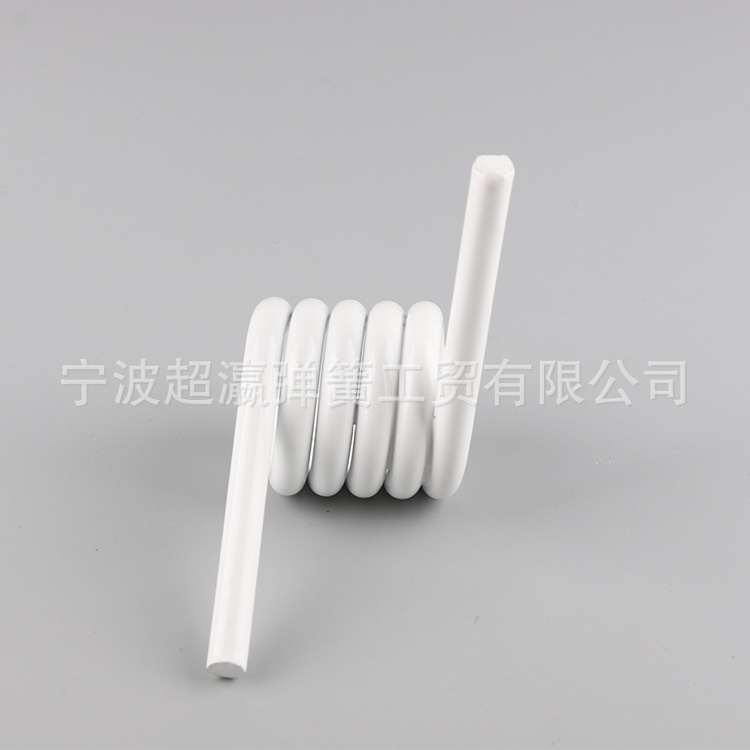
A torsion spring is designed to resist rotational (angular) force. The spring body is wound with adjacent coils that are usually close together. Each end of the spring has a straight leg, a hinge, or a specially shaped arm that allows torque to be applied. When the ends are rotated relative to each other, the spring stores energy in the twisting of the wire itself.
The relationship between torque and angular displacement is expressed as:
M = k × θ
Where M is torque, k is torsional spring rate, and θ is the angular deflection in radians or degrees. A simple example is a garage door torsion spring: the spring is mounted on a shaft, and when the door is lowered, the cables wind the shaft and twist the spring. When the door needs to be lifted, the stored torque helps pull the door up.
In production, torsion springs can be single-bodied or double-bodied. Double torsion springs consist of two separate coil sections joined by a common bend, which allows more balanced torque and reduces off-axis loading. You can see real examples in our guide to torsion springs and their working principles.
An extension spring is designed to absorb and store axial tensile energy. Opposite ends of the spring are pulled apart, and the spring contracts back when the pulling force is removed. Most extension springs have hooks, loops, or inserts at both ends.
Unlike a torsion spring, which works in rotation, an extension spring works in a straight line. The force required to elongate the spring follows:
F = k × x + F0
Where F is pull force, k is extension spring rate, x is extension distance, and F0 is initial tension. Initial tension is the force needed to start separating the coils. This value is important in applications such as brake pedal return springs and battery plate springs, where immediate force is required with minimal empty travel.
Because the coils are often wound with no clearance between them, extension springs can be compact at rest. But the hooks and loops are a common failure point, so proper end design and material selection are critical.
The table below summarizes the core technical and practical contrasts between torsion springs and extension springs.
| Parameter | Torsion Spring | Extension Spring |
|---|---|---|
| Loading type | Torque (rotational force) | Tension (axial pull) |
| Deflection | Angular deflection (degrees) | Linear extension (mm or inches) |
| Spring rate | Torque per angle (N·mm/deg) | Force per distance (N/mm) |
| End configurations | Straight legs, hinge ends, double torsion arms | Full loops, extended hooks, cross-center hooks, side hooks |
| Initial tension | Generally not applicable | Often present and designable |
| Typical failure mode | Leg bending, stress concentration at leg-to-coil transition, fatigue fracture | Hook opening or hook breakage, coil fatigue under repeated extension |
| Space efficiency | Can be mounted around a shaft, saving axial space | Needs clearance to stretch; overall length changes under load |
| Fatigue requirements | High cycle, high precision applications often require shot peening | Hooks must be designed carefully to avoid premature cracking |
The load-deflection behavior of both spring types is usually linear within the elastic range, but they operate in different coordinates. For an extension spring, the force rises linearly with displacement. A torsion spring also produces a linear relationship between torque and angular displacement, but the physical result is rotation, not translation.
The following chart illustrates the conceptual difference in output: a torsion spring converts angular displacement into torque, while an extension spring converts linear displacement into force.
This difference affects how engineers calculate the spring in an assembly. For a torsion spring, the moment arm length determines the equivalent force at a specific radius. For an extension spring, the spring rate is directly compared with the weight or resistance it must overcome.
End design is one of the most underrated factors in spring performance. A broken hook puts an entire machine out of service, so manufacturers must control bend radius and residual stress at the hooks. At our facility, we inspect every hook transition to prevent micro-cracks that develop during forming.
Material choice affects both types of springs, but in different ways.
| Material | Torsion Spring Performance | Extension Spring Performance |
|---|---|---|
| 304 stainless steel | Good corrosion resistance, moderate strength, not magnetic in annealed state | Excellent for outdoor and food-contact uses; hook forming requires careful work hardening |
| 316 stainless steel | Higher chloride resistance, better for marine or chemical environments | Preferred for saltwater exposure, retains toughness at low temperature |
| Music wire (carbon steel) | High strength and tight tolerance, but needs protective coating | Common in high-cycle tension applications, cost-effective |
| Alloy spring steel | Good fatigue resistance, often used in automotive and heavy machinery | Suitable for large extension springs with heavy loads |
Heat treatment matters as much as chemistry. Torsion springs benefit from low-temperature stress relieving after forming, which helps prevent leg distortion during first loading. Extension springs with hooks need controlled tempering so the hooks remain ductile rather than brittle.
Precision CNC spring machines allow us to hold wire diameter tolerances to ±0.01 mm and coil diameter tolerances to the customer’s specified standard. When a spring is destined for high-speed cycling, additional surface treatments such as shot peening or passivation can significantly extend fatigue life.
Both spring types appear in countless industrial assemblies. Understanding the typical use cases helps when you are deciding which spring to specify.
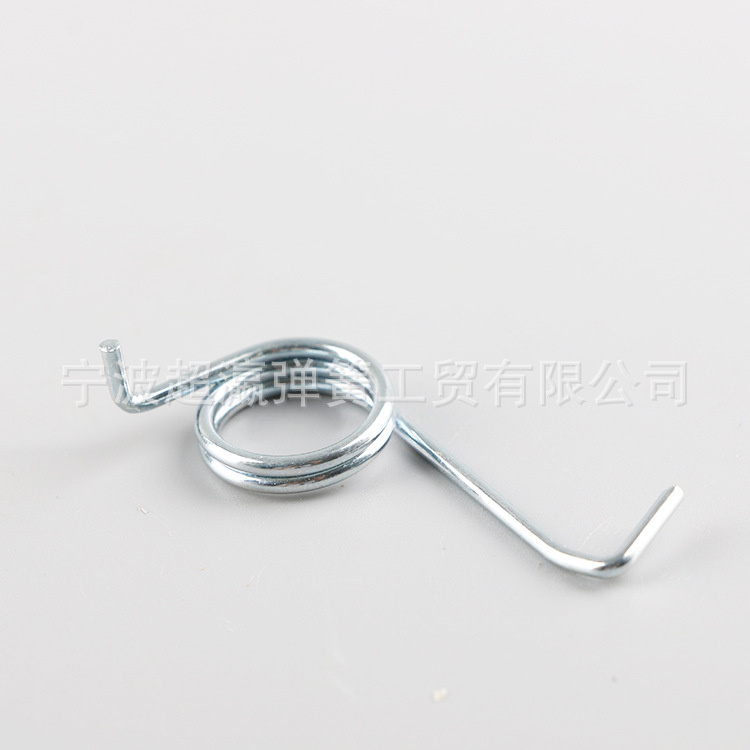
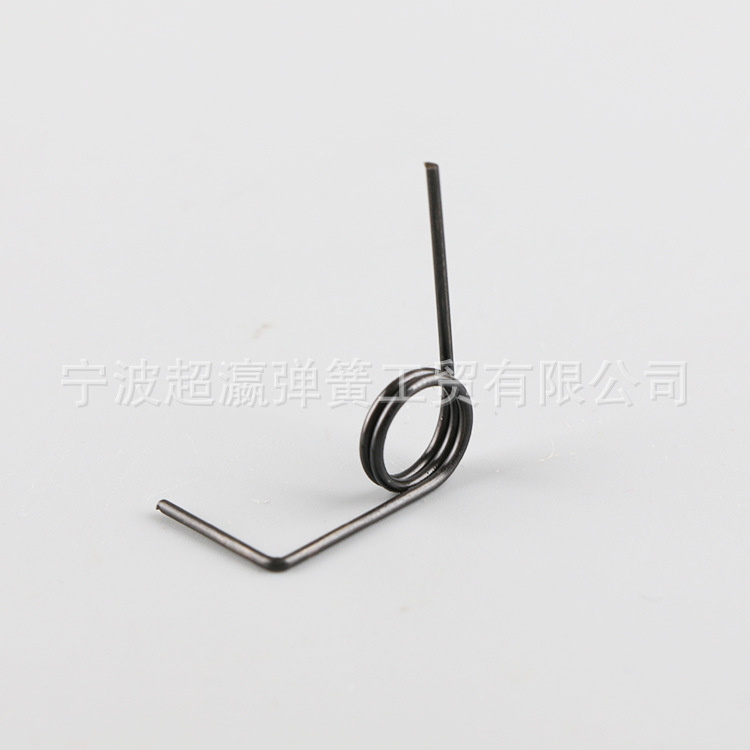
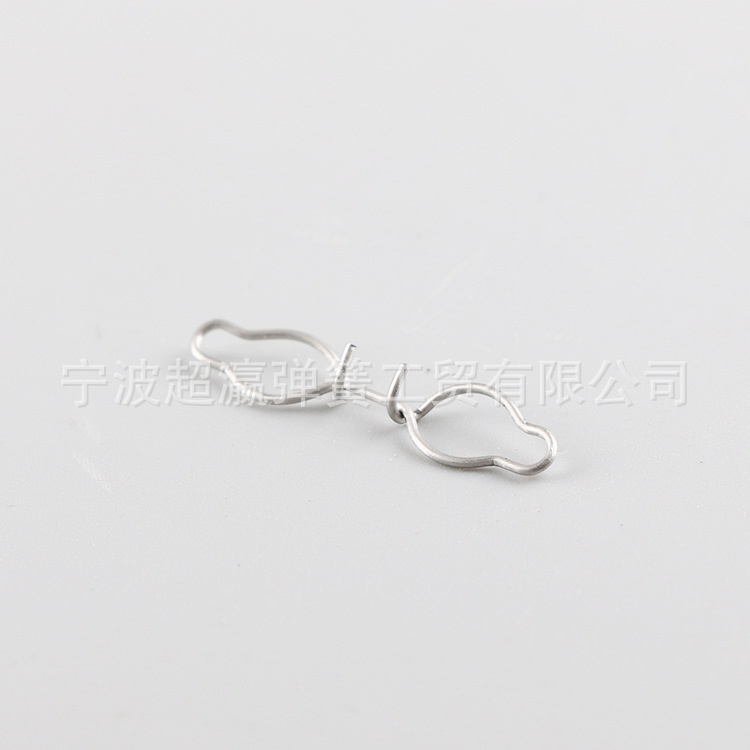
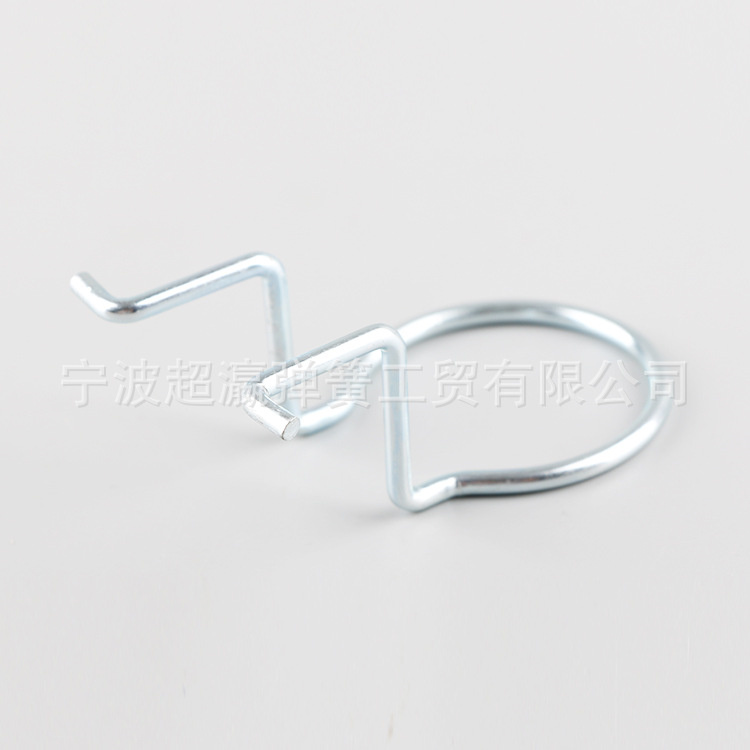 Dual Torsion Tension Special-Shaped Torsion Spring for Custom ApplicationsThis non-standard torsion spring handles high torque and tension loads, making it ideal when standard springs can't fit your custom shape requirements.View Product →
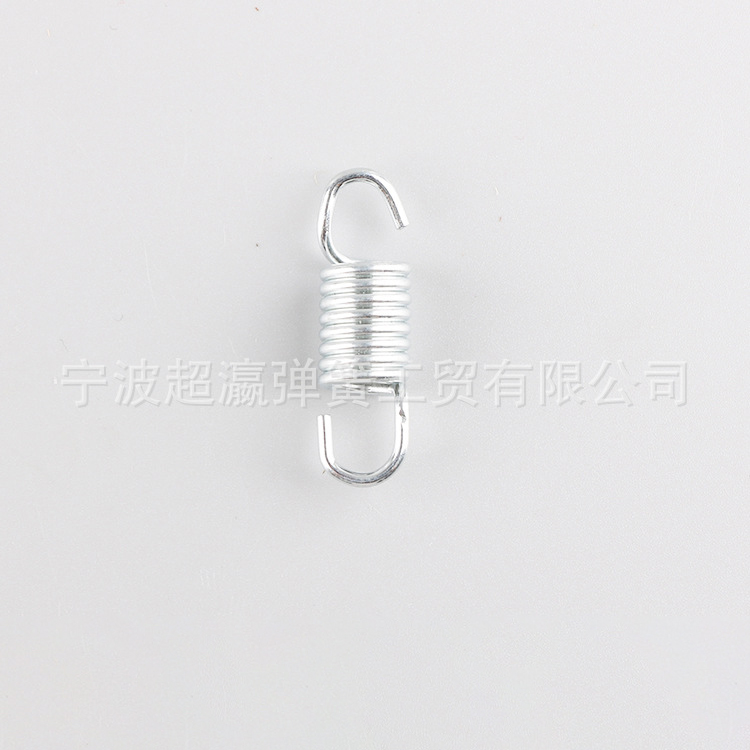
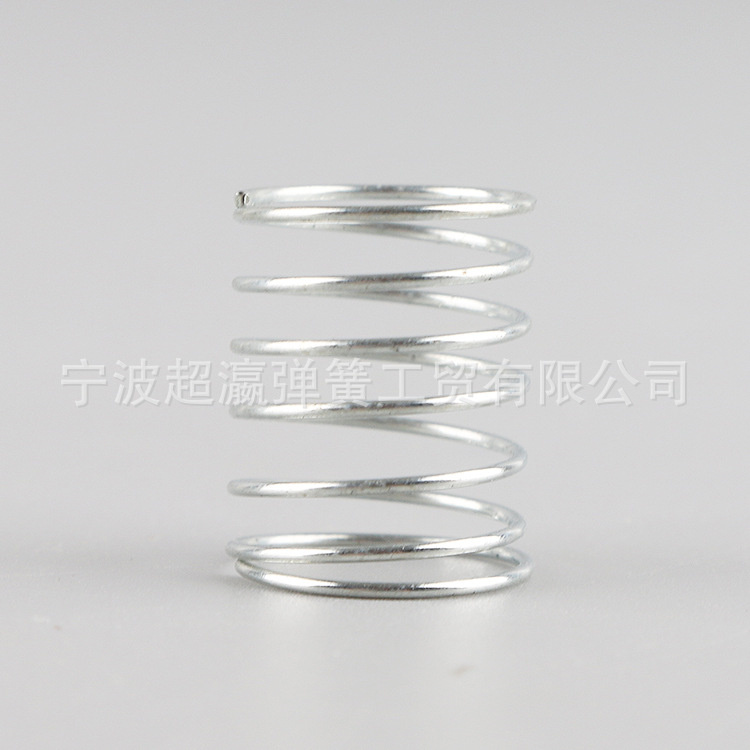
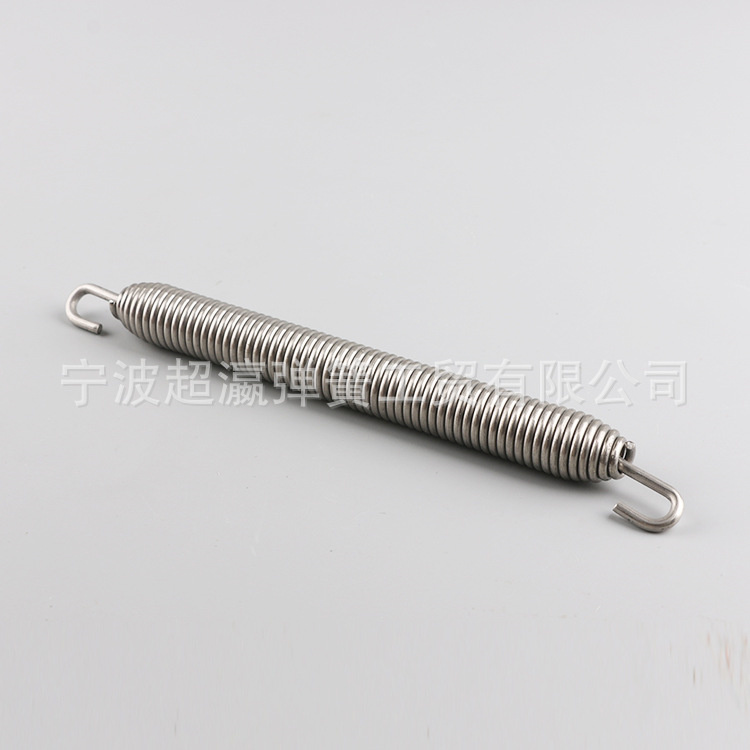 Stainless Steel Double Hook Small Tension Spring for Compact AssembliesDesigned for compact, high-strength tension needs, this double-hook spring ensures stable connections in electronics and medical equipment applications.View Product →
For custom shapes that fall outside standard torsion or extension classification, we often recommend a mixed configuration such as a tension spring with an offset hook or a torsion spring with an integrated lever arm. This is where a manufacturer’s experience with non-standard springs becomes valuable.
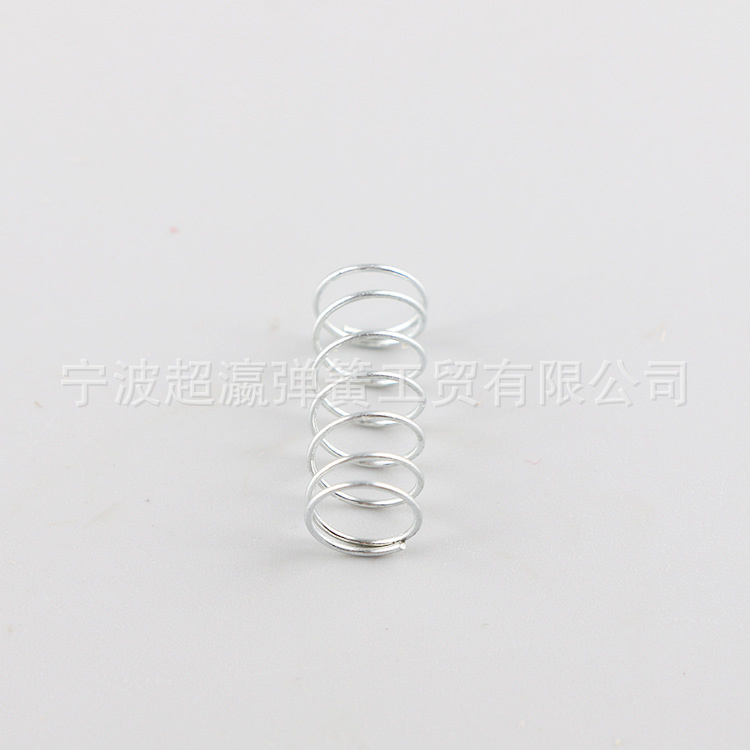
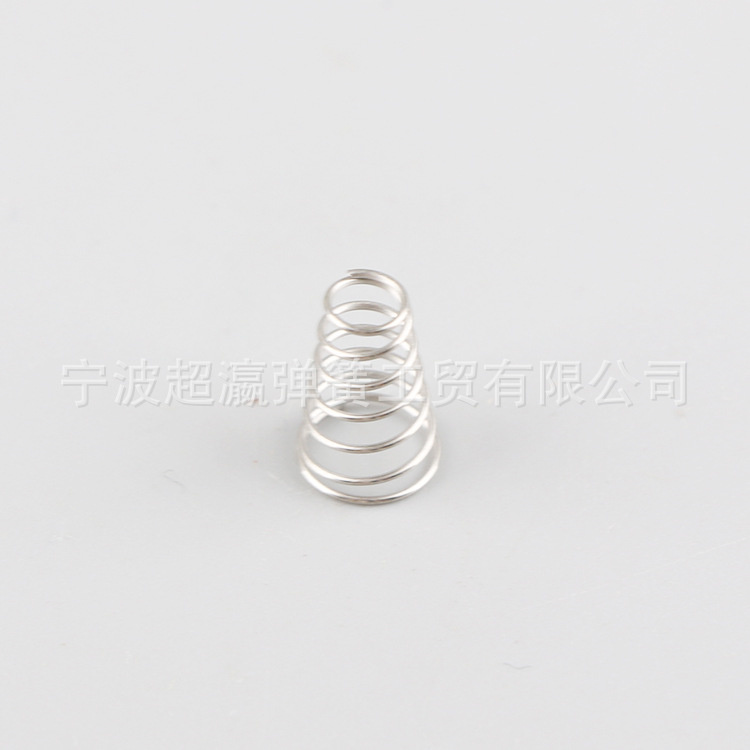
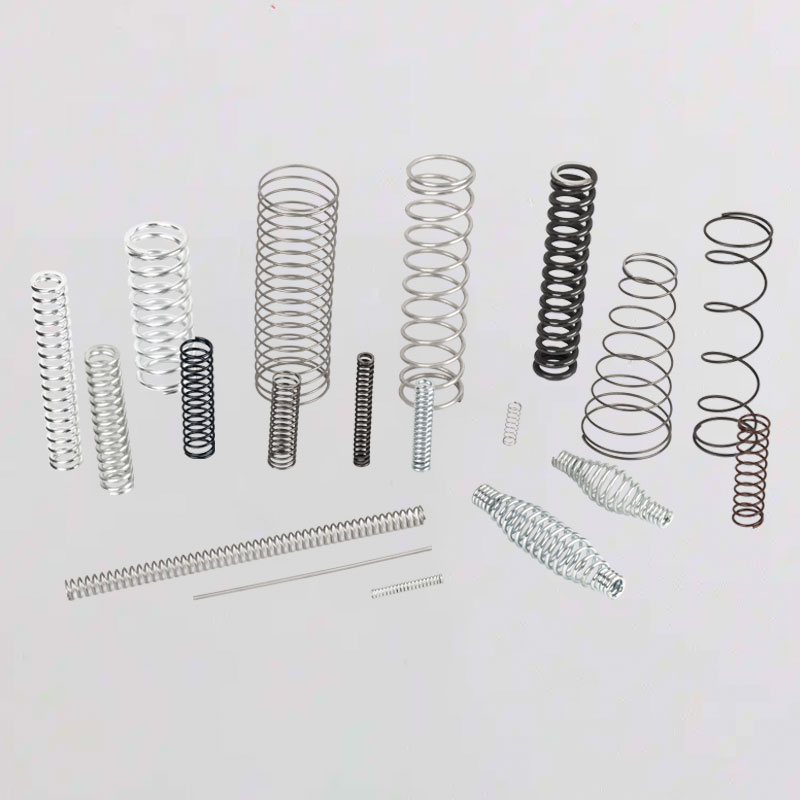 Stainless Steel 304 Spring Return Pressure Small Compression SpringMade from corrosion-resistant 304 stainless steel, this customizable compression spring suits harsh environments and can be matched to your sample or drawing.View Product →
If you are working from a sample, we can measure wire diameter, outer diameter, free length, total coils, and hook orientation to match the original spring. If you have a drawing, we can review tolerances and suggest manufacturing adjustments that reduce cost without compromising function.
If you are unsure whether an existing spring is actually a torsion spring or an extension spring, look at how it is mounted and how force is applied. A torsion spring has legs that push or pull around a center axis. An extension spring has hooks that pull directly away from each other.
No. A torsion spring works in rotation, while an extension spring works in translation. They are mechanically incompatible even if their coil sizes look similar.
Mount the spring in a tensile tester, record the load at two different lengths, and divide the load difference by the length difference. Be sure to exclude the initial tension region when calculating the rate.
In garage doors, torsion springs typically provide more cycles than extension springs because they have no hinges pulling sideways. However, the actual life depends on the wire gauge, mean coil diameter, and proper installation.
Yes. Increasing wire diameter raises the spring rate, but it also increases stress if the spring is forced into a smaller outer diameter. A professional manufacturer calculates the safe stress range for both types.
Look at the coil from the end where the wire starts. If the wire runs counterclockwise away from you, it is left-hand. If it runs clockwise, it is right-hand. Most torsion springs are wound right-hand unless the application specifically requires opposite direction.
Yes. Stainless steel works well in both types where corrosion resistance is important. For extension springs, we recommend specifying passivation to keep hooks clean and resistant.
When you need a spring that performs reliably in the field, the first step is to recognize which type your mechanism requires. Torsion springs and extension springs each have a clear mechanical role, and mixing them up usually leads to poor performance, unnecessary downtime, and higher replacement costs. If you are still unsure, talk to a spring manufacturing engineer with your drawing, sample, or load requirement. The right choice is simpler when you know the basic difference between torque and tension.
Related Products
Contact us
Factory Address
No. 8, Taoyuan South Road, Wuyuqiao, Henghe Town, Cixi City, Ningbo, China
Phone
+86-188 6787 1218+86-574-62605393
QR CODE
 Wholesale Stainless Steel Coil Springs Manufacturers