Home / News / Industry News / How Does a Pullback Spring Power a Spring-Driven Car

How Does a Pullback Spring Power a Spring-Driven Car

Jul 13, 2026

Spring Mechanics and Product Selection

How Does a Pullback Spring Store Energy and Move a Spring Car?

A pullback mechanism converts a short backward movement into stored spring energy. When the mechanism is released, the spring drives gears, wheels, levers, or other moving components in the opposite direction. The performance of a pullback spring depends on spring type, wire material, spring rate, available travel, gear ratio, friction, vehicle mass, and the amount of energy stored during winding.

Core function Store and release mechanical energy
Common spring form Torsion, extension, or spiral spring
Main design target Controlled return force and service life
01

Mechanism Overview

What Is a Pullback Spring?

A pullback spring is an energy-storage component used in mechanisms that are pulled, rotated, or wound away from their resting position before being released. The stored energy then produces a controlled return movement.

Pullback mechanisms are commonly found in spring-powered cars, retracting components, small mechanical devices, compact toys, handles, latches, return assemblies, and manually charged drive systems. The name describes the function of the complete mechanism rather than one universal spring shape.

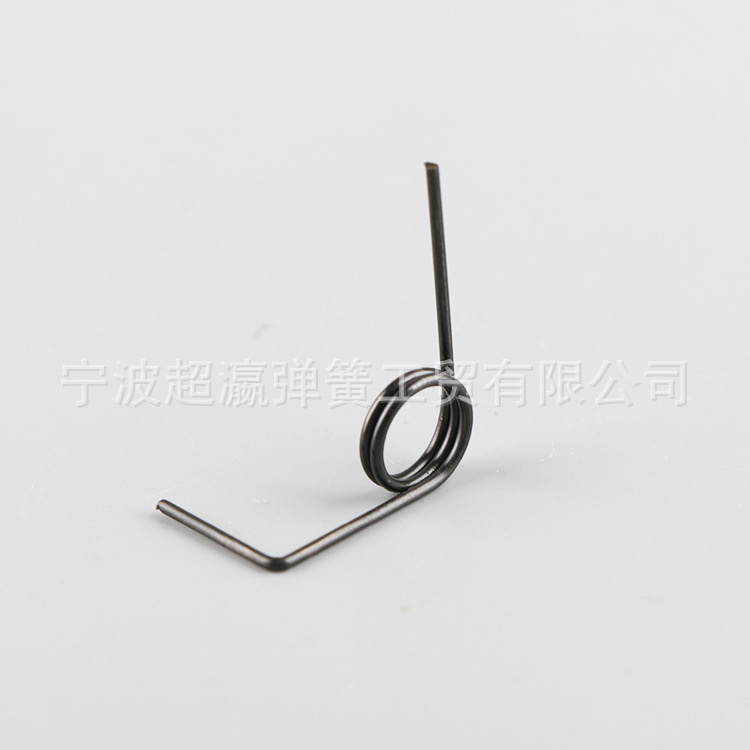
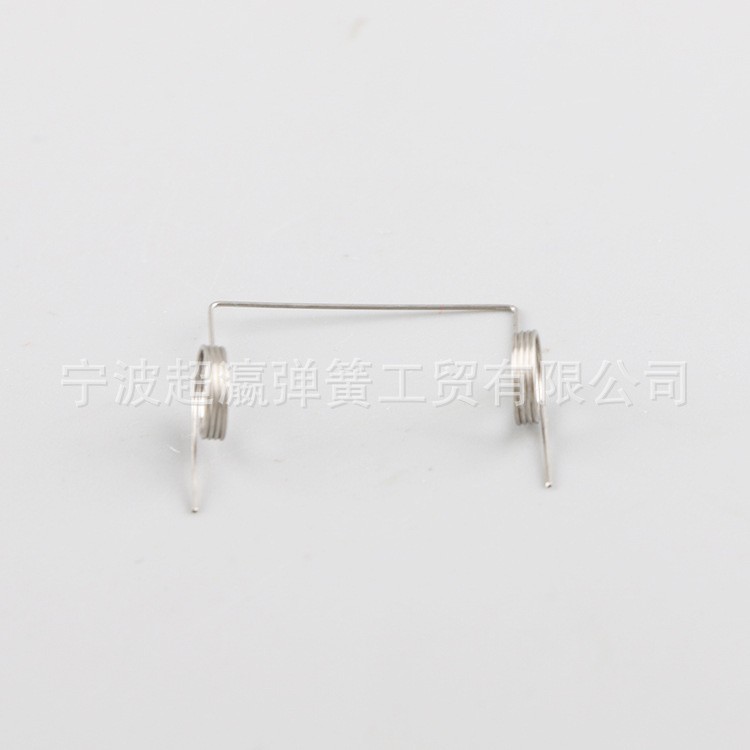
Depending on the product structure, pullback springs may be designed as torsion springs, extension springs, spiral springs, constant-force springs, or custom wire forms. The correct form is determined by the direction of movement, available space, required output force, winding angle, and service-cycle target.

Energy sequence

Input Pulling or rotating the mechanism backward
Storage Elastic deformation of the spring
Release Spring force drives the mechanism forward
Control Gears, stops, shafts, and friction regulate motion

Backward movement Spring deformation increases
Stored energy Potential energy accumulates
Release point Energy becomes rotational or linear motion
Return movement The mechanism approaches its rest position
02

Load Capability

What Is the Strongest Type of Spring?

There is no single spring type that is strongest in every application. Spring strength depends on material, wire diameter, coil diameter, active coil count, heat treatment, working travel, mounting method, and the direction of the applied load.

Heavy compression loads

Compression springs

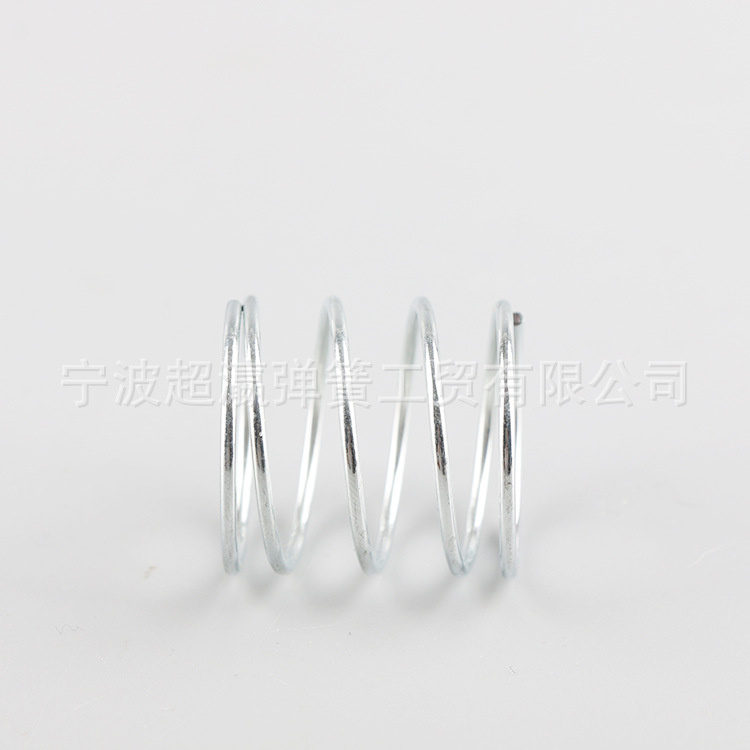
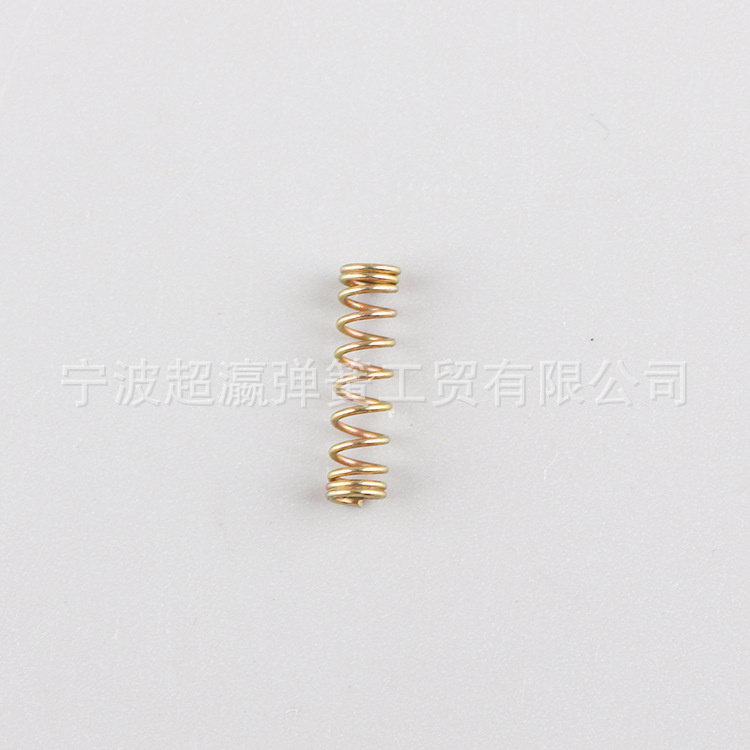
Compression springs can support substantial axial force when manufactured with large wire diameter, suitable coil geometry, and high-strength spring steel. They are commonly used where the applied load pushes the spring shorter.

Rotational torque

Torsion springs

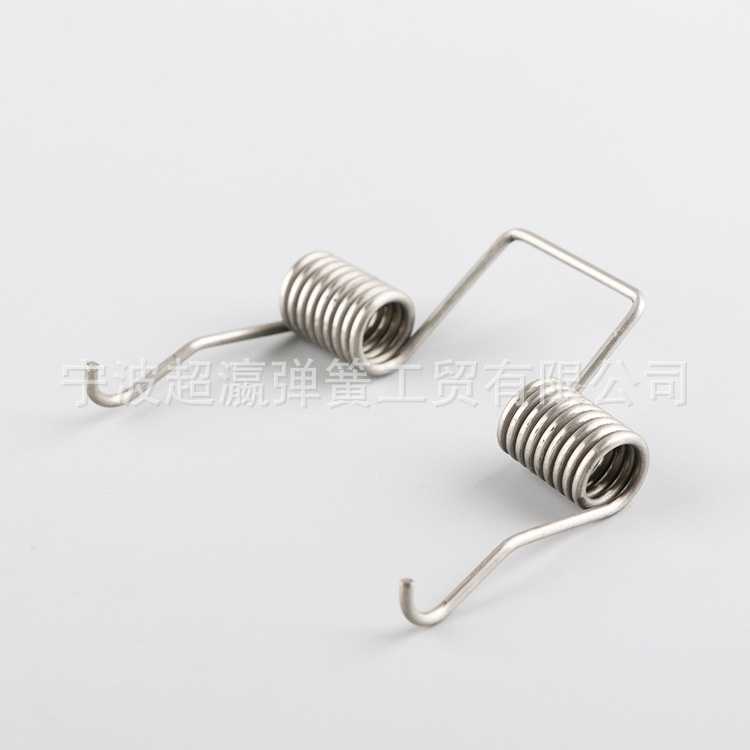
Torsion springs are effective where force must be delivered around a shaft or pivot. Their performance is defined by torque, angular deflection, leg configuration, and resistance to fatigue.

Linear pulling force

Tension springs

Tension springs resist separation and can generate high return force in a compact linear arrangement. Hook and loop design frequently determines the practical load limit.

Compact rotational storage

Spiral springs

Spiral springs store rotational energy in a flat strip or coiled band. They are useful where several rotations or a compact winding mechanism are required.

Practical answer:

The strongest spring is the spring that safely provides the required force or torque without permanent deformation, coil binding, hook failure, excessive stress, or premature fatigue in the intended mechanism.

03

Spring Classification

What Is a Tension Spring?

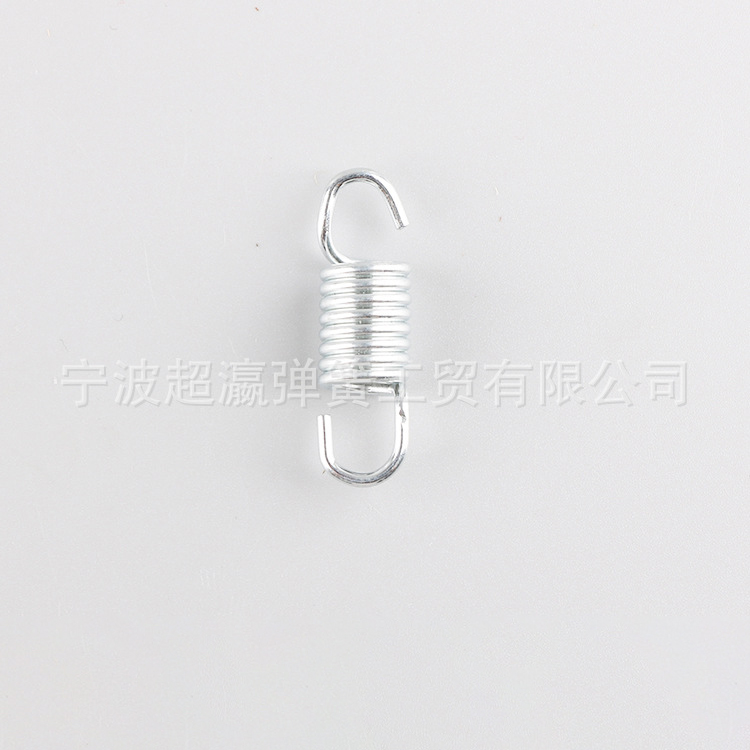
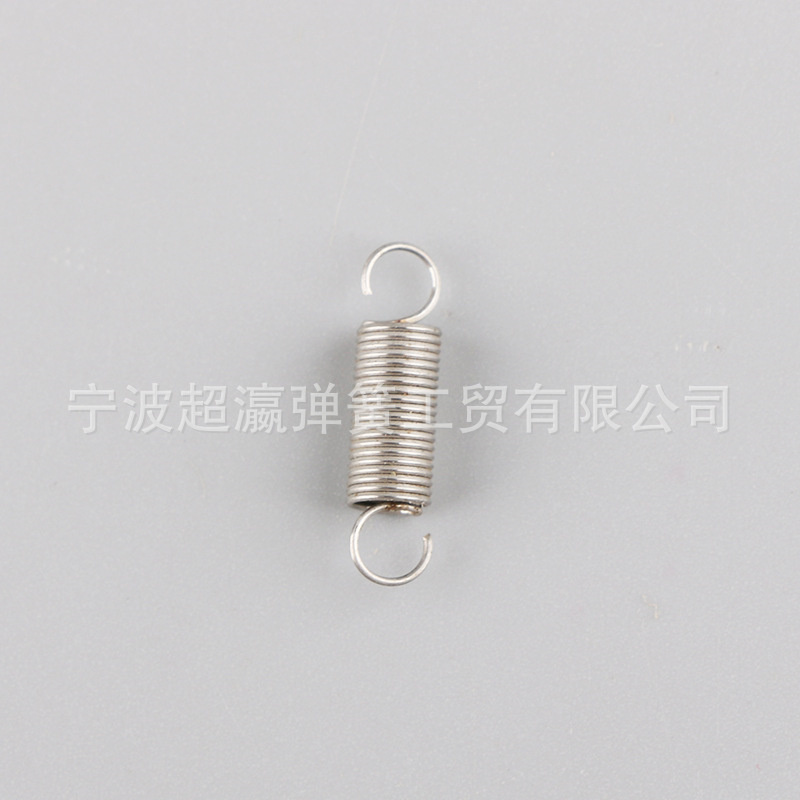
A tension spring, also called an extension spring, is a helical spring designed to resist pulling forces. Its coils are normally wound closely together. Hooks, loops, threaded fittings, or custom ends connect the spring to two moving components.

When the connected parts move apart, the spring becomes longer and develops a restoring force. The spring attempts to return to its original length when the external load is removed.

Many tension springs include initial tension. Initial tension is the internal force that keeps the coils closed before an external load is applied. A mechanism must overcome this force before the coils begin to separate.

Basic force relationship

Spring force = initial tension + spring rate × extension

Initial tension Force required to begin separating the coils
Spring rate Increase in force per unit of extension
Extension Change in spring length under load
Typical applications

Return mechanisms, latches, covers, levers, doors, retracting assemblies, exercise equipment, agricultural devices, and compact mechanical products.

Critical design area

Hooks and loops often experience greater local stress than the spring body and require careful geometry control.

04

Technical Comparison

What Is the Difference Between a Tensile Spring and a Compression Spring?

The term tensile spring usually refers to a tension spring or extension spring. A tensile spring resists forces that pull its ends apart. A compression spring resists forces that push its ends together.

Comparison item
Tensile or tension spring
Compression spring
Load direction
Opposing a pulling force
Opposing a pushing force
Coil condition at rest
Coils are normally closed or closely wound
Coils normally have spaces between them
Movement under load
Spring length increases
Spring length decreases
Common end design
Hooks, loops, clips, or threaded ends
Closed, open, ground, or shaped end coils
Main failure concern
Hook fatigue, excessive extension, or body fracture
Coil binding, buckling, excessive compression, or fatigue
Typical force equation
Initial tension plus spring rate multiplied by extension
Spring rate multiplied by compression distance
Common use
Return and retracting mechanisms
Cushioning, supporting, and force control

Choose a tension spring when

Two components move apart and require a pulling return force. The design must provide secure attachment points and enough space for spring extension.

Choose a compression spring when

Components move toward each other and require resistance, cushioning, load support, or a pushing return force.

05

Engineering Calculation

Calculating Acceleration of a Pullback Spring Car

Calculating acceleration of pullback spring car mechanisms requires more than dividing spring force by vehicle mass. Spring force changes during release, and the final acceleration is also affected by gear ratio, wheel radius, axle friction, tire deformation, air resistance, and rotational inertia.

Stage A

Determine stored energy

For an ideal linear spring, stored energy can be estimated from the spring rate and the amount of deformation.

Stored energy = 0.5 × spring rate × deformation²
Stage B

Determine spring force

For a linear spring without initial tension, force increases in proportion to deformation.

Spring force = spring rate × deformation
Stage C

Convert force through gears

The drive gear ratio changes output torque and wheel speed. Mechanical efficiency must be included.

Wheel torque = spring torque × gear ratio × efficiency
Stage D

Estimate vehicle acceleration

Drive force at the wheel is reduced by rolling resistance and other losses.

Acceleration = net drive force ÷ effective mass

Simplified Example

Estimating initial acceleration

Spring rate 25 N/m
Spring deformation 0.08 m
Vehicle mass 0.20 kg
Estimated opposing force 0.40 N
Spring force

25 × 0.08 = 2.00 N

Net force

2.00 − 0.40 = 1.60 N

Initial acceleration

1.60 ÷ 0.20 = 8.00 m/s²

This is a simplified linear estimate. A real pullback car usually uses a rotational spring and gear train. The spring torque decreases during release, so acceleration is not constant throughout the complete travel.

Rotational spring model

When a torsion or spiral spring is used, spring torque can be estimated from angular spring rate and winding angle.

Spring torque = angular spring rate × angular deflection

Wheel force model

Torque delivered to the drive axle produces a tangential force at the wheel.

Drive force = axle torque ÷ wheel radius

Effective mass model

Wheels, gears, and shafts add rotational inertia, making the mechanism behave as though its moving mass were greater.

Effective mass = vehicle mass + rotational equivalent
06

Product Specification

How Should a Pullback Spring Be Selected?

01

Identify the movement

Confirm whether the spring must produce linear return, rotational return, multi-turn winding, or constant retracting force.

02

Define the required output

Specify force, torque, travel, winding angle, return speed, and the allowable variation across the operating range.

03

Measure the installation space

Available diameter, axial length, shaft dimensions, attachment positions, and surrounding components limit spring geometry.

04

Confirm the cycle requirement

Frequently operated mechanisms require lower working stress and greater attention to fatigue resistance.

05

Consider the environment

Humidity, temperature, dust, chemicals, outdoor exposure, and storage conditions influence material and surface treatment.

06

Control release speed

A spring with adequate energy may still produce unstable movement if gear ratio, friction, damping, or stops are not properly designed.

Recommended technical data

  • Spring type and operating direction
  • Required force or torque
  • Working stroke or winding angle
  • Available installation space
  • Wire or strip dimensions

Application information

  • Moving component mass
  • Gear ratio and wheel diameter
  • Target return speed
  • Required operating cycles
  • Temperature and corrosion exposure
07

Material Engineering

Which Materials Are Used for Pullback Springs?

Music wire

High strength for compact spring designs

Music wire offers high tensile strength and good fatigue performance. It is commonly selected for small precision springs operating in dry indoor conditions.

Advantages High strength, stable spring rate, precise forming
Limitation Requires protection in corrosive environments

Stainless spring wire

Corrosion resistance for exposed mechanisms

Stainless spring wire is suitable for humid, outdoor, food-contact, medical, or chemically exposed applications where corrosion control is important.

Advantages Corrosion resistance and clean appearance
Limitation Material properties vary by stainless grade

Oil-tempered spring wire

Reliable fatigue strength for larger mechanisms

Oil-tempered wire is widely used where robust performance, repeated loading, and larger wire sizes are required.

Advantages Good fatigue resistance and practical cost
Limitation Surface protection may be required

Spring strip steel

Suitable for flat spiral energy storage

Hardened spring strip is used for spiral or clock-type springs that must store rotational energy within a flat housing.

Advantages Compact multi-turn rotational storage
Limitation Edge quality and heat treatment require control
Available surface considerations Passivation Zinc plating Phosphate coating Black oxide Protective oil Application-specific coating
08

Performance Verification

What Should Be Tested Before a Pullback Spring Enters Production?

Dimensional inspection

Wire diameter, coil diameter, body length, leg position, hooks, loops, and winding direction.

Force or torque test

Output at specified extension, compression, angle, or number of turns.

Return test

Ability to return without sticking, excessive vibration, or permanent deformation.

Cycle-life test

Repeated operation under representative load and movement conditions.

Testing the complete mechanism is essential

A spring may meet its individual force specification while the assembled product still performs poorly. Gear backlash, shaft alignment, bearing resistance, housing deformation, lubrication, wheel traction, and assembly tolerances can change the final movement.

Prototype testing should therefore evaluate both the spring and the complete pullback mechanism. The test should record travel distance, return time, output force, torque reduction, cycle stability, noise, temperature, and any permanent change in spring dimensions.

For a pullback spring car, useful measurements include pullback distance, winding turns, travel distance, peak acceleration, average speed, wheel slip, stopping distance, and performance after repeated cycles.

09

Direct Technical Answers

Pullback Spring FAQ

What is the strongest type of spring?

No spring type is universally strongest. Compression springs are effective for heavy axial loads, torsion springs for rotational torque, tension springs for pulling force, and spiral springs for compact rotational energy storage. Material and geometry determine the actual load capacity.

What is a tension spring?

A tension spring is a closely wound helical spring that resists pulling forces. It becomes longer under load and returns toward its original length when the load is removed.

Is a tensile spring the same as an extension spring?

In many product descriptions, tensile spring, tension spring, and extension spring refer to the same general spring category. Extension spring is the most widely used technical term.

What is the difference between a tensile spring and a compression spring?

A tensile spring resists being pulled longer, while a compression spring resists being pushed shorter. Their coil spacing, end structures, load directions, and failure risks are different.

Can a tension spring be used as a pullback spring?

Yes. A tension spring can provide linear return force in a pullback mechanism. The spring must have suitable initial tension, extension travel, hook strength, and fatigue life.

Why does a pullback spring car slow down during travel?

Spring force or torque decreases as stored energy is released. Friction, air resistance, wheel deformation, gear losses, and surface conditions further reduce vehicle speed.

How can a pullback spring car travel farther?

Travel distance may be improved through suitable spring energy, efficient gearing, low-friction bearings, aligned shafts, stable wheel traction, lower vehicle mass, and controlled release speed.

Why can a stronger spring reduce product life?

Higher force can increase stress in the spring, hooks, gears, housing, shafts, and stops. Excessive working stress may cause permanent deformation, fatigue failure, gear damage, or unstable movement.

Custom Spring Development

Need a Pullback Spring for a Specific Mechanism?

Provide the movement type, installation dimensions, required force or torque, working travel, winding angle, cycle life, material preference, and operating environment. A complete application description supports more accurate spring selection and prototype development.

View Pullback Spring Options