Home / News / Industry News / How Do You Choose the Right Garage Door Torsion Spring

How Do You Choose the Right Garage Door Torsion Spring

Jul 06, 2026

Garage Door Spring Engineering Guide

How Do You Select the Right Garage Door Torsion Spring?

A garage door spring system must lift a precisely measured door load while maintaining controlled movement through every opening and closing cycle. Correct spring selection depends on door weight, lift geometry, drum size, wire diameter, inside diameter, spring length, wind direction, and expected cycle life.

This technical guide explains how torsion springs work, how spring dimensions affect torque, what materials are commonly used, how long a spring may last, and why replacement work requires strict safety controls.

```

Key Selection Factors

Door weight Measured, not estimated
Wire diameter Controls torque and stress
Inside diameter Must fit the hardware
Spring length Affects cycles and torque
Wind direction Left-hand or right-hand

```
Primary function Counterbalance the garage door weight
Typical standard life Approximately 10,000 operating cycles
Main specification rule Match torque to the actual door load

01

What Is a Garage Door Torsion Spring?

A garage door torsion spring is a coiled mechanical component mounted on a shaft above the garage door opening. It stores rotational energy when the door closes and releases that energy when the door opens.

```

What the spring actually does

The spring does not simply pull the door upward. It applies torque to the torsion shaft. Cable drums mounted at both ends of the shaft convert that rotational force into lifting force through the cables attached to the bottom brackets of the door.

A correctly balanced door can usually be moved manually with controlled effort. The electric opener guides the movement but should not be expected to carry the full weight of the door.

Why correct matching matters

An undersized torsion spring may leave the door too heavy, increase opener load, and allow the door to descend rapidly. An oversized spring may make the door rise unexpectedly or prevent it from closing correctly.

Spring torque must remain compatible with the door weight, cable drum radius, track configuration, and required number of turns.

```

Operating Principle

How Do Torsion Springs Work?

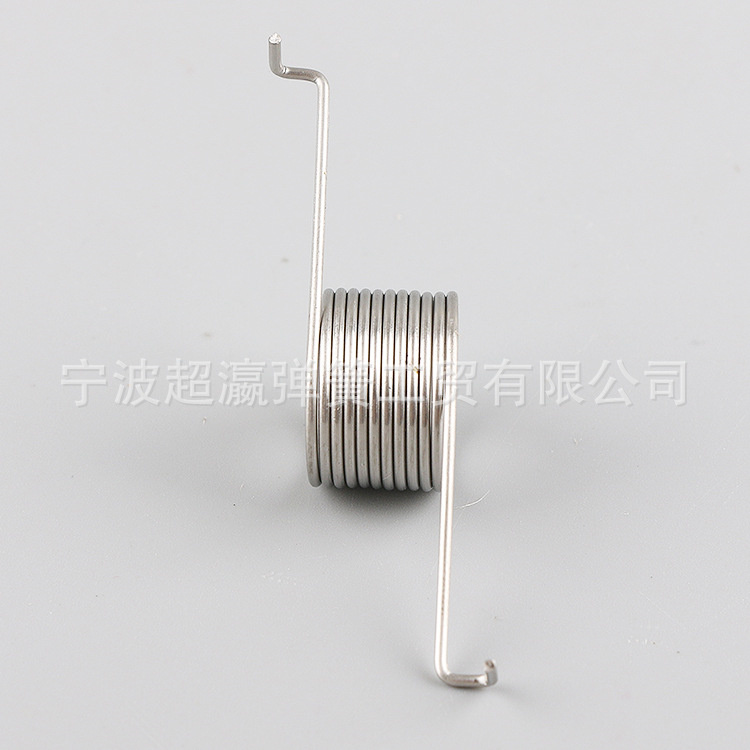
Torsion springs generate resistance by twisting around their center axis rather than stretching along their length.

```
1

Door closes

The lifting cables unwind from the drums while the torsion shaft rotates. This rotation winds the spring and increases stored energy.

2

Spring stores torque

The coils resist rotation. Spring geometry and material strength determine how much torque can be stored safely.

3

Door begins opening

The spring releases rotational energy into the shaft. The drums rewind the cables and lift the door from both sides.

4

Door remains balanced

Correctly calculated torque offsets most of the door weight throughout its travel, reducing strain on the opener and hardware.

Basic torque relationship

Required torque = door load × effective drum radius

This relationship is useful for understanding the system, but complete spring selection also requires spring rate, available travel, track type, winding turns, and hardware dimensions.

```

02

What Are the Different Types of Torsion Springs?

The term torsion spring covers several garage door configurations. Each design is intended for a particular door weight, available installation space, cycle requirement, and lifting arrangement.

```

Single-spring system

Compact construction for lighter doors

A single spring is installed on the torsion shaft. This arrangement uses fewer components but loses most counterbalance assistance if the spring breaks.

Common use: Narrow or relatively lightweight garage doors

Dual-spring system

Distributed torque for wider doors

Two garage door torsion springs divide the lifting requirement. The arrangement can support smoother balance and easier specification of higher cycle designs.

Common use: Double-width, insulated, or heavier doors

Standard-cycle spring

Designed for ordinary operating frequency

Standard torsion springs are commonly specified around a defined cycle target and are suitable where the door is opened only several times per day.

Typical target: Approximately 10,000 cycles

High-cycle spring

Longer service life through adjusted geometry

High-cycle designs may use a longer spring body or alternative wire sizing to reduce operating stress while maintaining the required torque.

Typical target: 20,000, 25,000, 50,000, or more cycles
```

Material Comparison

What Materials Are Commonly Used to Make Torsion Springs?

Material properties, heat treatment, wire quality, surface condition, and manufacturing consistency all influence spring performance.

```
Material option Performance characteristics Suitable environment Selection note
Oil-tempered spring wire High strength, stable fatigue resistance, widely used for door springs Residential, commercial, and industrial door systems Balanced choice for durability and consistent torque
Hard-drawn spring wire Economical material with practical performance under moderate loads Light-duty mechanisms and general spring applications Material grade must match the required stress level
Galvanized spring wire Improved surface corrosion resistance and a cleaner appearance Humid garages and areas exposed to moisture Coating quality and dimensional tolerances require control
Stainless spring wire Strong corrosion resistance with a higher material cost Coastal, wet, washdown, or chemically exposed environments Spring properties vary according to stainless steel grade
Alloy spring steel High strength and fatigue capability for demanding conditions High-load and high-cycle mechanical systems Heat treatment must be controlled for stable performance
Material alone does not determine service life.

Wire defects, decarburization, heat-treatment variation, surface damage, excessive stress, poor installation, and corrosion can shorten the life of otherwise suitable torsion springs.

```

03

How Long Do Torsion Springs Typically Last?

Spring life is normally expressed as operating cycles rather than calendar years. One complete opening and closing sequence equals one cycle.

```

10,000

Standard-cycle design

At four cycles per day, the theoretical service period is approximately six to seven years.

20,000

Extended-cycle design

At four cycles per day, the theoretical service period is approximately thirteen years.

50,000

High-cycle design

Selected for frequent operation where longer maintenance intervals are required.

Conditions that may shorten spring life

  • Door weight increased after adding insulation, windows, or decorative panels
  • Spring torque does not match the actual door load
  • Corrosion pits develop on the spring wire
  • The spring rubs against adjacent hardware
  • Cable drums or bearings create excessive resistance
  • Winding turns exceed the specified operating range
  • The door is opened much more frequently than expected

Basic balance observation

Can the door remain near the halfway position?

After disconnecting the opener according to the door system instructions, a balanced door should move smoothly and remain reasonably controlled around the halfway-open position.

Rapid downward movement may indicate insufficient spring assistance. Strong upward movement may indicate excessive torque. A qualified inspection is recommended when balance changes noticeably.

```

Spring Sizing

What Size Torsion Spring for 16x7 Garage Door?

Door width and height are not enough to identify a safe replacement spring.

```

Direct answer

A 16×7 door does not have one universal torsion spring size.

Two 16×7 doors can have significantly different weights because of differences in panel construction, insulation, steel thickness, windows, reinforcement, and decorative materials.

The correct spring must be calculated from actual load and hardware data. Selecting only by door dimensions can produce an unsafe or poorly balanced system.

Required information for spring selection

01
Actual door weight

Measure the complete door rather than relying only on a model description.

02
Wire diameter

Measure a group of consecutive coils and divide the total length by the number of coils.

03
Inside diameter

The spring must fit the winding cone, stationary cone, and shaft arrangement.

04
Spring body length

Length affects torque output, stress distribution, available travel, and cycle life.

05
Wind direction

Identify left-hand wind and right-hand wind correctly before installation.

06
Drum and track configuration

Standard lift, high lift, and vertical lift systems do not use identical calculations.

Wire Measurement Example

Measured length of 20 coils

5.000 inches

Calculation

5.000 ÷ 20

Approximate wire diameter

0.250 inches

Measurements should be taken across tightly grouped coils. Paint, corrosion, deformation, and gaps can reduce accuracy.

```

04

When Is Garage Door Torsion Spring Replacement Needed?

A broken spring is easy to identify when a visible gap appears between the coils. Other spring and balance problems may develop gradually.

```

Door feels unusually heavy

Loss of spring torque forces the opener or operator to carry more of the door weight.

Visible gap in the spring

A separated section of coils usually indicates that the spring wire has fractured.

Door rises unevenly

Unequal cable tension, drum movement, or mismatched springs can cause one side to move first.

Opener stops or strains

Increased lifting resistance may activate overload protection or accelerate opener wear.

Cables become loose

A spring or drum problem may remove the tension needed to keep lifting cables correctly seated.

Door closes too quickly

Insufficient counterbalance can allow gravity to accelerate the door during downward travel.

Should both springs be replaced together?

In a two-spring system, both springs usually experience a similar number of cycles. When one spring reaches fatigue failure, the other may also be near the end of its expected service life.

Replacing only one spring can leave the system with different spring rates, cycle histories, or torque characteristics. The appropriate decision depends on spring condition, specifications, and system design.

```

High-Tension Component

What Are the Safety Precautions When Working with Torsion Springs?

A wound torsion spring contains substantial mechanical energy. Sudden release can rotate the shaft, move cable drums, eject tools, or allow the door to fall.

```
01

Disconnect electrical power

Prevent unintended opener operation before inspecting or working near the spring system.

02

Secure the door mechanically

Do not rely only on the opener to hold a heavy garage door in position.

03

Use correctly sized winding bars

Screwdrivers, loose rods, and improvised tools may slip from the winding cone.

04

Stand outside the release path

Keep the body away from the winding cone, shaft end, spring, and possible tool trajectory.

05

Inspect cones and shafts

Cracks, worn holes, bent shafts, loose set screws, or seized bearings can make adjustment unstable.

06

Keep the area below the door clear

People, vehicles, and tools should remain outside the door travel area during service and testing.

Professional service is recommended.

Questions such as “how to replace garage door torsion spring” and “how to change torsion spring on garage door” involve more than removing an old component. Safe work requires controlled unwinding, correct spring identification, secure door restraint, accurate cable positioning, proper winding turns, and a complete balance test.

```

Manufacturing Capability

What Should Be Checked When Ordering Custom Torsion Springs?

Stable spring performance begins with controlled material selection, dimensional accuracy, forming consistency, and application-based verification.

```

Dimensional control

Spring geometry matched to the application

Wire diameter, inside diameter, body length, coil count, end configuration, and wind direction can be produced according to confirmed drawings or operating requirements.

Material options

Solutions for load, fatigue, and environment

Material can be selected according to torque demand, operating frequency, corrosion exposure, temperature, and required service life.

Surface treatment

Protection for storage and operating conditions

Surface options may be considered where improved corrosion resistance, appearance, or handling protection is required.

Application verification

Specifications reviewed before production

Door weight, shaft dimensions, drum geometry, operating turns, installation space, and target cycles should be reviewed as one complete system.

Specification Checklist

Information that helps confirm a torsion spring design

  • Application and installation position
  • Required torque or door weight
  • Wire diameter
  • Spring inside diameter
  • Spring body length
  • Left-hand or right-hand wind
  • Maximum working turns
  • Required cycle life
  • Operating environment
  • Drawing, sample, or dimensional reference
```

Technical Questions

Garage Door Torsion Springs FAQ

These direct answers address common sizing, operation, maintenance, and replacement questions.

```
How do torsion springs work?

Torsion springs store energy through rotational deformation. In a garage door system, the spring applies torque to a shaft, and cable drums convert that torque into lifting force.

How long do torsion springs typically last?

A standard spring may be designed for approximately 10,000 cycles. Higher-cycle torsion springs may be specified for 20,000, 25,000, 50,000, or more cycles, depending on geometry and operating stress.

Can garage door spring size be selected from door dimensions?

Door dimensions provide only part of the required information. Actual door weight, drum radius, track type, wire diameter, inside diameter, spring length, and wind direction must also be confirmed.

What size torsion spring for 16x7 garage door?

There is no single universal size for all 16×7 doors. A lightweight non-insulated door and a heavy insulated door of the same dimensions require different spring torque.

Can a garage door operate with a broken spring?

Operation is not recommended. The door may be extremely heavy, cables may lose tension, and the opener may be overloaded. The door should remain secured until the system is inspected.

Do torsion springs require lubrication?

A light coating of a suitable garage door spring lubricant may help reduce surface friction and corrosion. Excess lubricant should be avoided because it can attract dust and contaminate surrounding components.

Why does wind direction matter?

Left-hand and right-hand wound springs are installed in specific positions so that winding increases the required lifting torque. Incorrect orientation prevents the spring system from operating as designed.

```

Torsion Spring Product Support

Need a Spring Made for a Specific Load or Installation?

Provide the application, spring dimensions, load requirement, working turns, wind direction, operating environment, and target cycle life. A detailed specification review helps identify a suitable material and spring configuration.

Submit Your Spring Requirements